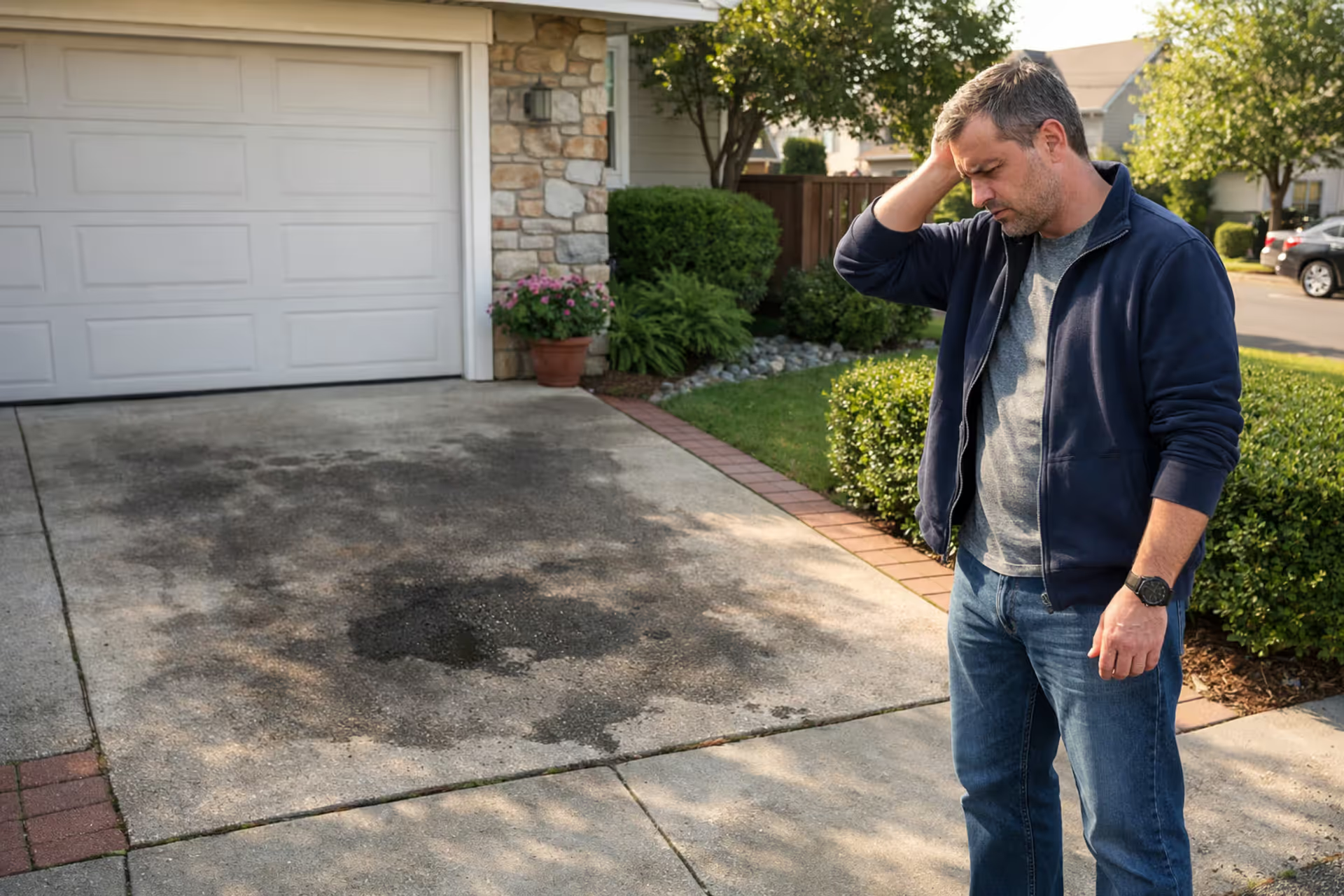
Car owner standing by an empty driveway after vehicle theft
Will Your Auto Insurance Pay If Someone Steals Your Car?

Content
Picture this: you walk out to your driveway, and your car is gone. After the initial shock wears off, a critical question emerges—will your insurance company cut you a check for the loss?
Here's the thing: your policy might not cover theft at all. About one million cars disappear from driveways, parking lots, and streets each year in America. Yet countless drivers carry policies that won't pay a single dollar if their vehicle vanishes overnight. The coverage that protects against theft isn't included in basic insurance packages, and many people discover this gap only after filing a claim that gets denied.
Even when you do have the right protection, you'll face deductibles that come out of your pocket, coverage caps that might leave you short, and exclusions that can void your claim entirely. Let's break down exactly what kind of policy you need, how much you'll actually receive, and what happens when you report your missing vehicle.
What Type of Car Insurance Covers Theft
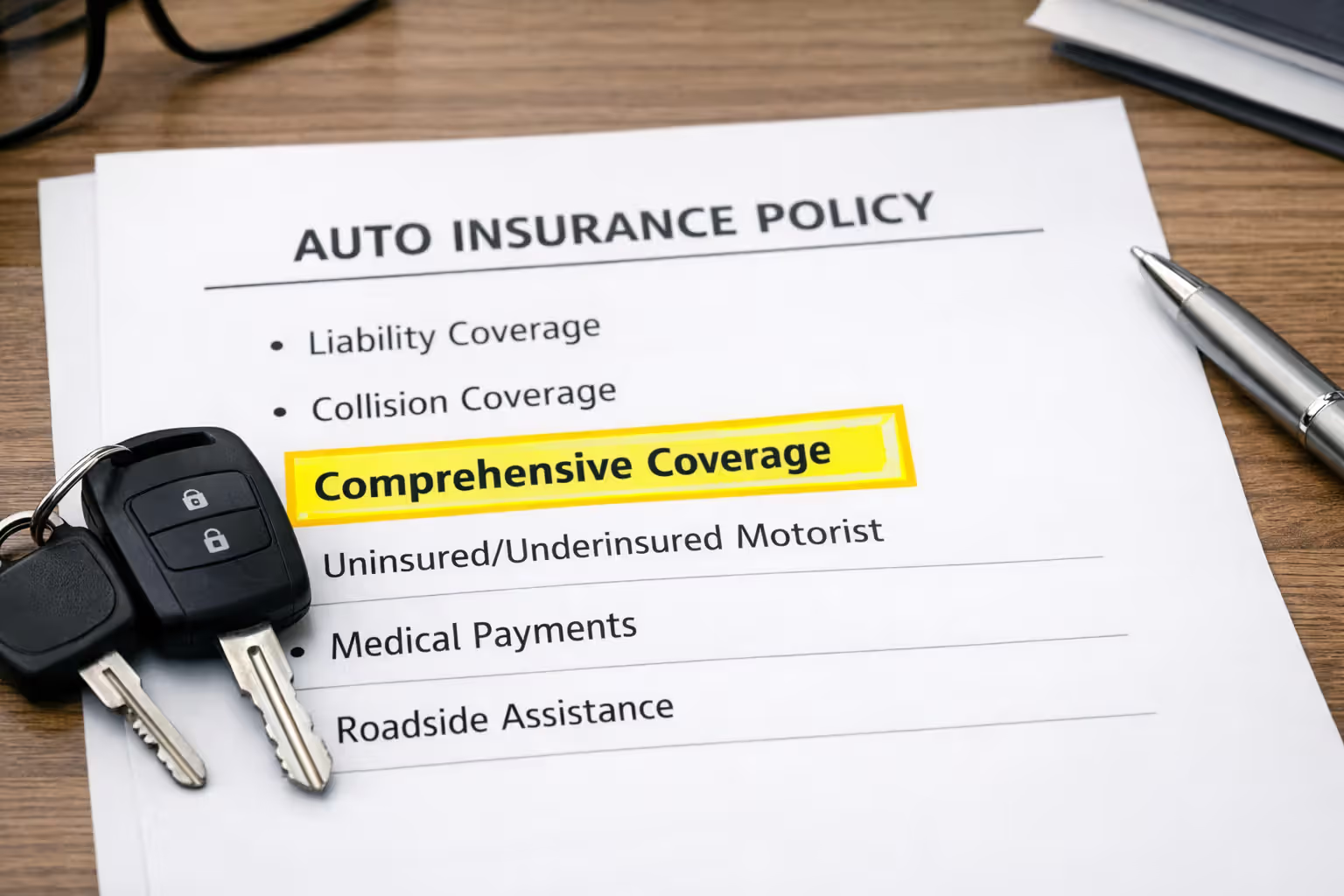
You need comprehensive coverage on your policy. That's it—nothing else will help if someone drives off with your car.
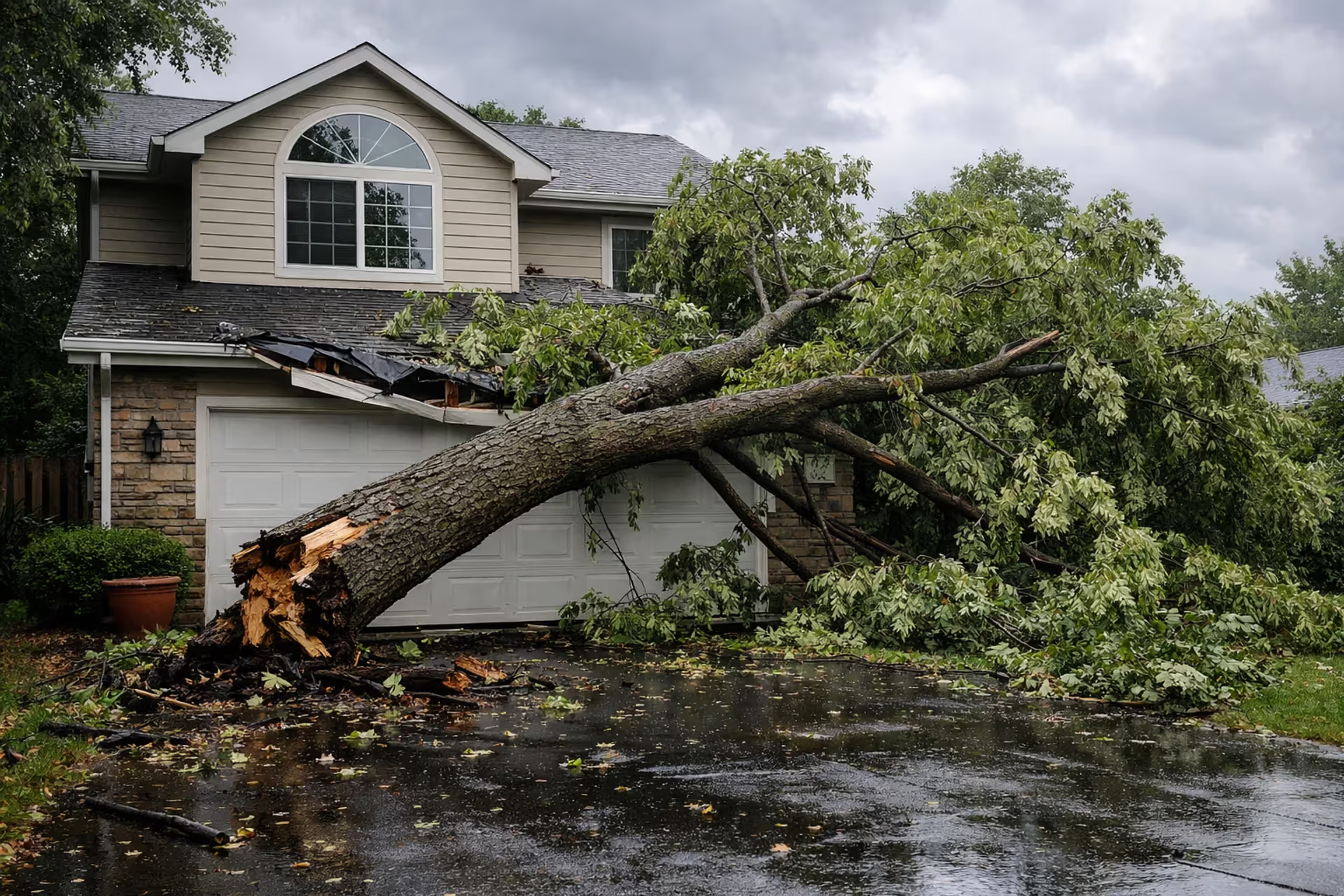
Comprehensive handles the stuff that happens when you're not driving. Trees falling on your hood during a storm? Covered. Hail denting your roof? Covered. Someone breaking your window and hot-wiring your ignition? Covered. This protection addresses non-collision incidents—fire, flooding, animal strikes, vandalism, and yes, theft.
Here's what won't help you: the liability coverage your state requires you to carry only pays for harm you cause others. Their injuries, their property damage, their medical bills. Your stolen car? Not their problem, which means not covered by liability. Collision coverage, meanwhile, kicks in when you crash into something or another vehicle hits you. But a thief making off with your ride isn't a collision.
A lot of folks think they have "full coverage." That's not actually an insurance term with a standard definition. Usually, people mean they carry liability plus collision plus comprehensive. Only that last piece matters for theft protection.
One important note: if you're making payments on your car, your lender almost certainly forced you to buy comprehensive coverage. It's written into your finance agreement. They want their asset protected. But if you own your vehicle outright, comprehensive becomes optional. Some drivers drop it to save money on older cars—then face massive losses when those older cars get stolen.
I review denied claims every week where someone genuinely believed their basic policy covered theft. They've paid premiums for years, never filed a claim, and now they're shocked to learn they have zero protection for their stolen vehicle. It's heartbreaking, and it's preventable.
— Rachel Hendricks
How Car Insurance Theft Coverage Works
When your vehicle gets stolen, your insurer doesn't immediately hand you a check. They start a clock—usually 30 days—to see if police recover your car. About half of all stolen vehicles turn up again, so insurers wait before declaring your car a total loss.
During those 30 days, an adjuster opens an investigation. They'll verify you actually had comprehensive coverage when the theft occurred, confirm you filed a police report, and rule out fraud. Expect detailed questions: Which parking lot? Were the doors locked? Who has copies of your keys? Where's your spare set?
If day 31 arrives and your car hasn't been located, the insurance company calculates what your vehicle was worth the moment before it disappeared. They subtract your deductible, then issue payment. At that point, they own the title. If police find your car after you've been paid, it belongs to the insurer now. They'll auction it for salvage value.
Different scenario: police find your car on day 20 with minor damage. You keep your vehicle, and insurance covers repair costs minus your deductible. But if they find it stripped and burned out, even during the waiting period, the insurer will total it and pay you its value.
Some companies let you "buy back" a recovered vehicle by returning the claim money, but this rarely makes sense financially. Why would you want a car that was stolen, possibly damaged, and now has that history attached to its title?
Author: Caroline Halstead;
Source: talero.spotpariz.net
What Does Theft Coverage Actually Cover
Comprehensive protection extends beyond just the whole vehicle vanishing. Here's what gets covered:
Your car's full value when it's gone for good or recovered so damaged that repairs would cost more than the vehicle is worth. This includes factory equipment and permanently installed features like built-in GPS systems.
Stolen parts when thieves target specific components. Catalytic converter theft has exploded recently—replacing one runs anywhere from $1,000 to $3,500 depending on your vehicle make and model. Comprehensive pays for that.
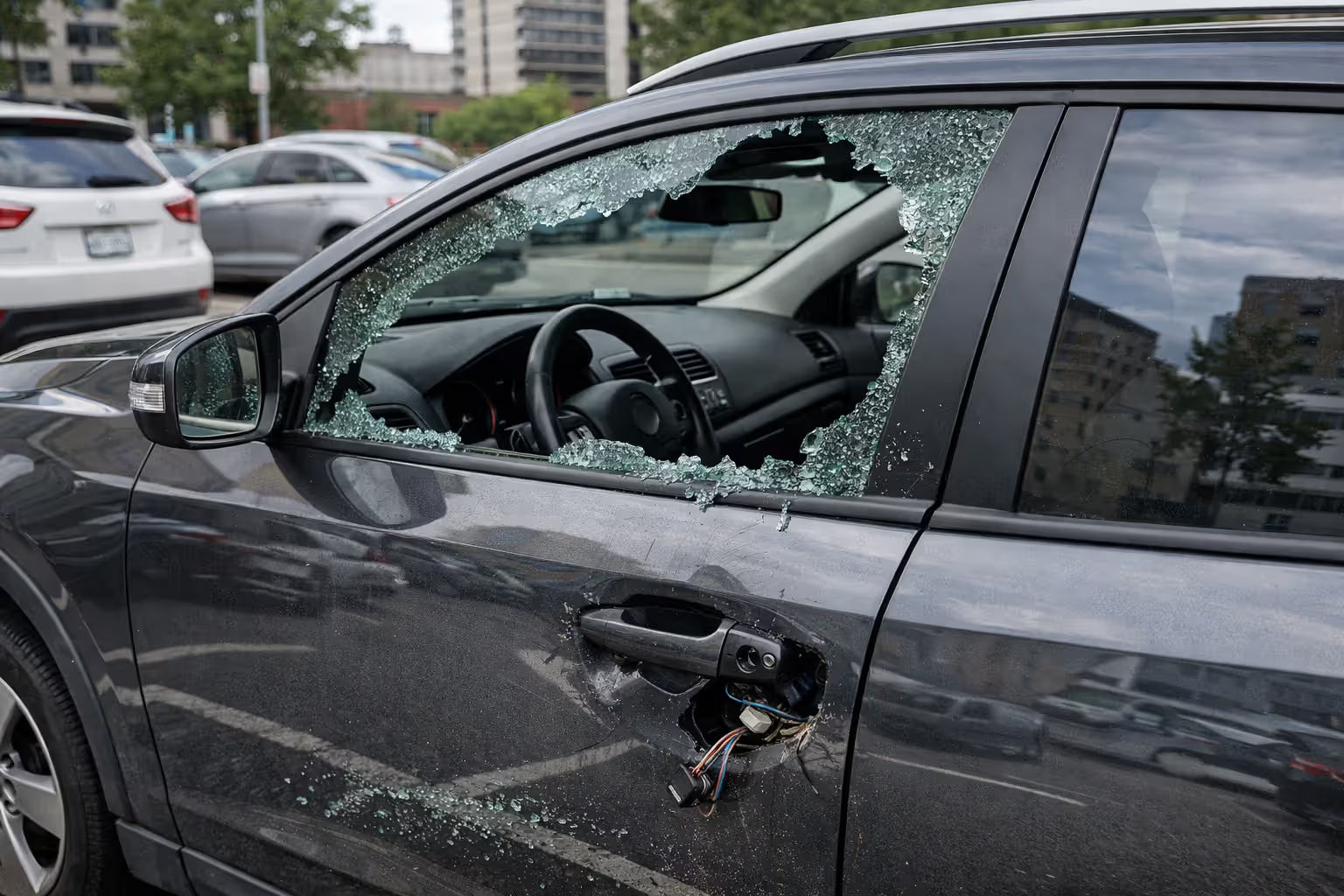
Vandalism that accompanies theft attempts. Broken windows, jimmied locks, slashed seats, and busted steering columns all fall under comprehensive when tied to a theft event.
Aftermarket additions and custom equipment—with a catch. Standard policies cap aftermarket stuff at $1,000 to $1,500. Installed a $5,000 sound system? Custom rims worth $3,000? You'll need to buy additional custom equipment coverage and document those upgrades with receipts and photos before any theft occurs.
Personal Items and Belongings in a Stolen Car
Your auto policy won't cover personal belongings that disappear with your vehicle. That laptop on the back seat? Your gym bag? Tools in the trunk? Golf clubs? All excluded from auto insurance.
Those items fall under homeowners or renters insurance instead, under the personal property section. You'll need to file a separate claim through that policy, face that policy's deductible, and work within those coverage limits. Jewelry, collectibles, expensive electronics—these often require special riders because standard policies cap high-value items.
Here's a gray area: child car seats. Some insurers treat permanently installed bases as vehicle components and cover them. Others classify them as personal property. You'll need to ask your specific carrier how they handle this.
Author: Caroline Halstead;
Source: talero.spotpariz.net
Common Exclusions and Limitations
Insurance companies will reject your theft claim under certain conditions:
Keys left inside an unlocked vehicle: Leave your car running while you dash into a convenience store and someone drives off? Many insurers deny these claims, calling it negligence. A few states ban this denial tactic, but most allow it.
Fraud: Stage a fake theft to collect insurance money and you're looking at claim denial, policy cancellation, and criminal charges. Investigators check financial records, interview people you know, and review surveillance footage from the area. Red flags include recently increasing your coverage amounts, facing financial problems, or giving inconsistent details about the theft.
Family member takes the vehicle: Your teenager takes your car without permission after you grounded them? That's a parenting issue, not a theft claim. Insurance won't pay when someone on your policy or in your household has the vehicle.
Repossession: The bank takes your car because you missed three payments? Not theft—no coverage.
Business use without proper endorsements: Use your personal vehicle for Uber, delivery services, or other commercial purposes? Standard personal policies exclude coverage during those activities unless you've added specific endorsements.
Deductibles and Out-of-Pocket Costs for Theft Claims
Your comprehensive coverage comes with a deductible—money you pay before insurance kicks in. When filing a theft claim, the insurer subtracts this amount from whatever they owe you.
Most comprehensive deductibles fall between $100 and $2,000. The sweet spot? Many drivers choose $500. This number differs from your collision deductible, which you might have set differently. You pick your comprehensive deductible when buying coverage, making a trade-off: higher deductibles mean lower monthly premiums but more out-of-pocket cost when disaster strikes.
Real-world example: thieves steal your car, police never find it, and the insurer values it at $18,000. You carry a $500 comprehensive deductible. You get a check for $17,500. But what if you still owe $20,000 on your auto loan? You're stuck covering a $2,500 gap between the insurance payout and your loan balance, plus you already paid that $500 deductible. Total out-of-pocket: $3,000.
Should you choose a low deductible or high deductible? Consider this: bumping your deductible from $250 to $1,000 might save you $200 yearly in premiums. Go five years without a claim and you've saved $1,000—exactly offsetting that higher deductible. File a claim in year two, though, and you're paying $750 more than you would have with the lower deductible.
A few insurers offer vanishing deductible programs where your deductible drops $50 or $100 for each claim-free year. Worth asking about when shopping for coverage.

Author: Caroline Halstead;
Source: talero.spotpariz.net
Coverage Limits and Payout Calculations
Insurance companies won't pay what you originally paid for your car, what you still owe on it, or what replacing it costs today. They pay actual cash value (ACV)—what your specific vehicle was worth the day before the theft.
ACV means replacement cost minus depreciation. Insurers rely on industry databases like CCC, Mitchell, or Audatex, which track recent sales of comparable vehicles in your region. They factor in your car's age, make, model, trim package, mileage, overall condition, and optional features.
Depreciation hurts most in years one through three. A brand-new car loses about 20% of its value before you get home from the dealership. Another 15-25% evaporates during year one. By year three, you're looking at 40-50% depreciation. Finance $35,000 for a new car, and three years later when it gets stolen, the ACV might hit only $18,000. You still owe $17,000? That's your problem unless you bought gap insurance.
Gap coverage (Guaranteed Asset Protection) bridges the difference between ACV and your outstanding loan or lease balance. Put down a tiny down payment? Lease your vehicle? Buy a model that depreciates fast? Gap insurance prevents catastrophe after a theft totals your car.
Dealers love selling gap coverage in finance contracts, but they typically overcharge. Your auto insurer usually offers gap coverage as a policy add-on for less money. Once your loan balance dips below your car's value, you can cancel gap coverage.
No state requires comprehensive insurance. It's optional everywhere. But state laws do regulate how quickly insurers must handle claims, how long investigations can run, and what obligations adjusters face during the process.
How to File a Theft Claim with Your Insurer
Take these steps the moment you realize your vehicle is gone:
- Call the police right away. File an official report with local law enforcement. Give them your VIN, plate number, year, make, model, color, and anything distinctive about your vehicle. Get the report number or a copy—your insurer requires this.
- Contact your insurance company fast. Phone the claims department within 24 hours. Most run round-the-clock hotlines. Share basic details: when you noticed the theft, where the car was parked. They'll open a claim file and assign an adjuster to your case.
- Answer their detailed questions. Your insurer will grill you: What time did the theft occur? Where exactly was the vehicle? Was it locked? Where are all your keys? Does anyone else drive this car? What was inside? Any modifications?
- Gather your paperwork. Round up your title (if you have it), registration, loan/lease documents, maintenance history, and receipts for aftermarket equipment or recent repairs. Photos of your vehicle, especially showing condition and modifications, strengthen your claim.
- Cooperate fully during investigation. The adjuster might want a recorded statement. Answer truthfully and completely. Contradictions or evasive responses trigger red flags that delay or sink your claim. They might request bank statements, especially if you're facing money troubles.
- Wait out the recovery window. Most insurers wait 30 days before totaling your vehicle. Stay in touch with your adjuster for updates. If police recover your car, you'll hear immediately.
- Check the settlement offer carefully. After 30 days without recovery, the insurer presents their valuation and settlement. Review it thoroughly. Think the ACV calculation is too low? Negotiate by gathering evidence of comparable vehicles selling for higher prices in your area.
- Accept or counter the offer. Agree with the valuation? Sign title transfer documents and expect payment within 3-5 business days. Disagree? Present your counter-evidence. Insurers must justify valuations and consider legitimate proof of higher market value.

Author: Caroline Halstead;
Source: talero.spotpariz.net
Count on 30-45 days from theft to payment, assuming your car stays missing. Delays happen when paperwork is incomplete, fraud concerns surface, or valuation disputes arise.
Coverage Comparison: Understanding Your Policy Options
| Coverage Type | Theft Protection? | Vandalism Protection? | Collision Damage Protection? | Legally Required? |
| Liability | No | No | No (only others' vehicles) | Yes (most states) |
| Collision | No | No | Yes (your vehicle) | No (lenders may require) |
| Comprehensive | Yes | Yes | No | No (lenders may require) |
Frequently Asked Questions About Car Theft and Insurance
Theft protection isn't automatic. You need comprehensive coverage—a specific policy component that many drivers skip to save money on premiums.
Liability insurance won't help, despite being mandatory in most states. It protects other people, not your property. Collision coverage handles crashes but ignores theft. Only comprehensive fills this gap.
Pull out your insurance declarations page right now and verify you carry comprehensive coverage. Check your deductible amount. Consider gap insurance if your loan balance exceeds your vehicle's current value. Added aftermarket equipment? Confirm you have adequate custom equipment coverage with documentation.
Going without comprehensive coverage can wreck you financially. A stolen vehicle means lost transportation and potentially tens of thousands in unrecovered value. For financed vehicles, you might keep making payments on a car sitting in a chop shop or already sold for parts.
Review your policy's specific terms, exclusions, and limits before you need to file a claim. Know what documentation matters—keep your VIN, vehicle photos, and modification receipts somewhere other than your car. These preparations streamline claims during what will already be a stressful situation.
Comprehensive coverage costs vary based on your specific vehicle, zip code, driving record, and chosen deductible. But the protection against theft, vandalism, and other non-collision losses makes it essential for most drivers. The premium represents reasonable insurance against potentially devastating financial loss.