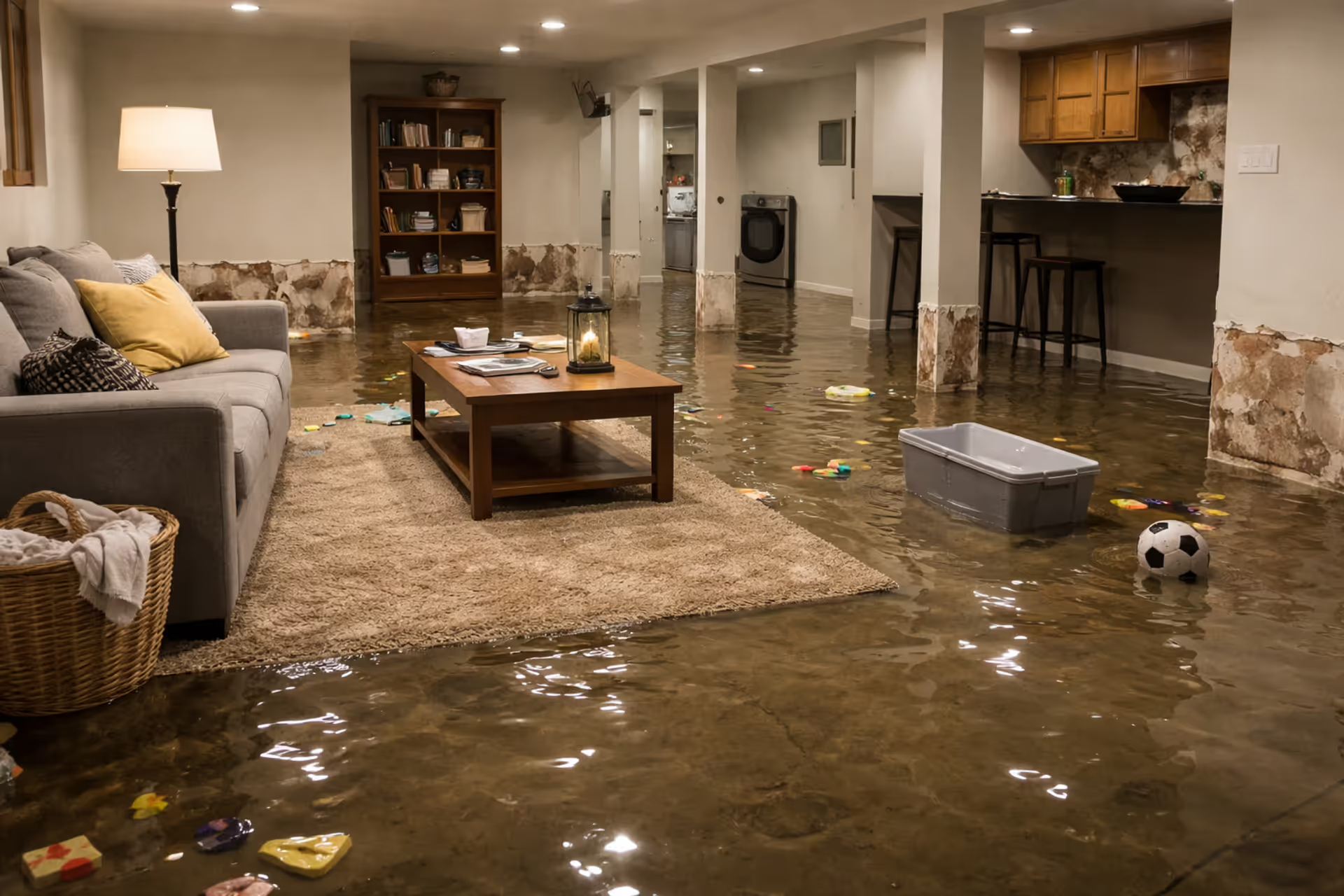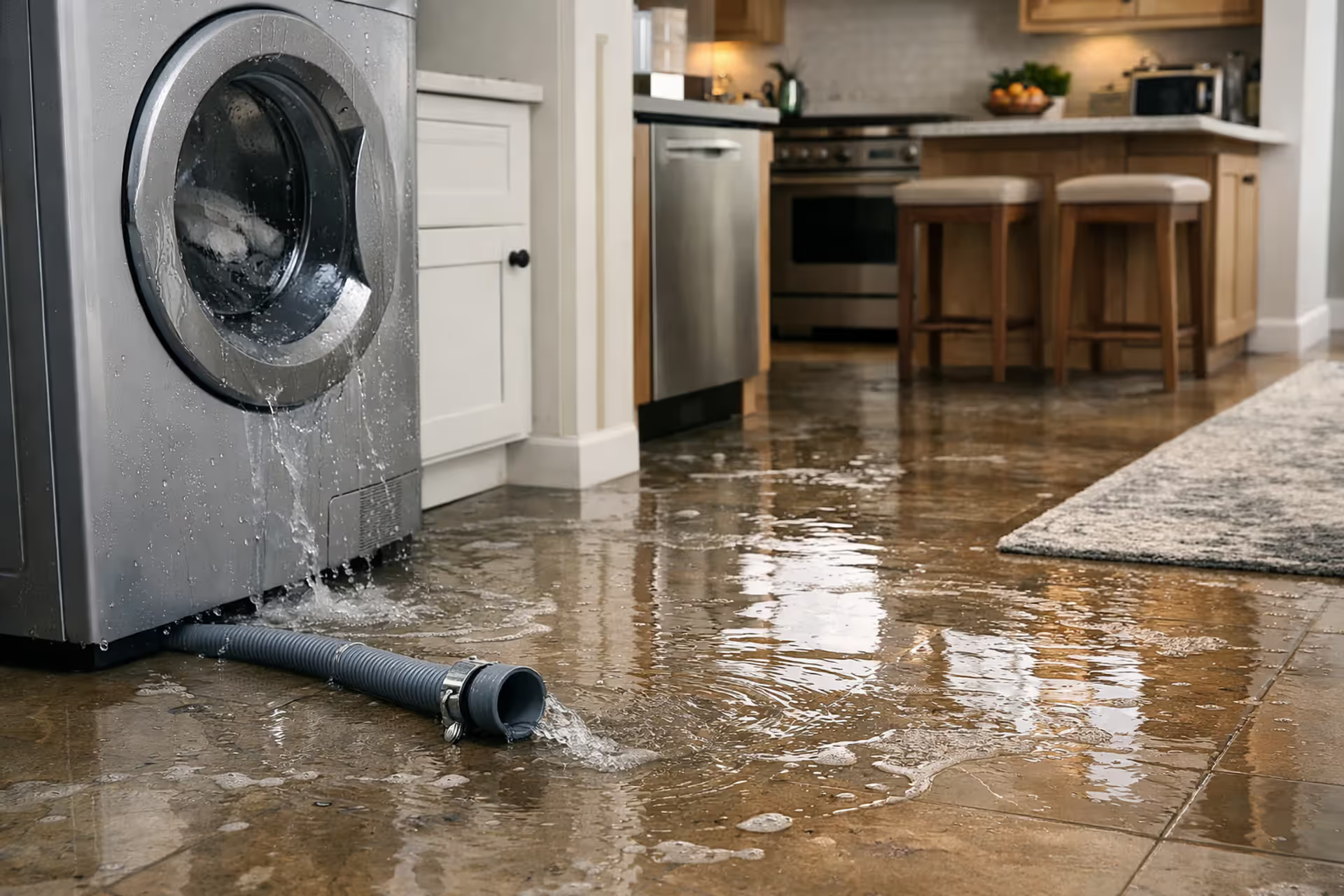
Water damage in a home laundry room and kitchen after a washing machine hose burst
Does Homeowners Insurance Cover Plumbing Repairs?

Content
Last Tuesday at 2 AM, my neighbor's washing machine hose let go. By the time she woke up, water had spread through her laundry room, kitchen, and hallway. She called me panicking: "Will insurance actually pay for this?"
That's the question every homeowner asks when plumbing goes wrong. Here's what catches people off guard—your policy treats a pipe that breaks today very differently from one that's been dripping for three months. Most carriers will step up for genuine emergencies but walk away from problems you should've spotted during regular home maintenance.
The difference between these two scenarios can mean $15,000 in repairs either covered or coming straight from your bank account.
What Plumbing Issues Homeowners Insurance Covers
Your homeowners policy exists for one primary reason: handling disasters you couldn't predict or prevent. When something breaks without warning and water goes everywhere, that's when coverage kicks in.
Sudden and Accidental Water Damage
Think about dwelling coverage as protection for your home's bones—the walls, floors, and structure. A pipe connection fails out of nowhere, water floods your den, ruining oak hardwood and the drywall behind your entertainment center. Insurance steps in to fix those structural elements. Your personal belongings—the couch, TV, and rug that got soaked—fall under a different bucket called personal property coverage.
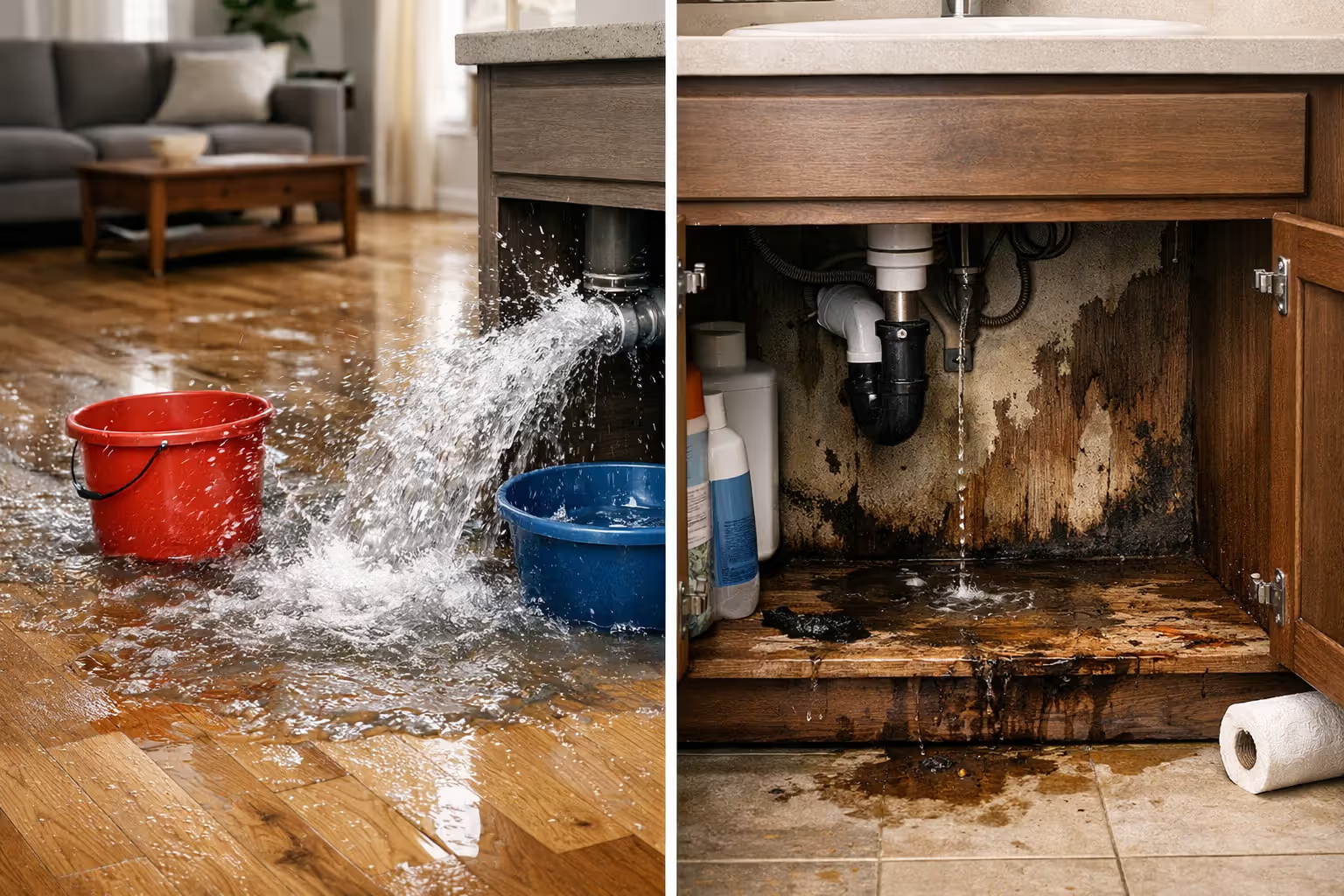
Here's the critical distinction adjusters focus on: how fast did this happen? A bathroom faucet that's been dripping since February, slowly destroying the cabinet underneath? That's on you for ignoring it. But that same faucet's supply line that splits open on a Monday afternoon, dumping water for three hours until you get home? That's the definition of sudden, and it's covered.
Most policies also pay for access costs. Your plumber might need to cut a two-foot hole in the living room wall to reach a failed pipe. Insurance covers patching that hole. What they won't do is fund replacing every old pipe in your house just because one section failed.
Author: Alyssa Coleman;
Source: talero.spotpariz.net
Burst Pipes and Frozen Pipe Damage
Burst pipe claims make up a huge chunk of winter insurance calls. Doesn't matter if the pipe gave out from age, excessive pressure, or January temperatures—the water damage that follows generally qualifies for coverage.
But insurers attach strings to frozen pipe claims. You can't just abandon your house in December with the heat turned off. Nearly every policy requires maintaining indoor temps at 55°F minimum during cold weather. My friend learned this the hard way—she spent Christmas in Florida, turned her thermostat to 50°F to save money, and came home to burst pipes. Her claim? Denied within 48 hours.
What about pipes that freeze but don't actually burst? That's murkier territory. Some carriers will reimburse professional thawing if it prevents imminent rupture. Others call it routine maintenance you should handle yourself. Once that frozen pipe actually bursts and floods your basement, though, coverage becomes straightforward—assuming you kept your house warm enough.
Water Heater Failures
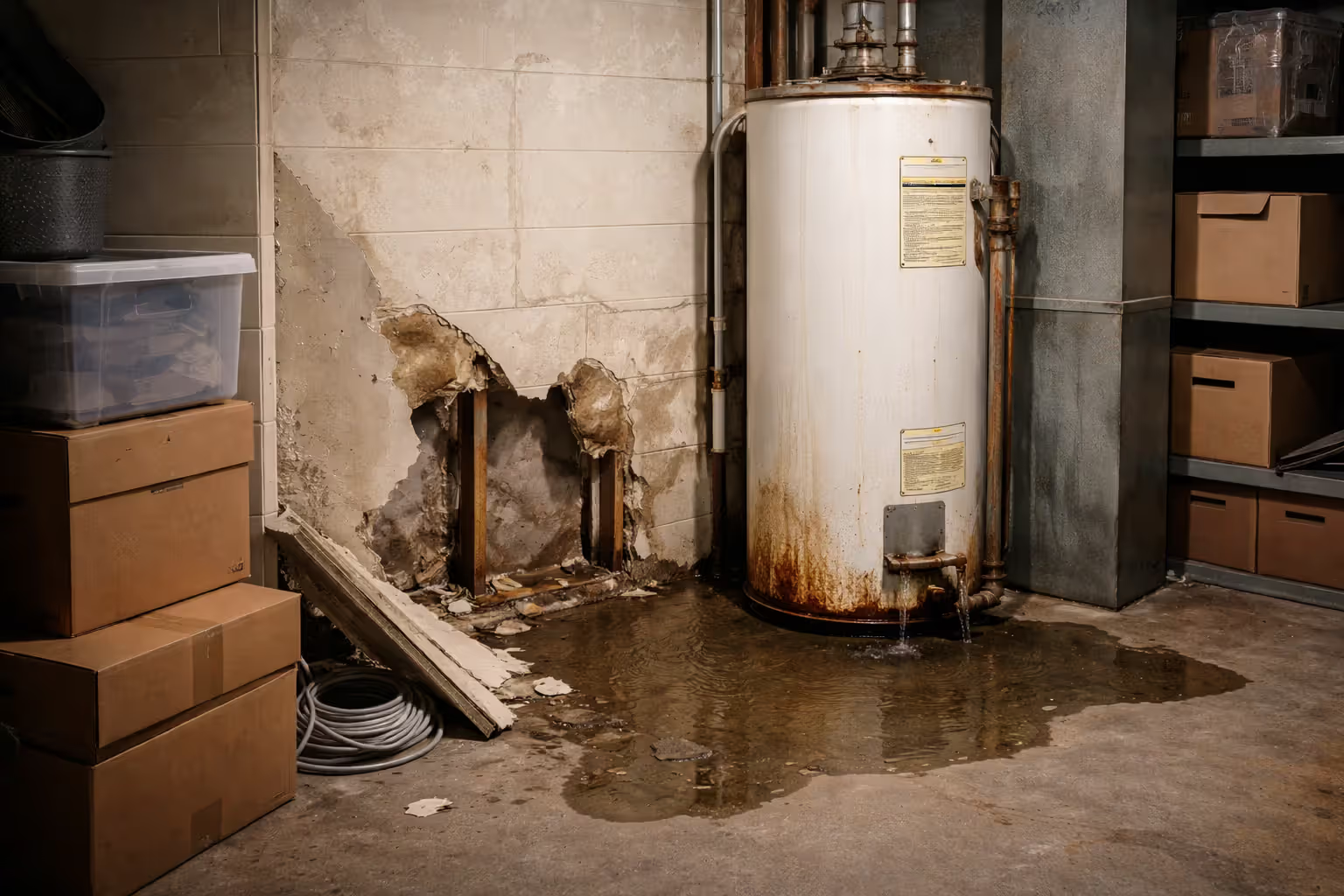
Water heaters quit in two ways, and your coverage shifts depending on which happens. When the tank ruptures unexpectedly, flooding your utility closet or basement, insurance typically handles the water damage to everything the water touched—flooring, drywall, stored belongings. They'll often reimburse for the water heater itself, but here's where it gets tricky: they calculate depreciation.
Your water heater is twelve years old? They might value it at $300 even though replacing it costs $1,400. Equipment breakdown coverage changes this math. For roughly $75 yearly, you get replacement cost instead of depreciated value. If you've got older appliances, that endorsement pays for itself on a single claim.
Now contrast that with a water heater that's been seeping rust-colored water for six weeks, creating a slowly expanding puddle. That's not covered—period. The distinction matters tremendously because water heater failures can easily hit $20,000 once you factor in ruined flooring, wall replacement, and everything stored nearby.
Author: Alyssa Coleman;
Source: talero.spotpariz.net
What Plumbing Problems Are Not Covered
Knowing what your policy excludes prevents the shock of denied claims when you're already stressed about water damage.
Gradual Leaks and Maintenance Issues
Denied plumbing claims almost always trace back to one issue: the damage happened slowly over time. When water seeps persistently for weeks or months, creating rot, mildew, or structural problems, insurers point to the maintenance clause in your policy. You're supposed to inspect your home regularly and fix small problems before they become disasters.
Picture a toilet supply line developing a tiny leak. Water trickles behind the wall for eight months, rotting the studs and creating a mold colony. You finally spot it when the drywall gets spongy. The adjuster investigates and finds advanced wood decay, substantial mold growth, and mineral buildup—all signs this has been happening for months. Claim denied.
Worn fixtures, corroded pipes, and deteriorated gaskets represent normal home maintenance. If your house still has the original 1968 galvanized pipes, that's your cue to budget for replacement now—not to assume insurance will eventually fund it. Your policy isn't a maintenance plan or a warranty. It's disaster protection.
Sewer Backup Without Additional Coverage
Standard homeowners policies contain explicit sewer backup exclusions. Sewage or drain water backing up through your pipes and flooding your basement with contaminated water? Your base policy gives you zero dollars. This surprises countless homeowners who assume all water damage qualifies as covered.
Sewer backups occur when main lines clog, tree roots punch through pipes, or municipal systems overflow during storms. The destruction can be catastrophic—contaminated water destroys everything it contacts, requiring hazmat-level cleanup and disposal.
Water backup coverage fills this significant gap. Depending on your chosen limits, expect to pay $40 to $250 per year for this endorsement. It protects you when sewage backs up, sump pumps overflow, or drains get blocked. Most carriers offer limits from $5,000 to $25,000. Given that the typical sewer backup claim exceeds $9,000, this endorsement makes financial sense if you've got a basement or aging sewer lines.
Flood Damage vs. Plumbing Leaks
You need separate flood insurance through NFIP or private carriers to handle flooding. Your homeowners policy draws a bright line: water originating inside your home's plumbing (potentially covered) versus water entering from outside (excluded).
Heavy rain causes the nearby creek to overflow, sending water into your basement? That's flood damage—not covered. That same rainstorm overwhelms your basement floor drain, causing water from your home's own plumbing system to back up? You might have coverage if you purchased a water backup endorsement.
This distinction gets technical when groundwater seeps through foundation cracks during heavy rainfall. Adjusters examine the water's source and path. Surface water coming through windows, doors, or cracks due to exterior flooding gets excluded. Water from overwhelmed interior plumbing gets evaluated differently.
How Deductibles and Coverage Limits Apply to Plumbing Claims
Plumbing claims touch multiple parts of your homeowners policy, and each section has unique limits and deductible rules.
Dwelling coverage—the amount it would cost to rebuild your entire house—applies to structural damage from plumbing failures. Say your home carries $400,000 in dwelling coverage and a burst pipe causes $30,000 in damage to floors, ceilings, and walls. You'll pay your deductible first (commonly $1,000 to $2,500), then insurance covers what's left.
Your personal property coverage, usually 50-70% of dwelling coverage, protects belongings destroyed by water. If that same burst pipe ruins $6,000 worth of furniture and electronics, personal property coverage applies. Some policies hit you with one deductible per incident, while others apply separate deductibles to dwelling and personal property losses. This isn't standardized—check your specific policy documents.
Additional living expenses kick in when plumbing damage forces you out during repairs. Water damage requires three weeks in a hotel while contractors dry out and rebuild? This coverage reimburses those expenses, typically up to 20-30% of your dwelling limit.
Water backup endorsements carry their own smaller limits—commonly $10,000 to $25,000—and sometimes involve separate deductibles. Some carriers offer these endorsements with zero deductible, while others apply your standard deductible or create a dedicated $500 to $1,000 water backup deductible.
Equipment breakdown endorsements change how insurers calculate payment for failed appliances. Without this coverage, you get actual cash value—what your used water heater is worth after depreciation. With equipment breakdown coverage, you receive replacement cost—enough money to buy a comparable new unit. For a twelve-year-old water heater that originally cost $1,300, actual cash value might be $350, while replacement cost provides the full $1,300 (minus your deductible).
How to File a Plumbing Insurance Claim
How quickly you act and how thoroughly you document determines whether your claim succeeds or fails.
Document the Damage Immediately
Grab your phone before you touch anything. Capture photos and videos of everything—the water source, how deep the standing water is, damaged materials, and affected belongings. Time-stamped images prove exactly what happened and when. If it's safe, photograph the actual failure point—that burst pipe, the broken water heater, or the appliance connection that gave out.
Make a detailed list of damaged items, including brand, approximate age, and what you paid for them. Original receipts help your case, but insurers accept reasonable value estimates even without documentation. For structural damage, photograph walls, floors, and ceilings from different angles. You'll appreciate having these images if disagreements arise later about coverage or repair costs.
Stop additional water if you can safely do so. Turn off the main water valve or the supply line feeding the failed fixture. Insurance companies require you to prevent further damage once you've discovered the problem. If you leave water running because you can't be bothered to shut it off, they'll deny coverage for damage that accumulated after you found the leak.
Contact Your Insurance Company
File your claim within 24-48 hours of discovering the problem. Most carriers operate 24/7 claims hotlines and have mobile apps for immediate reporting. Waiting more than a week to report raises immediate questions about when the damage actually occurred.
When you make that first call, stick to basic facts: what broke, when you found it, what got damaged, and what you've done to stop it. Don't speculate or make statements like "I think this might have been leaking a while." State only what you directly observed. The adjuster will investigate causes and timelines—that's their job.
Ask specifically about emergency mitigation. Many policies cover immediate water removal and drying to prevent mold. Some insurers dispatch their preferred vendors directly, while others require you to hire contractors and submit receipts later. Get clarity on whether you need pre-approval before spending money on emergency services.
Work with Adjusters and Contractors
An adjuster will inspect your property within 2-5 business days for substantial claims. They'll examine where the failure occurred, measure the damage extent, and determine what's covered. Be there during this inspection to answer their questions and make sure they see all affected areas.
Adjusters frequently overlook secondary damage—water that seeped under baseboards into adjacent rooms, wet insulation hiding inside walls, or moisture that traveled along floor joists. Politely make sure the adjuster documents everything. If you discover additional damage after their initial visit, report it right away for a supplemental assessment.
Collect multiple contractor bids for repairs. You're not obligated to use the insurer's preferred contractors, though doing so often makes the process smoother. If you hire your own contractor and their bid substantially exceeds what the adjuster estimated, expect the insurer to request another inspection or invoke the appraisal clause buried in your policy.

Author: Alyssa Coleman;
Source: talero.spotpariz.net
When to Add Extra Plumbing Coverage
Standard policies leave gaps you can fill inexpensively with endorsements.
Water backup coverage becomes essential if you've got a basement, live somewhere with aging municipal sewer infrastructure, or have mature trees whose roots threaten your sewer line. The $75 to $150 annual cost barely registers compared to potential $10,000 to $25,000 sewer backup losses. Choose at least $10,000 in limits; $25,000 offers better protection for finished basements or valuable storage areas.
Equipment breakdown endorsements make sense for homes with aging water heaters, sump pumps, or well pumps. For $50 to $100 yearly, you receive replacement cost coverage rather than depreciated value. This endorsement typically extends beyond plumbing to include HVAC systems, built-in appliances, and electrical panels.
Service line coverage protects underground pipes and wires running between your house and the street. When your water service line breaks beneath the front yard, repairs can hit $4,000 to $12,000. Standard policies exclude these underground utilities. Service line coverage, available for $25 to $75 per year, handles repairs or replacement of water lines, sewer lines, electrical lines, and sometimes propane or natural gas lines. Limits typically span $5,000 to $25,000.
Homes with finished basements should consider boosting personal property coverage limits. Standard policies often cap basement personal property at $2,500 to $5,000 for water damage. If your basement holds a home theater, exercise equipment, or valuable stored items, you need higher limits or scheduled property endorsements.
Common Mistakes That Lead to Denied Plumbing Claims
The number one misconception I encounter is homeowners believing insurance covers every type of water damage regardless of what caused it.I watch claims get denied daily because water damage accumulated over weeks or months instead of happening suddenly. Timeline is absolutely critical. If you can't identify when the leak started—'I'm not really sure, maybe it's been a few weeks?'—that signals gradual damage to us. Document everything the moment you discover water, and report it that same day. Those two actions alone prevent the majority of denials I see
— Jennifer Martinez
Most claim denials stem from mistakes you can easily avoid.
Delayed reporting triggers suspicion. You discover a plumbing leak Monday morning but don't report it until Thursday afternoon? Adjusters immediately question whether you're being truthful about the timeline. They may conclude the damage is older and gradual rather than sudden and accidental.
Failing to stop ongoing damage voids coverage for preventable destruction. You discover a burst pipe Saturday morning but don't shut off the water or contact help until Monday? The insurer denies coverage for everything that happened after Saturday morning. Policies require taking reasonable protective steps once you're aware of a problem.
Weak documentation undermines claims. Without photos showing standing water, the failure point, and initial damage, you depend entirely on what the adjuster thinks when they arrive. Adjusters showing up days later see dried-out damage and may significantly underestimate severity.
Mixing covered and non-covered damage in one claim creates serious problems. You file a claim for a burst pipe but also mention "we've had some dampness in that bathroom for a few months"? You just suggested gradual damage to your adjuster. Keep claims focused exclusively on the sudden, unexpected event.
Neglecting obvious maintenance gives insurers ammunition to deny claims. If your claim reveals you haven't drained your water heater in twenty years, ignored visible corrosion, or never replaced supply lines showing clear wear, the insurer argues you contributed to the failure through neglect.
Covered vs. Not Covered Plumbing Issues
| Issue | Typically Covered? | Notes/Conditions |
| Burst pipe (sudden failure) | Yes | Winter claims require maintaining 55°F+ indoor temps; includes resulting water damage |
| Frozen pipe damage | Yes | Only when home kept adequately heated; damage from insufficient heating gets excluded |
| Water heater rupture | Yes | Water damage covered; heater value calculated with depreciation unless equipment breakdown endorsement purchased |
| Gradual leak/seepage | No | Classified as maintenance neglect; excludes damage from persistent moisture |
| Corroded/worn pipes | No | Standard wear and tear; homeowner must replace failing pipes proactively |
| Sewer backup | No* | Standard policy excludes; requires water backup endorsement for coverage |
| Sump pump failure | Partial | Pump failure itself excluded; water damage may be covered with water backup endorsement |
| Toilet overflow (internal malfunction) | Yes | Sudden overflow from plumbing malfunction typically covered |
| Service line break (underground) | No* | Standard policy excludes; requires service line endorsement for underground utility repairs |
| Flood damage | No | Separate flood insurance required; groundwater and surface water specifically excluded |
| Failed caulking/grout | No | Maintenance responsibility; damage from deteriorated seals excluded |
| Tree root pipe damage | Partial | Sudden pipe break may qualify; gradual root intrusion classified as maintenance |
*Coverage available through policy endorsements
FAQ About Homeowners Insurance and Plumbing
Understanding plumbing coverage requires recognizing what your policy actually promises versus what most homeowners assume it covers. Your insurance exists to handle sudden, unforeseeable failures but draws firm boundaries around your maintenance responsibilities and damage that develops gradually. Grasping these distinctions before water starts pooling on your floor helps you make smart decisions about which coverage endorsements to purchase, when to report claims, and how to document damage properly.
Review your policy every year, paying special attention to exclusions and available endorsements. Homes with finished basements, plumbing systems over 30 years old, or locations vulnerable to sewer backups gain substantial value from water backup and service line coverage. These endorsements cost less than most people's monthly coffee budget but shield you from five-figure catastrophes.
When plumbing disasters hit, your response speed determines outcomes. Immediately shut off water, thoroughly document everything, and report claims within 24 hours. These straightforward actions dramatically improve both claim approval rates and settlement amounts. Your insurance policy functions as a safety net for genuine emergencies, not a substitute for home maintenance—understanding that difference prevents the frustration of denied claims precisely when you need financial protection most.