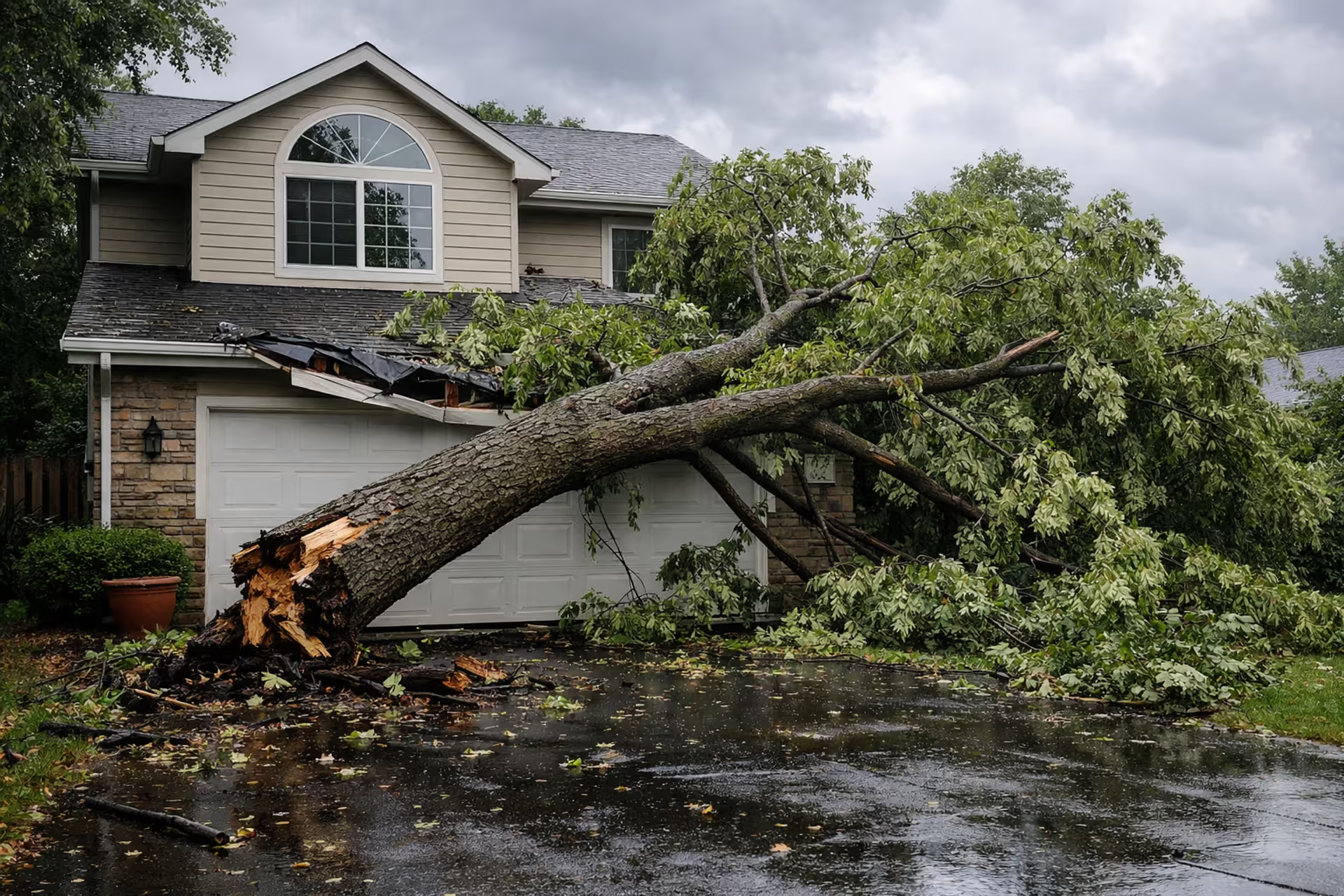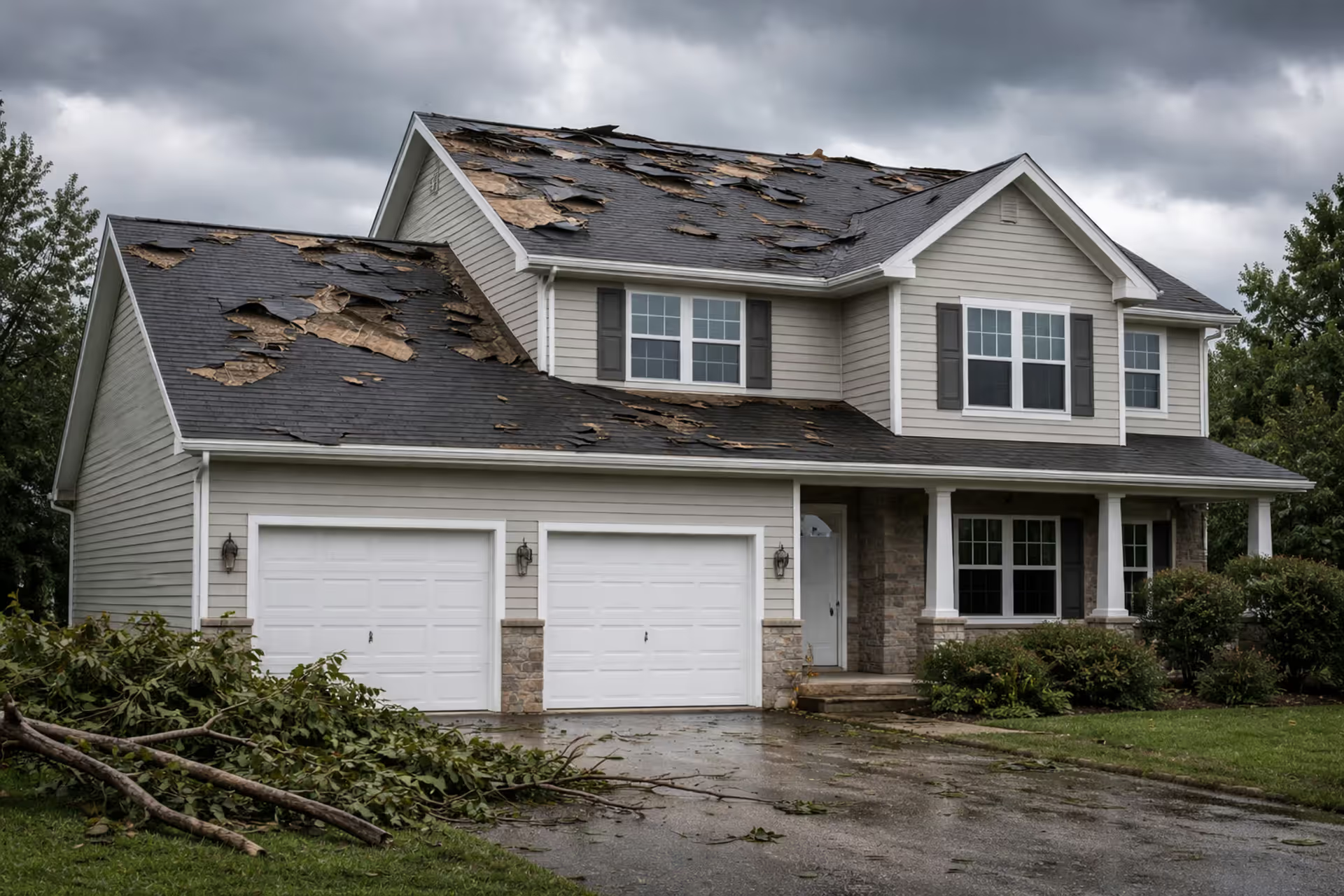
Storm-damaged house roof with missing shingles in a suburban neighborhood
Does Homeowners Insurance Cover Roof Replacement?

Content
A damaged roof brings two immediate worries: keeping water out of your house and figuring out who'll pay the repair bill. You've been sending premium checks for years—surely your insurance handles this, right? Not necessarily. Whether you'll get that check depends on three things: what wrecked your roof, how many birthdays it's celebrated, and which coverage options you picked when you signed up.
Your insurer won't just write you a check because your roof needs work. They'll investigate the cause, review your maintenance history, and apply coverage rules you probably haven't thought about since you bought your policy. Learning these rules now—before water's dripping into your living room—means you'll know exactly what documentation to gather and which battles are worth fighting.
When Homeowners Insurance Covers Roof Replacement
Your policy responds to sudden disasters, not gradual decline. Insurers differentiate sharply between "something unexpected happened" and "your roof got old." That distinction determines everything.
Covered Perils and Damage Types
Wind tops the list of approved roof damage causes. A storm tears through at 70 mph, rips off thirty shingles, and rain floods your attic? You're covered. A branch crashes through during that same storm? Also covered. Wind claims account for roughly 30% of all homeowners insurance payouts, making them the most frequent roofing-related expense insurers handle.
Hail ranks second. Those ice chunks pummeling your roof during a Texas thunderstorm or Colorado spring storm? Covered. Hail creates distinct damage patterns—dings on metal flashing, bruising on shingles where granules get knocked loose, cracked vents. Adjusters know what fresh hail damage looks like versus old deterioration.
Fire coverage extends beyond your own kitchen mishaps. Your neighbor's house fire sends embers onto your roof and ignites your shingles? Covered. Lightning strikes your chimney and cracks the surrounding roof structure? That's in. Electrical fires that start in your attic and burn through the roof deck? Also covered, though you'll want to check if your policy limits fire damage payouts.
Northern homeowners know snow and ice loads can buckle roof trusses. When accumulation exceeds your roof's load rating—maybe three feet of wet snow after a blizzard—and your roof sags or collapses, insurance responds. The catch: your roof must have been properly maintained and built to code.
Falling objects create coverage, but context matters. Airplane parts, construction debris from a neighboring site, satellite dishes torn loose in storms—these qualify. But that dead tree you've been meaning to remove for two years? If it finally topples onto your roof, expect questions about why you didn't address an obvious hazard.
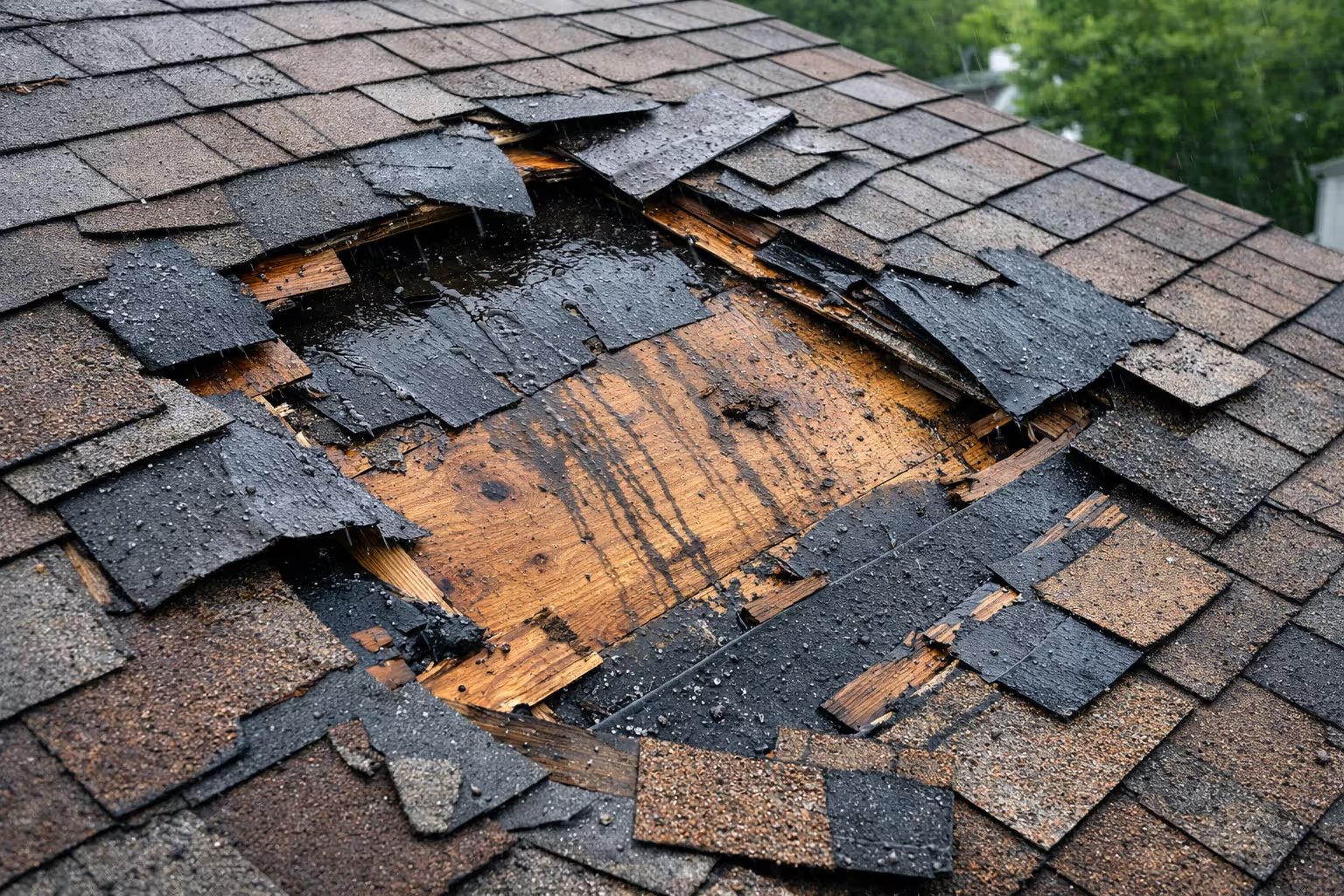
Water damage through the roof gets tricky. Wind must create the opening first. Wind tears off shingles, then rain enters—covered. Your roof just leaked because the twenty-year-old flashing finally rusted through—not covered.
Author: Caroline Halstead;
Source: talero.spotpariz.net
Age and Condition Requirements
Here's where many claims hit a wall. Age alone won't disqualify your roof—a well-maintained 18-year-old roof with storm damage still qualifies for coverage. But insurers now routinely inspect roofs on older homes before issuing new policies or renewals.
They're checking for curled shingles, missing granules, cracked flashing, moss growth, and sagging sections. Find any of those during inspection? The insurer might require repairs before coverage starts, switch you to actual cash value coverage only, or decline to insure you entirely.
Many carriers automatically convert from replacement cost to actual cash value once your roof hits 10, 15, or sometimes 20 years old. Check your declarations page—there's usually a line specifying your roof coverage type. If it says "ACV" instead of "RCV," you're getting depreciated payouts regardless of the damage cause.
Pre-existing conditions void subsequent claims. Say an inspector photographs three missing shingles in June. You don't fix them. October brings a windstorm that peels off two dozen more. The adjuster reviews that June photo and argues your roof's pre-existing weakness contributed to the failure. Your payout gets reduced or denied entirely.
When Your Roof Replacement Won't Be Covered
Claim denials blindside homeowners who assumed "I pay premiums, they pay claims" represented the full agreement. Your policy contains pages of exclusions—situations where they explicitly won't pay.
Normal Wear and Tear Exclusions
Roofs have expiration dates. Architectural shingles typically last 25-30 years. Three-tab shingles give you 15-20 years. When your roof simply reaches the end of its service life and starts failing, that's on you.
Granule loss illustrates this perfectly. Brand new asphalt shingles have thick granule coatings that protect the underlying material. Over fifteen years, weather gradually wears those granules away. You'll see them accumulating in gutters. Eventually, the exposed asphalt deteriorates and cracks. This slow decline over many years? Not covered. Sudden granule loss across multiple shingles after a hailstorm? That's covered.
UV radiation breaks down roofing materials constantly. Shingles in Phoenix age faster than identical shingles in Seattle because of sun exposure differences. This expected deterioration falls under wear and tear—no coverage.
Shingles naturally curl, cup, and become brittle as they age. Even if wind then blows off these degraded shingles, adjusters often deny claims. They'll argue the wind wouldn't have caused damage if the shingles weren't already compromised by age. You'll find yourself in arguments about whether 40 mph winds should affect 17-year-old shingles.
Flat roofs with standing water face denials. Water should drain off within 48 hours. Persistent ponding indicates design flaws, settling foundations, or blocked drains—maintenance issues, not insurable events.
Maintenance-Related Denials
Insurers expect you to act like your property matters to you. Neglect visible problems, and they'll use that against you during claims.
Clogged gutters cause ice dams in winter climates. Ice builds up at the roof edge, forces water backward under shingles, and leaks into your walls. The adjuster sees those leaf-packed gutters and denies your claim for failing to maintain basic drainage. "You could have prevented this with a $150 gutter cleaning twice a year" becomes their defense.
Flashing around chimneys, skylights, and vents requires periodic inspection and repair. Spot rust forming or caulk deteriorating? Fix it immediately. Wait until water damage appears, and the adjuster documents your negligence in their report. They'll show photos of obviously deteriorated flashing and argue you allowed preventable damage to worsen.
Tree branches scraping your roof during every windstorm represent obvious risks. You knew about them. You did nothing. When they finally break through, the insurer reduces your payout proportionally or denies the claim entirely for failure to mitigate known hazards.
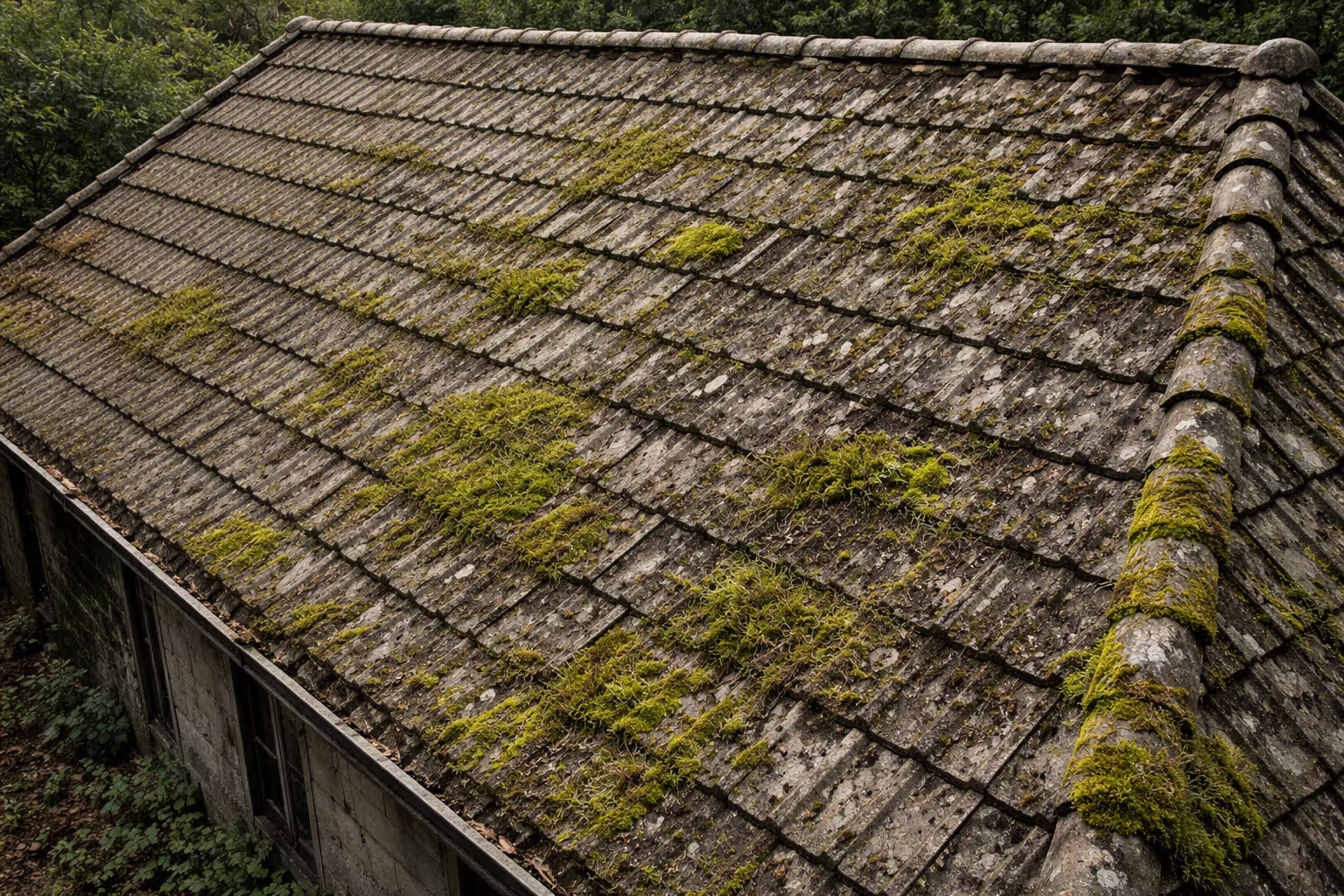
Moss and algae aren't just cosmetic. They retain moisture against shingles, accelerating deterioration. Left untreated for years, they create conditions where shingles fail prematurely. Adjusters photograph that moss carpet and argue your roof failed due to neglect.
Author: Caroline Halstead;
Source: talero.spotpariz.net
How Insurance Determines Your Roof Claim Payout
Two neighbors experience identical hail damage. One receives a check for $16,000. The other gets $8,500 for the exact same repairs. The difference? Coverage type determines everything about your settlement amount.
Actual Cash Value vs. Replacement Cost Coverage
Replacement cost means what it costs today to install a comparable new roof. Damage estimates at $17,000? You get $17,000 minus your deductible. Period. No arguments about how old your roof was.
Actual cash value subtracts depreciation first. The insurer calculates your roof's remaining useful life, then reduces your payout by whatever percentage they claim you'd already "used up." Your 10-year-old roof with a rated 25-year lifespan? They'll depreciate it by 40% (10 ÷ 25 = 0.40), cutting your payout substantially.
Replacement cost claims typically involve two payments. Check one covers actual cash value—replacement cost minus depreciation. You can't touch that second depreciation check until you complete repairs and submit invoices proving you actually replaced the roof. This prevents homeowners from pocketing money without making repairs.
Guaranteed replacement cost coverage—rare now for roofs—pays full replacement costs regardless of age. A 20-year-old roof gets the same payout as a 5-year-old roof. These policies cost considerably more upfront but eliminate depreciation disputes entirely.
Depreciation and Your Settlement Amount
Most insurers apply straight-line depreciation: divide roof age by expected lifespan, multiply the result by replacement cost, and subtract that amount. A 12-year-old roof with a 24-year expected life gets depreciated 50%.
Actual Cash Value vs. Replacement Cost Value: Payout Comparison
| Scenario Element | Actual Cash Value | Replacement Cost Value |
| Full replacement estimate | $18,000 | $18,000 |
| Roof age | 12 years | 12 years |
| Rated roof lifespan | 25 years | 25 years |
| Depreciation calculated | 48% | 0% |
| Amount subtracted for depreciation | -$8,640 | $0 |
| Pre-deductible amount | $9,360 | $18,000 |
| Your deductible applied | -$2,500 | -$2,500 |
| Check you receive | $6,860 | $15,500 |
| What you must pay yourself | $11,140 | $2,500 |
That $8,000+ difference explains why coverage type matters desperately. Actual cash value forces you to come up with substantial additional funds. Replacement cost limits your exposure to just the deductible amount.
Material choice affects these calculations. Metal roofs rated for 50 years depreciate at 2% annually. Architectural shingles rated for 30 years depreciate at roughly 3.3% annually. Basic three-tab shingles at 20-year lifespans lose 5% of value each year. Adjusters reference manufacturer specifications when calculating depreciation rates.
Inadequate documentation of pre-loss condition causes more claim reductions than anything else I see. Homeowners who can't produce photos, inspection reports, or maintenance records from before the damage get hammered with depreciation or outright denials for supposedly pre-existing deterioration. The burden of proving your roof was well-maintained falls entirely on you
— Sarah Mitchell
Understanding Deductibles for Roof Replacement Claims
Your deductible represents the portion you're responsible for paying yourself. For roof damage, this amount often determines whether filing even makes financial sense.
Standard homeowners policies use either flat-dollar deductibles ($1,000, $2,000, $5,000) or percentage-based deductibles calculated from your dwelling coverage limit. That $250,000 home with a 2% deductible? You're paying the first $5,000 of any claim yourself.
Storm-related deductibles frequently differ from your base deductible. Insurers in Texas, Oklahoma, Kansas, and other hail-prone states commonly impose separate wind/hail deductibles ranging from 1% to 5% of dwelling coverage. Your policy might show a $1,500 standard deductible but a 3% wind/hail deductible—that's $9,000 on a $300,000 home. Many homeowners discover this unhappy surprise only when filing claims.
Coastal properties face hurricane deductibles that activate whenever the National Weather Service officially declares a hurricane in your region. These run 2% to 10% of dwelling coverage, potentially reaching $15,000 to $30,000 for expensive homes. Even if the storm weakens to tropical storm status before reaching you, that hurricane deductible still applies if it was a named hurricane when first declared.
Some carriers reduce deductibles if you install impact-resistant materials. Class 4-rated shingles—tested to withstand 2-inch hail—can lower your wind/hail deductible by 50% or reduce premiums enough to offset their higher installation costs within 8-10 years.
Run the math before filing claims. Repair costs $5,000, but your deductible is $3,500? You're netting only $1,500 while creating a claims history that'll inflate premiums for years. Sometimes paying out-of-pocket costs less long-term than involving insurance.
Filing a Roof Replacement Insurance Claim
The claims process starts when you discover damage. What you do in the first 72 hours substantially affects whether you'll get paid fairly or fight denials for months.
Documentation You'll Need
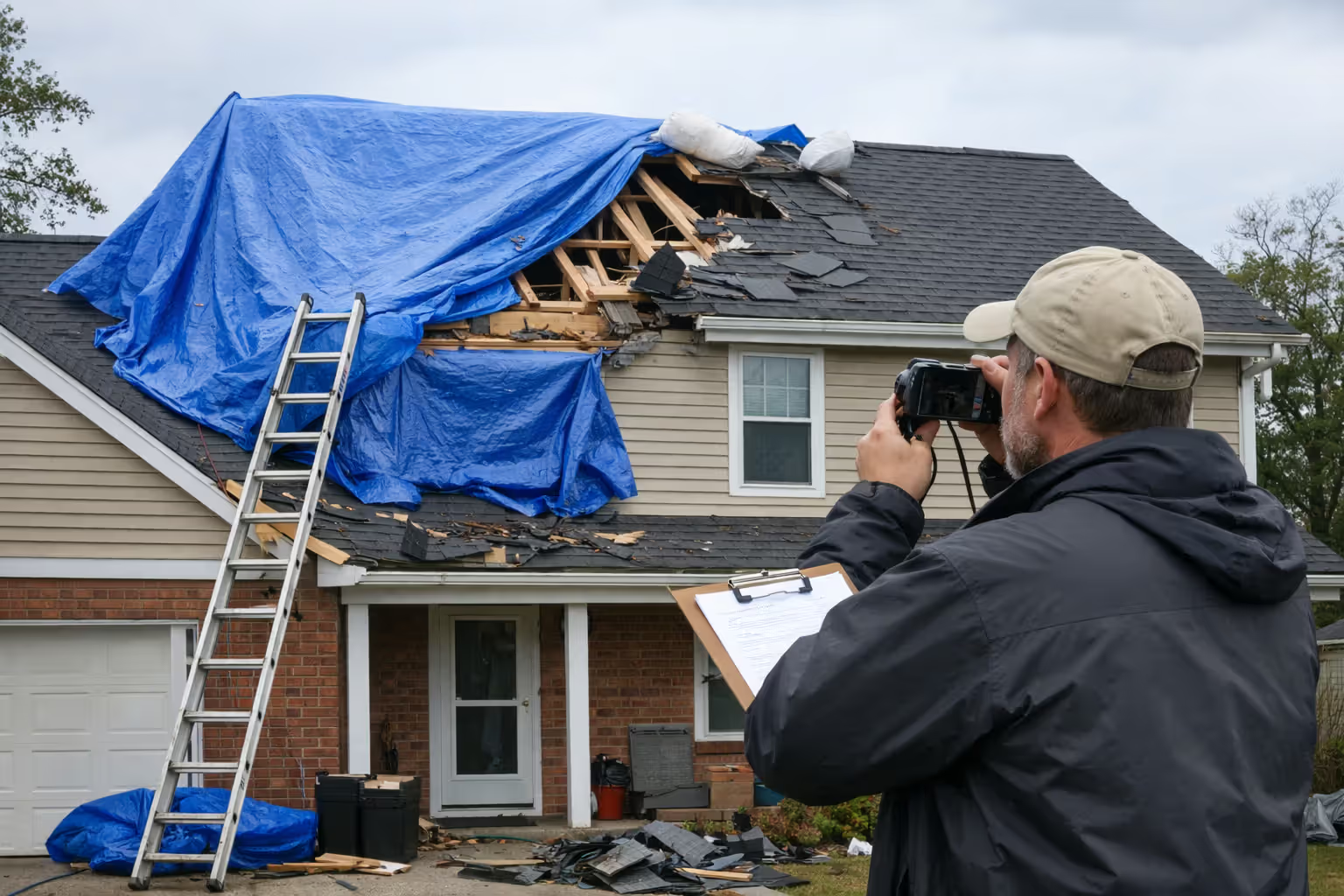
Photograph everything immediately. Grab your phone and shoot both wide-angle views showing your whole roof and zoomed-in shots of individual damaged areas. Enable timestamp features so photos prove when damage occurred. Shoot from multiple angles—damage invisible from your driveway might show clearly from the backyard.
Dig out previous roof inspection reports, installation receipts, and maintenance records. That file proves you maintained your roof properly before disaster struck. Receipts for gutter cleanings, moss treatments, or minor repairs demonstrate responsible ownership—exactly what adjusters want to see.
Hire a licensed roofing contractor for an independent inspection. Their written assessment should specify damage extent, likely cause, affected square footage, and estimated replacement cost. Some contractors offer "free inspections" but provide only verbal estimates. Pay $200-400 for a detailed written report—it's worth every penny during negotiations.
Preserve physical evidence when practical. Those baseball-sized hail stones that just pummeled your neighborhood? Photograph several next to a quarter or ruler for size reference, then freeze them. They'll melt, but photos with size references prove what hit your roof. Keep damaged shingles showing clear impact patterns or wind tears.
Make temporary repairs to prevent additional damage—you're required to mitigate further losses. Throw tarps over exposed areas, but photograph everything first. Save receipts for emergency materials; insurers reimburse reasonable mitigation expenses. Photograph your temporary repairs to show what you did to protect the property.
Author: Caroline Halstead;
Source: talero.spotpariz.net
Working with Adjusters and Contractors
Report claims quickly—policies typically require notification within specific timeframes, often 60 days but sometimes less. Provide basic facts: what happened, when it happened, and what's damaged. Skip speculation about causes or comments about your maintenance habits.
Your insurer assigns an adjuster who'll schedule an inspection, typically within one week of filing. Be there. Walk the property with them. Point out every damaged area—adjusters sometimes miss damage depending on sun angles, viewing positions, or time constraints. They're managing dozens of claims; you're focused on just yours.
For claims exceeding $15,000-20,000, consider hiring a public adjuster. They represent you, not the insurance company, typically charging 7%-12% of your settlement. They know what documentation convinces insurers, how to challenge lowball estimates, and when to escalate disputes. Licensed contractors estimate public adjusters increase settlements by an average of 40%-70%, easily justifying their fees on substantial claims.
Collect at least three written estimates from licensed contractors before accepting any settlement. Adjusters often use software generating estimates below actual market rates in your area. Three detailed bids from local contractors with solid reputations provide leverage when the insurance estimate comes in suspiciously low.
Avoid contractors promising to "waive" your deductible or "rebate" it later. This constitutes fraud in most jurisdictions—they're inflating claim amounts to compensate, which violates insurance contracts. If discovered, your entire claim can be denied and coverage potentially canceled.
Common Claim Mistakes to Avoid
Never sign contingency agreements letting contractors represent you to your insurer. You control the claims process. Contractors should estimate repairs and complete work, not negotiate your settlement. Once they have authorization to represent you, they control strategy and communications—often poorly.
Skip starting repairs before the adjuster inspects unless emergency mitigation is critical. Replacing damaged sections before documentation eliminates the evidence supporting your claim. Adjusters can't assess what they can't see. Make temporary weatherproofing repairs only.
Don't accept initial settlement offers without scrutiny. First offers often represent minimum payouts insurers expect to make. Review line-by-line. Compare material costs, labor rates, and square footage calculations against your contractor estimates. Dispute any discrepancies with documentation.
Never assume low initial assessments mean denial. You can dispute estimates, request re-inspections with your contractor present, and escalate through formal appeals processes. Persistence often yields significantly higher settlements.
Don't exaggerate or misrepresent anything. Claiming wind damage when you know your roof leaked from age constitutes fraud. Insurers investigate suspicious claims thoroughly and can deny coverage entirely plus cancel your policy if they catch misrepresentation.

Author: Caroline Halstead;
Source: talero.spotpariz.net
Coverage Limits and Policy Caps on Roof Claims
Your dwelling coverage limit caps total structural damage payments, roofs included. A home insured for $300,000 can't receive more than that amount even if total reconstruction costs $350,000.
Some policies impose roof-specific sublimits. These caps might restrict roof claims to $15,000 maximum or force actual cash value coverage only for roofs regardless of your broader policy's replacement cost coverage. Sublimits appear most commonly for older roofs (15+ years) or homes in high-risk coastal regions. They're buried in policy endorsements—you need to read carefully to spot them.
Cosmetic damage clauses have proliferated recently. These allow insurers to pay only for functional repairs without aesthetic matching. Hail damages 40% of your roof? They'll pay to replace just the damaged section, even if those new shingles don't remotely match the weathered existing ones. Your home looks patchwork, but the insurer fulfilled their obligation as written.
Code upgrade coverage (also called law and ordinance coverage) addresses building code changes since your original roof installation. New codes might require thicker decking, different ventilation, or improved flashing methods. Standard policies exclude these upgrades. You need specific law and ordinance coverage endorsements, typically capped at 10%-25% of dwelling coverage. Without it, you're paying thousands extra for code compliance out of pocket.
Extended replacement cost coverage boosts your dwelling limit by 25%-50% automatically if replacement costs exceed your policy face amount. This buffer protects against construction cost inflation and unexpected complications. Between 2020 and 2024, roof replacement costs jumped roughly 35% due to material shortages and labor costs—extended replacement cost coverage would have protected homeowners whose policies became inadequate.
Review coverage limits annually. Construction costs inflate 4%-8% yearly in normal markets, more during supply disruptions. Policies written five years ago might seriously underinsure your home today.
FAQ: Homeowners Insurance and Roof Replacement
Roof replacement claims rank among the largest payouts you'll likely request from your insurer. The line between full coverage and denial often comes down to documentation quality, maintenance records, and understanding your specific policy terms before damage happens.
Pull out your policy today while your roof remains intact. Verify whether you carry actual cash value or replacement cost coverage—this distinction alone can mean $8,000-12,000 difference in your payout. Check for separate wind/hail deductibles that exceed your standard deductible. Look for sublimits or age-based restrictions that could slash your settlement.
Start maintaining detailed maintenance records immediately. Photograph your roof's condition once or twice yearly, creating visual evidence proving proper care. Save every invoice for inspections, repairs, gutter cleanings, and moss treatments. This documentation becomes your defense when adjusters question pre-existing conditions.
Calculate the long-term financial impact before filing smaller claims. That $4,000 repair with a $2,500 deductible nets you $1,500 but creates claims history inflating premiums for three to five years. The premium increases often cost more than just paying repairs yourself. Reserve insurance for major damage creating genuine financial hardship.
When significant damage strikes, move fast to document everything comprehensively, prevent additional losses with temporary repairs, and file promptly. The more evidence you compile showing sudden damage from a covered peril to a well-maintained roof, the stronger your position for receiving the full coverage your policy promises.