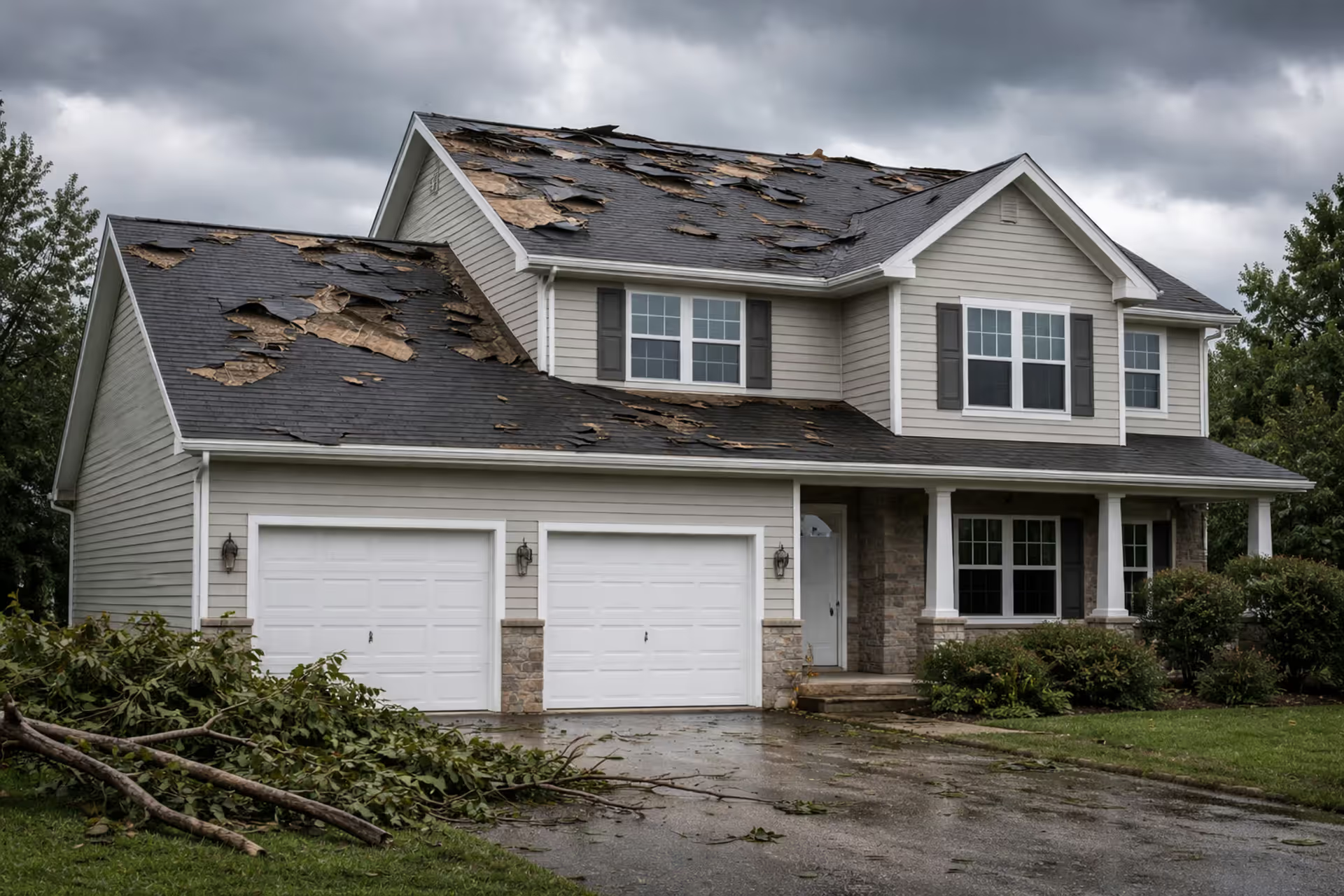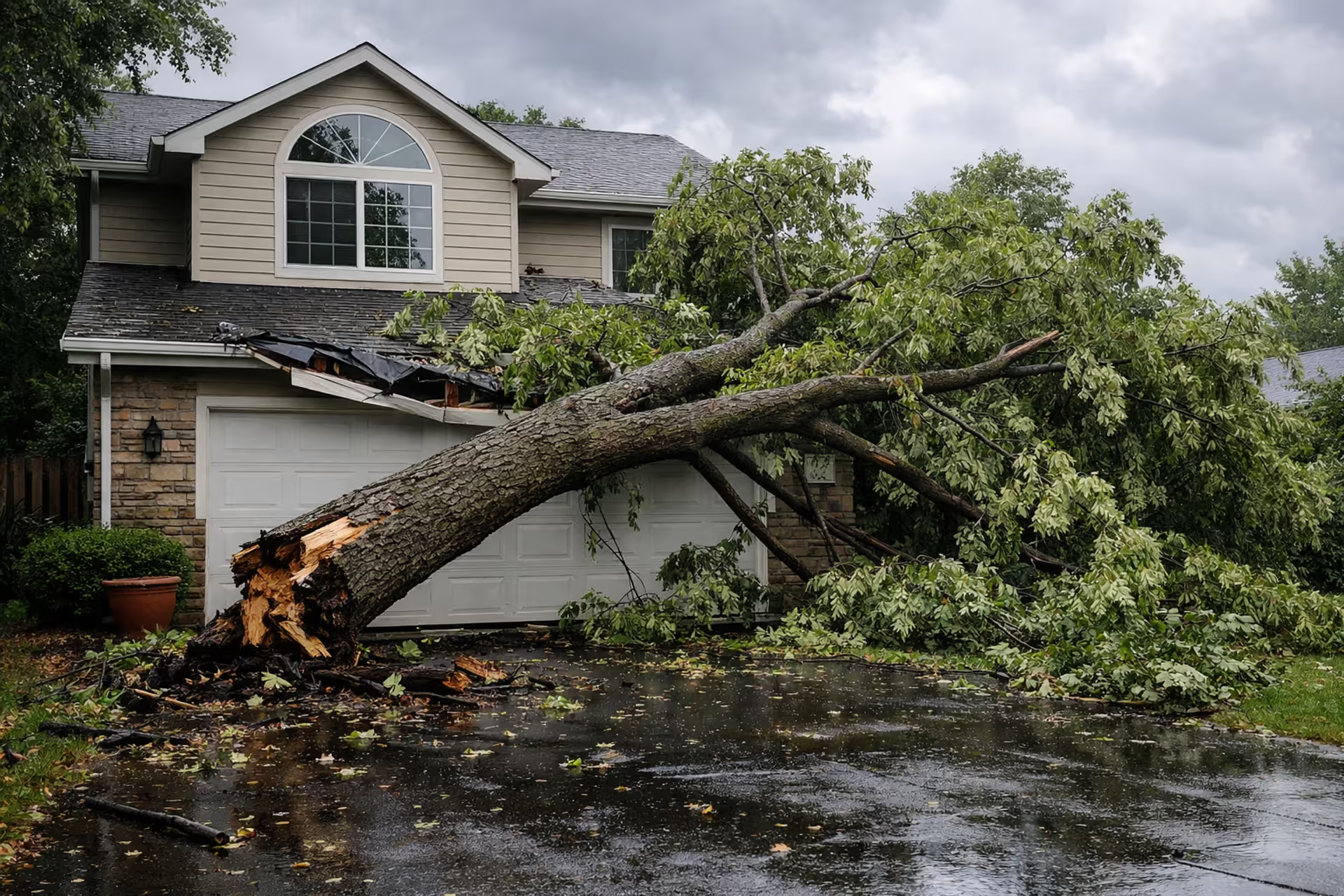
Storm-damaged tree on a suburban house garage after a thunderstorm
Does Homeowners Insurance Cover Tree Removal After Storm?

Content
Last spring, my neighbor watched a 70-foot maple crash through his garage during a severe thunderstorm. His first call? Not to a tree service—to his insurance agent. That choice saved him roughly $3,200 in removal costs, though he still paid $1,800 out of pocket. Storm-damaged trees create this exact dilemma for thousands of homeowners each year: which expenses land on your insurance company, and which come straight from your wallet?
Professional tree services charge anywhere from a few hundred dollars for minor debris to well over five grand when you're dealing with massive trees tangled in structures or power lines. The difference between a covered claim and a financial headache often comes down to exactly where that tree landed—and whether you understand your policy before calling for help.
When Homeowners Insurance Covers Storm Tree Removal
Your policy pays for tree cleanup in surprisingly specific situations. The central question insurers ask: did this fallen tree actually damage something we insure, or did it just create a mess?
Coverage usually kicks in under these circumstances:
A tree crashes into your house or insured structures. When storm winds send a tree through your roof, into your garage, or smashing your fence, cleanup costs get bundled into your property damage claim. Insurers view removal as essential debris cleanup—you can't fix a crushed roof with a tree still sitting on it.
A fallen tree completely blocks your driveway or ADA ramp. Here's where things get interesting: even without structural damage, you'll get coverage if a tree makes your driveway completely impassable or blocks wheelchair access. The tree needs to create total obstruction, though. A few branches hanging over the pavement won't cut it—you need to demonstrate that vehicles absolutely cannot get through.
A tree poses genuine, imminent danger to insured property. In rare cases, insurers approve removal when a tree is actively threatening to fall on your home. I say "rare" because you'll need solid documentation—typically a licensed arborist's written assessment confirming the immediate threat. Your own concern isn't enough; you need professional backing.
Here's the frustrating part: location determines everything. Two identical trees fall during the same storm. One lands harmlessly on a lawn—no coverage. The other destroys a shed—full coverage for removal and repairs. That seemingly arbitrary distinction leaves many homeowners bitter, especially when they're looking at $2,000+ removal bills with zero insurance help.
The difference between a covered claim and a financial headache often comes down to exactly where that tree landed—and whether you understand your policy before calling for help
— Amy Bach
What Your Policy Typically Covers and Excludes
Standard HO-3 policies (what roughly 80% of homeowners carry) handle tree removal through their broader dwelling and debris provisions. When covered perils like wind, lightning, or ice storms cause tree damage to insured property, several policy sections work together:
Your dwelling protection handles structural repairs to your home. This works alongside but separate from removal coverage—two different buckets of money addressing different problems.
Debris removal provisions tackle the actual cleanup work. This coverage applies specifically when debris results from a covered loss. If removal costs exceed your standard debris allowance (commonly 5% of the total dwelling claim), most policies tack on another $500 to $1,000 earmarked specifically for tree debris.
Loss of use coverage reimburses living expenses when tree damage forces you out of your home. Hotel stays, restaurant meals, and similar costs get covered while contractors handle removal and repairs.
Other structures protection responds when trees damage your detached garage, storage shed, or fence. This typically provides about 10% of whatever dwelling coverage amount you carry.
Coverage Limits for Tree Debris Removal
Here's where many homeowners get blindsided: policies typically cap tree removal at $500 to $1,000 per tree. Total coverage for all trees in a single storm event? Usually capped at $1,500 to $2,500 maximum. These limits only apply when the tree damages covered structures or creates qualifying access problems.
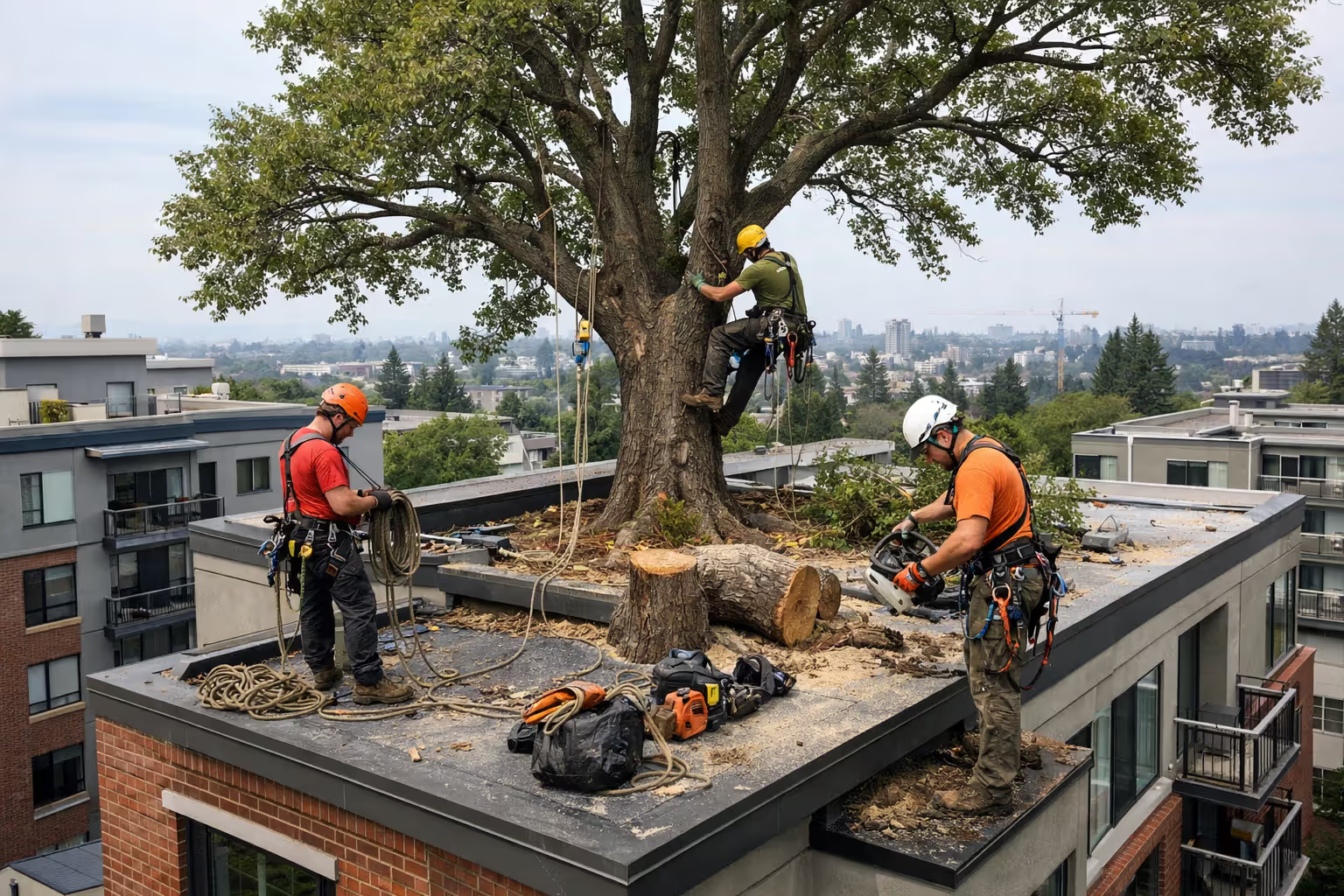
I've watched these caps create real financial pain. Removing a large oak from a damaged roof commonly runs $2,000 to $4,000. Your insurer might contribute $1,000 toward removal, leaving you covering the rest. Many homeowners mistakenly assume their full dwelling coverage applies to tree work, then get hit with unexpected bills.
Author: Nathaniel Porter;
Source: talero.spotpariz.net
Premium policies and special endorsements can raise these limits considerably. Got several mature trees looming near your house? Ask your agent about expanded tree coverage before storm clouds gather—not after.
Common Exclusions You Should Know
Several exclusions consistently trip up policyholders:
Trees with pre-existing health problems. If a tree was already dead, diseased, or visibly rotting when the storm hit, insurers frequently deny claims outright. Their argument? You should've handled this maintenance issue proactively. This exclusion requires insurers to prove the pre-existing condition existed, but obvious decay—hollow trunks, extensive deadwood, missing bark—makes their job easy.
Trees that fall without hitting anything important. A massive tree sprawled across your lawn costs plenty to remove but triggers zero insurance coverage. Even if it demolished your prize landscaping or vegetable garden, standard policies won't respond without structural damage or qualifying access obstruction.
Slow-motion damage. Trees gradually leaning over months, or roots slowly buckling your foundation, don't qualify as sudden covered losses. Insurance addresses accidents and unexpected events, not predictable deterioration you could see coming.
Proactive tree removal. Hire an arborist to remove a dangerous tree before it falls? You're paying that bill yourself. Coverage requires actual storm damage, not preventive maintenance (except those rare imminent-peril situations with bulletproof documentation).
Landscaping damage has strict caps. When a covered tree fall crushes other trees, shrubs, or plants on your property, most policies limit plant coverage to roughly $500 per item and maybe $1,000 to $2,500 total. That expensive Japanese maple collection under your fallen oak? Minimal compensation.
How Deductibles Apply to Tree Removal Claims
Your deductible applies to the complete claim amount—tree removal plus all related damage combined. Many homeowners miss this critical detail until they receive their settlement check.
Let's work through an example. Say your deductible sits at $1,000. A storm-felled tree causes $8,000 in roof damage and generates $1,500 in removal costs. Your total loss: $9,500. You'll receive $8,500 after your deductible gets subtracted from the top.
This math creates tough decisions on smaller claims. Imagine a tree hitting your shed, causing $1,200 in damage with $800 in removal costs. Total loss: $2,000. With a $1,000 deductible, you'd collect $1,000 from insurance—but potentially trigger claim history issues for minimal actual benefit. Plenty of homeowners choose to self-fund smaller tree incidents to avoid potential rate consequences.
Wind and hail deductibles based on percentages make this even trickier. Coastal and wind-prone areas often require percentage-based deductibles—commonly 1% to 5% of your dwelling coverage amount. Picture this: $300,000 in dwelling coverage with a 2% wind deductible means you're responsible for the first $6,000 of any wind claim. A $7,000 tree removal and repair scenario would net you just $1,000 after your deductible, barely worth the administrative hassle.
The debris removal sub-limit doesn't bypass your deductible, either. If your policy grants an additional $1,000 for tree debris beyond standard debris allowances, that money still falls under your deductible. There's no secret, deductible-free tree removal fund hiding in your policy.
Filing a Tree Removal Claim After Storm Damage
The claims process rewards speed and thorough documentation. Here's what actually works:
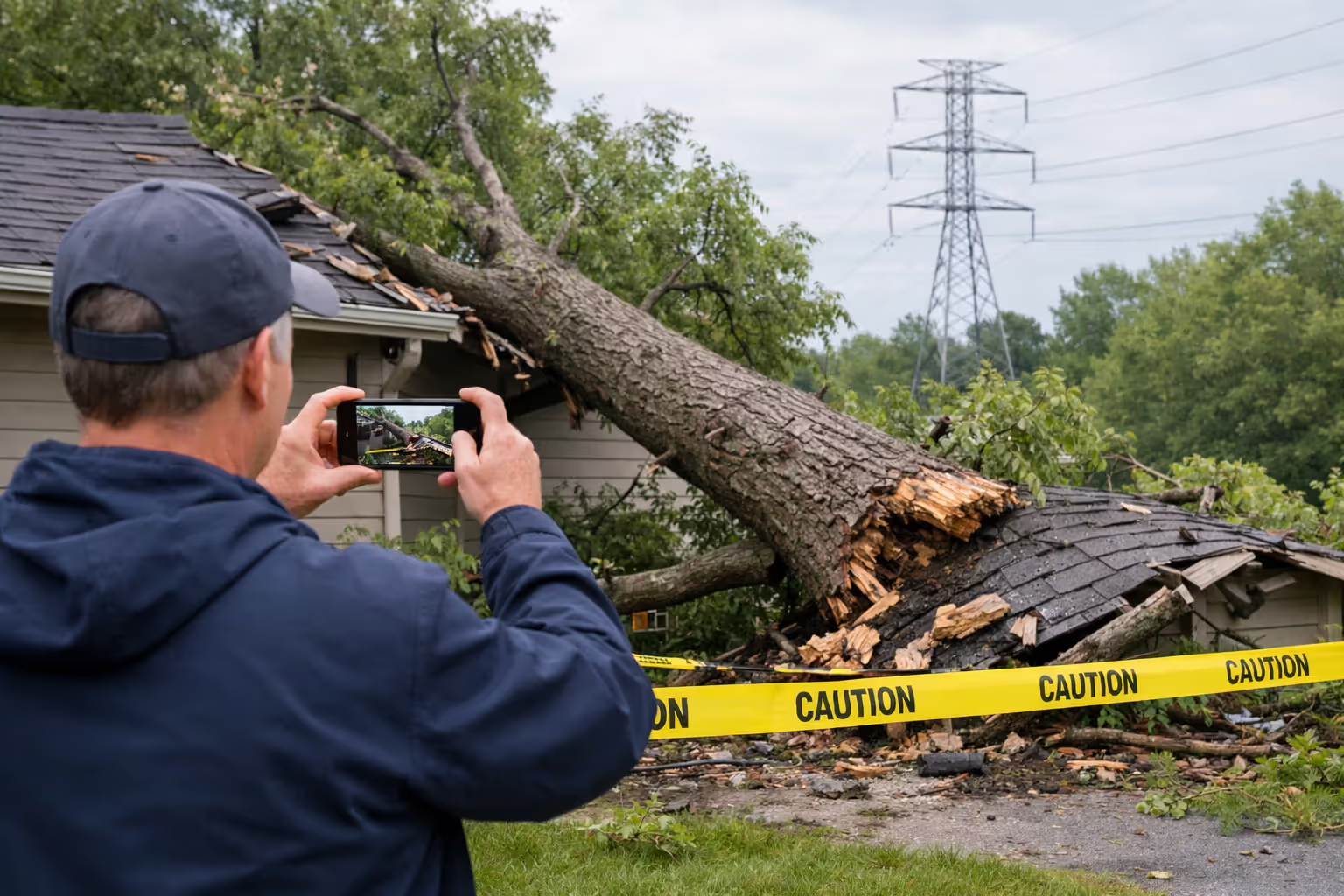
Right after the storm passes, prioritize safety above everything. Never approach trees near power lines—treat every downed line as live and contact your utility immediately. Once conditions are safe, start documenting. Shoot photos and videos from every angle showing tree position, structural damage, and overall scene context. Photograph the root ball and trunk interior to demonstrate the tree was healthy—this evidence counters potential neglect allegations.
Author: Nathaniel Porter;
Source: talero.spotpariz.net
Call your insurer within a day or two. Policies require "prompt" notice, which isn't specifically defined but generally means ASAP. Waiting won't automatically void coverage, but delays create complications. Your insurer assigns a claim number and outlines next steps. Ask specifically about emergency removal authorization—many insurers pre-approve emergency stabilization up to certain dollar thresholds.
Collect multiple written estimates from licensed, insured tree companies. Get at least two detailed quotes specifying the work scope. Insurers often suggest preferred vendors, though you're never obligated to use them. That said, preferred contractors sometimes guarantee pricing matching insurance estimates, which eliminates payment disputes.
Take reasonable steps to prevent additional damage. Your policy requires you to protect property from further loss. If a tree punctured your roof, tarp the opening. Keep receipts for emergency mitigation work—you'll typically get reimbursed. However, don't authorize complete tree removal before your adjuster inspects unless you've received explicit approval or face legitimate safety emergencies.
Schedule adjuster inspection quickly. After widespread storms, adjusters handle catastrophic losses first, so expect potential delays ranging from several days to two weeks. The adjuster evaluates damage, confirms coverage, and provides preliminary estimates.
Documentation You'll Need
Strong documentation accelerates claims and strengthens your position:
- Photos and video captured immediately post-storm
- Property survey or site plan showing tree location relative to structures
- Any recent arborist evaluations (proves tree health before the storm)
- Written estimates from licensed tree removal contractors
- Receipts for emergency services like tarping or temporary debris hauling
- Evidence documenting blocked access if you're claiming driveway obstruction without structural damage
- National Weather Service reports confirming storm severity in your area (establishes covered peril)
Create a dedicated claim folder—paper or digital works fine. Insurance claims drag on for weeks or months, and organized records prevent unnecessary delays.
Working with the Insurance Adjuster
Adjusters determine coverage and calculate repair costs. Understanding their process improves outcomes:
Adjusters rely on standardized software calculating replacement costs using local labor rates and material pricing. Their initial estimate might seem low compared to contractor bids. This doesn't necessarily indicate bad faith—contractors build in profit margins and contingencies that adjuster software doesn't initially account for.
Be there during the inspection. Walk through the damage together, highlighting all affected areas. Adjusters might overlook secondary damage like cracked siding or mangled gutters unless you point them out.
Question coverage decisions directly. When an adjuster excludes something, ask for the specific policy language supporting that decision. Adjusters sometimes apply internal guidelines that don't actually appear in your contract. Politely asking "Where exactly does my policy state that exclusion?" occasionally reveals misapplied rules.
Grasp how depreciation works. For roof damage, adjusters commonly issue initial payments for actual cash value (replacement cost minus wear-and-tear depreciation), then release the depreciation holdback after you finish repairs. This two-stage payment structure confuses homeowners expecting full payment immediately.
Read everything before signing. Some adjusters request signed statements or liability releases. These documents can restrict your ability to reopen claims or challenge estimates. When uncomfortable, consult a public adjuster or attorney before signing anything.
Disagreeing with the adjuster's assessment? Your policy likely includes an appraisal clause—a process where both sides hire appraisers who attempt reaching agreement, with an umpire resolving remaining disputes.
Cost Factors and Out-of-Pocket Expenses
Tree removal pricing swings wildly based on multiple variables. Understanding cost drivers helps you anticipate expenses exceeding insurance coverage:
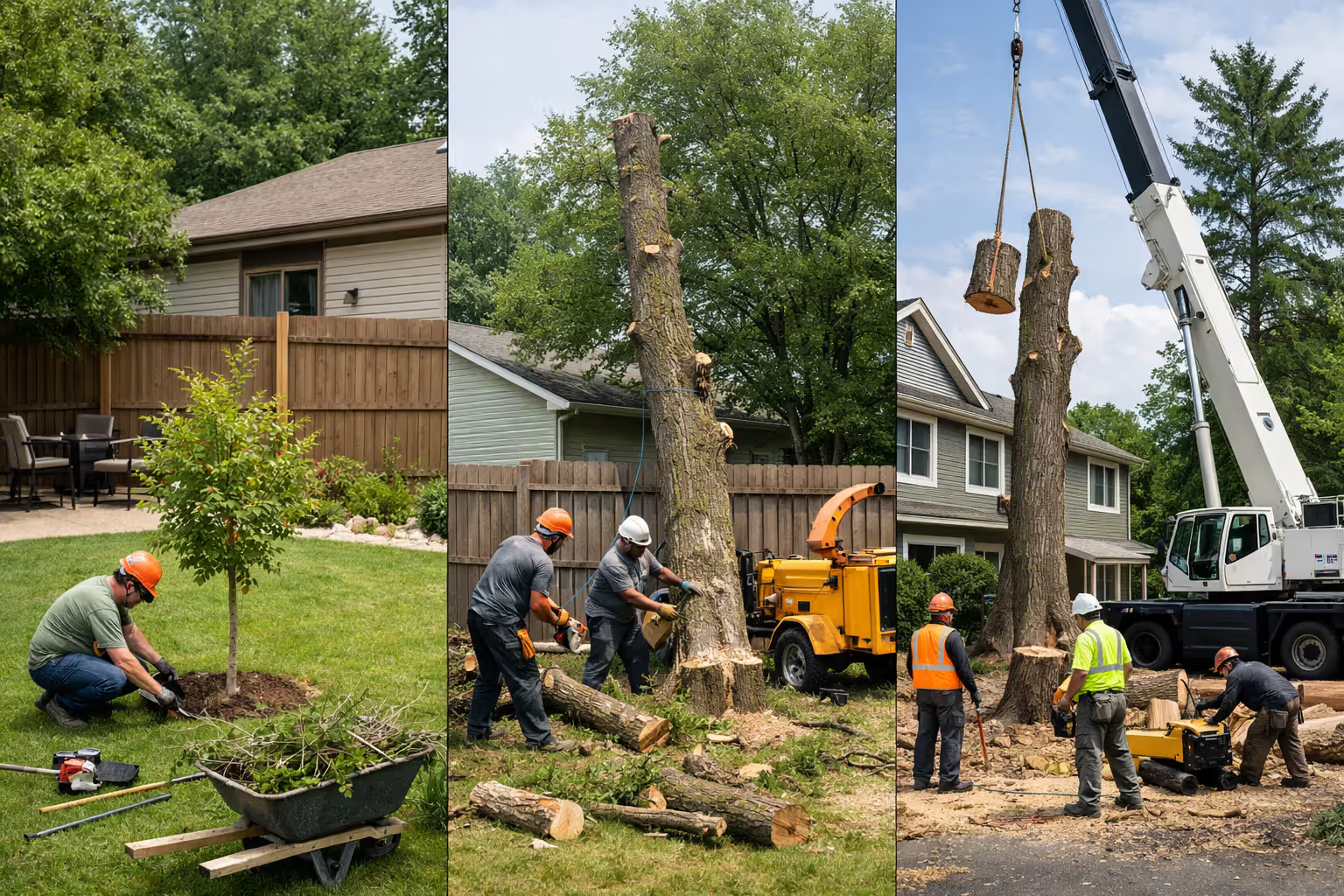
Size matters most. Small trees under 30 feet generally run $300 to $800 for removal. Medium-sized trees in the 30-60 foot range cost $800 to $2,000. Large trees exceeding 60 feet start around $2,000 and can hit $5,000 or more for enormous specimens.
Author: Nathaniel Porter;
Source: talero.spotpariz.net
Location and complexity multiply the bill. A tree lying in open yard space is straightforward. That same tree wrapped around power lines, crushing your house, or requiring crane access? Costs can double or triple. Arborists charge $150 to $250 hourly for specialized crane work.
Emergency service timing carries hefty premiums. Need immediate removal preventing further damage or restoring critical access? Expect to pay 50% to 100% above standard rates. Weekend and holiday emergency calls command the steepest premiums.
Stump grinding runs separately from tree removal. Grinding stumps costs $100 to $400 per stump based on diameter. Insurance policies rarely cover stump removal unless the stump itself creates a covered hazard.
Disposal and hauling may be bundled into removal quotes or charged as separate line items. Some contractors charge $50 to $150 for hauling debris to disposal facilities. Others leave cut wood on-site, requiring you to arrange your own disposal.
Given typical insurance caps of $500 to $1,000 per tree, homeowners routinely pay $1,000 to $3,000 out-of-pocket for large tree removal, even with active insurance coverage. Budget for these coverage gaps when planning storm recovery finances.
Storm Tree Removal Coverage Scenarios
| Scenario | Usually Covered? | Reasoning | Typical Coverage Cap |
| Storm winds blow tree onto house | Yes | Covered peril causing direct structural damage | $500-$1,000 for removal; dwelling coverage handles repairs |
| Fallen tree makes driveway impassable | Yes | Creates necessary access obstruction | $500-$1,000 |
| Tree falls on lawn missing all structures | No | Creates no structural damage or access problem | $0 |
| Already-dead tree falls on garage during storm | Possibly | Coverage depends on whether decay was visible/knowable | $500-$1,000 if insurer approves |
| Your neighbor's tree crashes onto your property | Yes (through your policy) | Your insurance responds; might subrogate against neighbor later | Whatever your policy provides |
| Tree leans precariously but hasn't actually fallen | No | Preventive maintenance falls outside coverage | $0 |
| Tree destroys only landscaping and gardens | Very limited | Minimal coverage exists for plants and shrubs | $500-$2,500 aggregate for all landscaping |
| Emergency removal preventing imminent structural damage | Rarely | Demands extensive documentation proving immediate threat | $500-$1,000 if insurer pre-approves |
FAQ: Storm Tree Removal and Insurance Coverage
Tree removal coverage after storm damage operates within surprisingly narrow boundaries defined by structural impact and access obstruction. The frustrating reality? Expensive cleanup often falls partially or entirely on homeowners because of sub-limits, deductibles, and exclusions. A $4,000 tree removal might generate just $1,000 from insurance after applying your deductible and policy limits.
Review your policy's debris removal and tree coverage provisions right now, before storm season arrives. If you've got large, mature trees looming near structures, consider whether enhanced coverage endorsements justify their additional premium cost. Document your trees' current health with photos and professional assessments—evidence proving trees were healthy before a storm strengthens claims and counters maintenance-neglect arguments.
When disaster eventually strikes, act quickly: prioritize safety, document everything thoroughly, notify your insurer promptly, and obtain multiple written estimates. Understanding the claims process and coverage boundaries positions you to navigate tree removal claims effectively, minimizing surprise expenses and disputes. The goal isn't just recovering from storm damage—it's recovering with your finances and insurance relationship intact.