Damaged car being inspected by an insurance specialist at an auto repair shop
Does Car Insurance Cover Repairs?

Content
Car insurance can cover repairs, but not in every situation. Understanding when your policy pays for vehicle damage—and when it doesn't—can save you thousands of dollars and prevent frustrating surprises after an accident or incident.
Most drivers assume their insurance automatically covers any repair their car needs. That's rarely the case. Your coverage depends on what caused the damage, which policy types you carry, and whether you've met your deductible. Some repairs fall squarely within your policy's scope, while others remain your financial responsibility entirely.
What Types of Car Repairs Does Insurance Cover?
Car insurance repair coverage isn't a single blanket protection. Instead, different policy components address specific damage scenarios. What does car insurance cover repairs for, exactly? The answer depends on which coverage types you've purchased and what caused the damage.
Collision Coverage for Accident Repairs
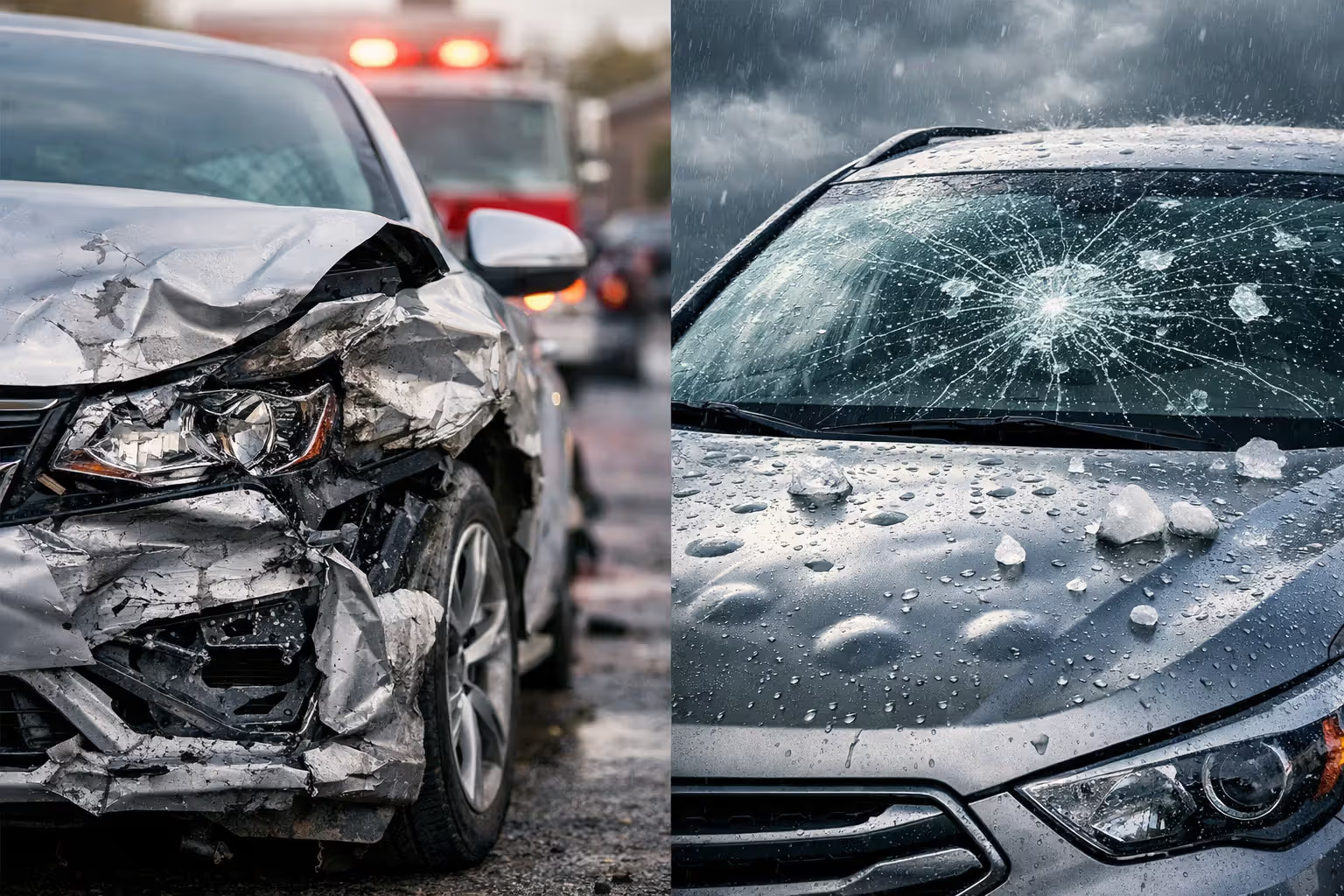
Collision coverage pays for repairs when your vehicle hits—or is hit by—another object. This includes other vehicles, guardrails, trees, buildings, or even potholes in certain circumstances. If you rear-end someone at a stoplight or sideswipe a parked car, collision coverage handles your repair costs.
This coverage applies regardless of fault. Even if you caused the accident, your collision policy still covers your vehicle's damage after you pay your deductible. The insurance company may later pursue reimbursement from the at-fault party through subrogation, potentially refunding your deductible.
Collision coverage won't pay for damage to the other driver's vehicle—that's what liability coverage handles. It only addresses your own car's repair needs.
Author: Alyssa Coleman;
Source: talero.spotpariz.net
Comprehensive Coverage for Non-Collision Damage
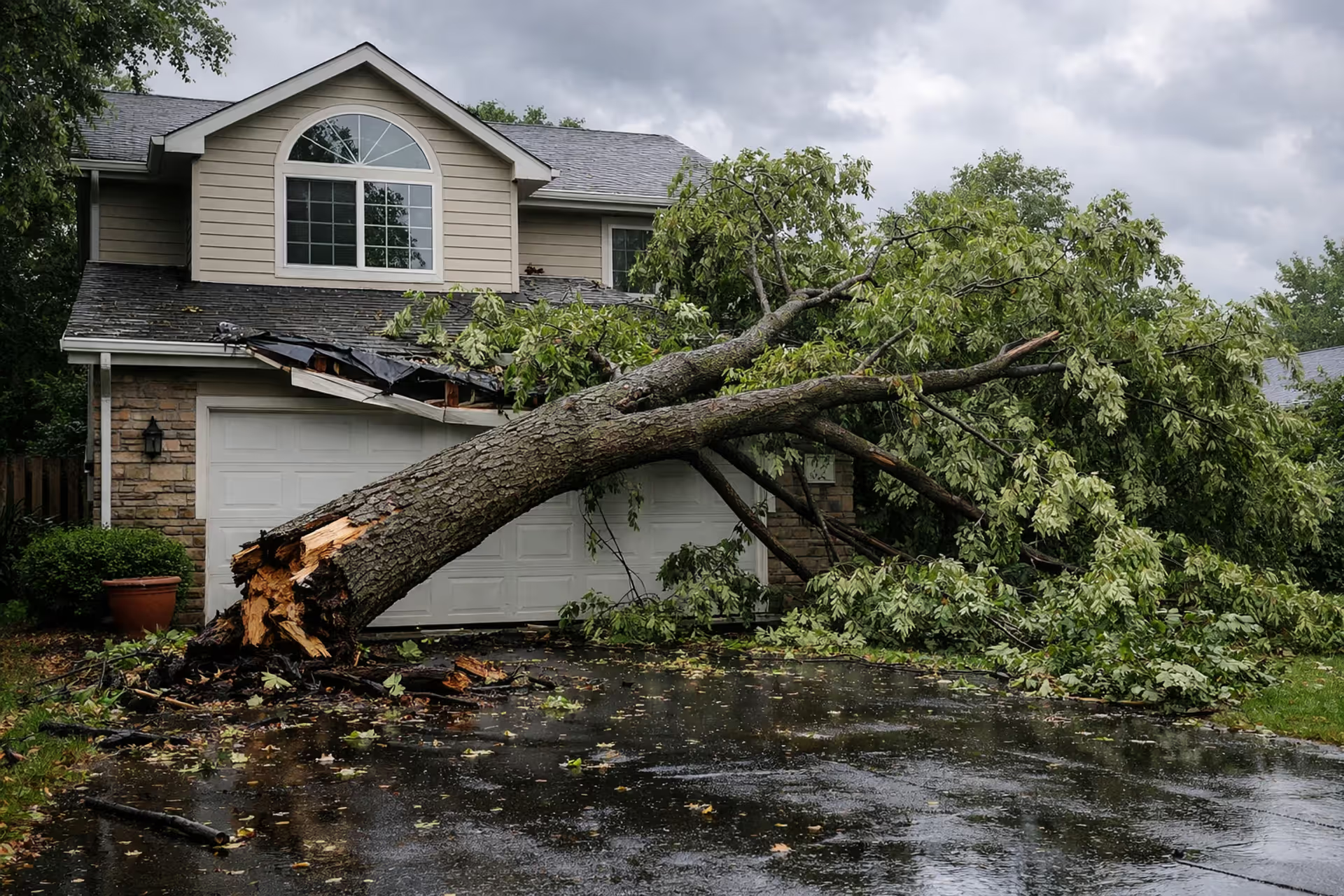
Comprehensive coverage addresses nearly everything collision doesn't. Think of it as protection against the unexpected: hail dents, fallen tree branches, vandalism, theft, fire, flood damage, and animal strikes.
If a deer runs into your car on a rural highway or thieves break your window, comprehensive coverage pays for repairs. This coverage also handles windshield chips and cracks in most states, sometimes without requiring you to pay a deductible.
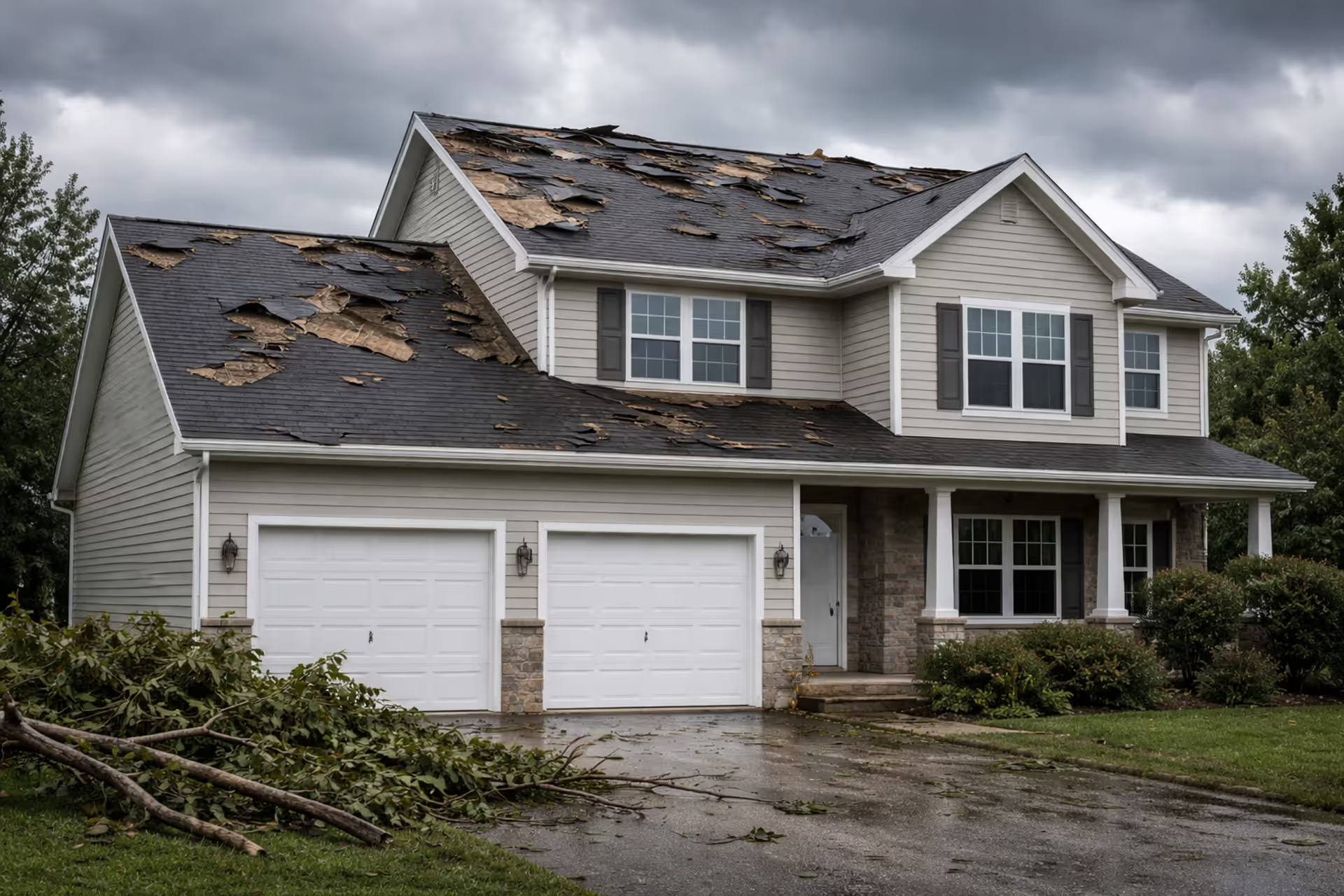
Weather-related damage represents a significant portion of comprehensive claims. A severe hailstorm can cause $5,000 to $10,000 in body damage, and comprehensive coverage becomes essential in regions prone to such weather events.
What Repairs Insurance Won't Cover
Standard auto insurance policies exclude several repair categories entirely. Mechanical breakdowns from normal wear and tear remain your responsibility. If your transmission fails at 120,000 miles or your engine develops an oil leak, insurance won't pay—these are maintenance issues, not covered perils.
Routine maintenance never qualifies for insurance coverage. Oil changes, brake pad replacements, tire rotations, and fluid top-offs are expected vehicle ownership costs. Some drivers mistakenly believe "full coverage" includes these items, but no standard policy does.

Author: Alyssa Coleman;
Source: talero.spotpariz.net
Intentional damage also falls outside coverage boundaries. If you deliberately damage your vehicle or allow someone else to do so, your claim will be denied. Pre-existing damage discovered during a legitimate claim inspection may also be excluded from the repair estimate.
Custom modifications and aftermarket additions typically aren't covered unless you've purchased additional equipment coverage. That $3,000 sound system or lifted suspension won't be replaced under standard comprehensive or collision policies.
| Coverage Type | What It Covers | What It Doesn't Cover | Typical Deductible |
| Collision | Accidents with vehicles or objects, rollovers, single-car crashes | Mechanical failures, normal wear, intentional damage | $500–$1,000 |
| Comprehensive | Theft, vandalism, weather damage, animal strikes, fire, falling objects | Maintenance, breakdowns, collision damage, road wear | $250–$500 |
| Liability | Other party's vehicle and property when you're at fault | Your own vehicle's damage | None (no deductible) |
How Car Insurance Repair Coverage Actually Works
Understanding how does car insurance cover repairs works requires knowing the sequence of events from damage to payment. The process isn't automatic—specific conditions must be met before your insurer pays anything.
First, the damage must result from a covered peril under your active policy. If you only carry liability insurance, damage to your own vehicle won't trigger any coverage, regardless of circumstances. You need collision or comprehensive coverage for your own repairs.
Second, you must report the damage within the timeframe specified in your policy—typically within a few days of discovery or as soon as reasonably possible. Delayed reporting can jeopardize your claim, especially if the insurer suspects you're attempting to claim pre-existing damage.
Third, an adjuster or approved repair shop must assess the damage and create an estimate. The insurance company pays based on this estimate, not necessarily what the repair shop ultimately charges. If additional damage is discovered during repairs (common with collision damage), a supplemental claim may be needed.
The insurer pays the repair shop directly in many cases, or reimburses you if you've already paid. However, you must satisfy your deductible first. If repairs cost $2,800 and your deductible is $500, the insurance company pays $2,300.
Your insurance payout stops at your car's actual cash value (ACV)—meaning what it's worth on the market right now. If your car is worth $8,000 and repairs would cost $9,000, the insurer declares it a total loss and pays you the ACV minus your deductible, rather than paying for repairs.
The biggest misconception I encounter is drivers thinking 'full coverage' means every repair is covered. There's no such thing as full coverage in insurance terminology—it's just shorthand for having collision and comprehensive plus liability. But even with all three, mechanical breakdowns, wear items, and maintenance remain the owner's responsibility. I've seen people genuinely shocked when we can't cover their failed alternator or worn-out clutch
— Jennifer Martinez
Understanding Your Deductible and Out-of-Pocket Costs
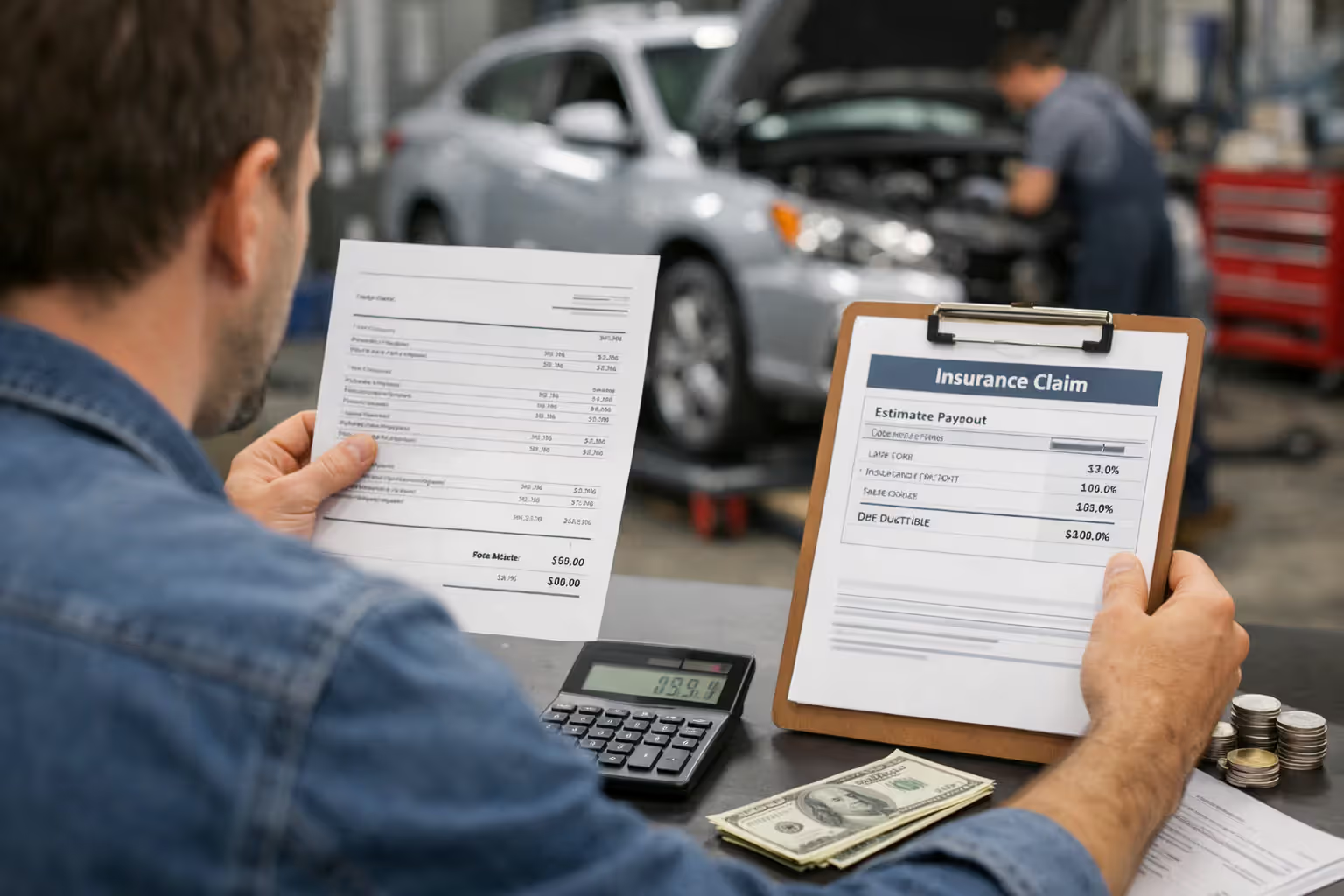
Your deductible represents the amount you pay before insurance coverage begins. When you file a repair claim, you'll pay this amount out-of-pocket, and the insurer covers the remaining eligible costs. Understanding does car insurance cover repairs deductible explained mechanics helps you make smarter financial decisions about when to file claims.
Deductibles typically range from $250 to $2,000, with $500 and $1,000 being most common. You choose your deductible when purchasing coverage—higher deductibles mean lower premiums, while lower deductibles increase your monthly costs.
You pay your deductible once per claim, not per repair. If hail damages your roof, hood, and trunk, you pay one deductible for all related repairs, not three separate deductibles.
Your collision and comprehensive policies may each carry different deductible amounts. You might select a $1,000 deductible for collision protection but choose only a $250 deductible for comprehensive risks, since comprehensive claims typically don't affect premiums as severely.
Some situations don't require deductibles. If another driver is at fault and their liability insurance pays for your repairs, you pay nothing. Similarly, if your insurer waives the deductible for windshield repairs (available in some states), you won't have out-of-pocket costs.
Calculating whether to file a claim requires comparing repair costs against your deductible and potential premium increases. If repairs cost $800 and your deductible is $500, you'd only receive $300 from insurance—but your premiums might increase by more than that over the next three years.
| Total Repair Bill | Your Deductible | Your Out-of-Pocket Cost | Insurer's Payment | Should You File? |
| $600 | $500 | $500 | $100 | Likely not worth it—you gain little |
| $1,500 | $500 | $500 | $1,000 | Maybe—consider how rates might rise |
| $4,000 | $500 | $500 | $3,500 | Often makes sense—substantial payout |
| $8,000 | $1,000 | $1,000 | $7,000 | Almost always file—significant protection |
Author: Alyssa Coleman;
Source: talero.spotpariz.net
Coverage Limits and Policy Caps Explained
Every auto insurance policy includes maximum payout thresholds that determine how much your insurer will spend on repairs, regardless of the actual bill. Understanding these does car insurance cover repairs coverage limits helps you set realistic expectations when filing claims.
Your vehicle's actual cash value (ACV) serves as the ceiling for repair payouts—it represents what your car would sell for right now, accounting for factors like age, mileage, and overall condition. If your 2019 sedan has an ACV of $15,000, your insurer won't exceed that amount when settling claims, minus whatever deductible you owe.
ACV differs significantly from replacement cost. Your car's replacement cost might be $28,000 for a comparable new model, but your insurance only pays what your specific vehicle was worth immediately before the damage occurred.
Depreciation affects ACV calculations substantially. A new car loses roughly 20% of its value in the first year and 15% annually for the next four years. By year five, your vehicle might be worth only 40% of its original purchase price, which directly impacts repair coverage limits.
When repair costs approach 70-80% of your vehicle's ACV, insurers typically declare a total loss rather than paying for repairs. This threshold varies by company and state, but the principle remains consistent: if repairs cost nearly as much as the car is worth, you'll receive a settlement check instead of repaired vehicle.
Some policies offer additional coverage options that modify these limits. If your car gets totaled while you still owe money on the loan, gap coverage pays the difference between the insurance settlement and your outstanding loan balance. New car replacement coverage pays for a brand-new equivalent vehicle if your car is totaled within the first year or two of ownership.
Agreed value policies, common for classic or collectible vehicles, establish a predetermined payout amount regardless of ACV calculations. These specialized policies cost more but eliminate disputes about depreciation and market value.
Author: Alyssa Coleman;
Source: talero.spotpariz.net
How to File a Repair Claim With Your Insurance
The does car insurance cover repairs claim process follows a structured sequence designed to verify damage, prevent fraud, and ensure appropriate compensation. Understanding each step helps you navigate the process efficiently and maximize your settlement.
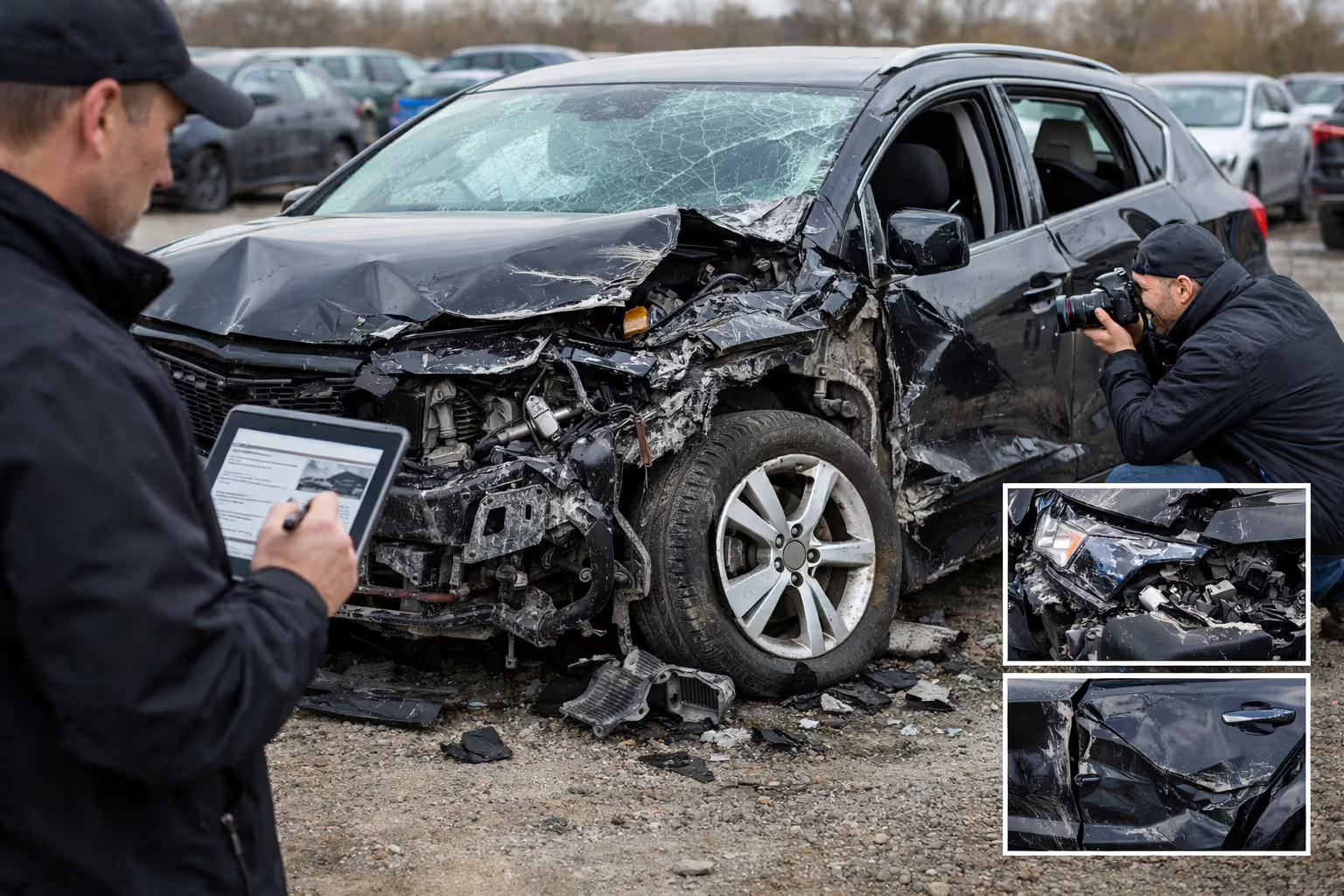
Step 1: Document the damage immediately. Take photos from multiple angles showing all affected areas. If the damage resulted from an accident, photograph the scene, other vehicles involved, and any relevant road conditions or signage. This documentation supports your claim and prevents disputes later.
Step 2: Report the claim promptly. Contact your insurance company within 24-48 hours of discovering damage, or immediately after an accident. Most insurers offer mobile apps for claim filing, making the process faster. Give your insurer specific information about the incident—what led to the damage, the exact time it occurred, and the location.
Step 3: Receive claim number and adjuster assignment. Your insurer assigns a claim number for tracking and designates an adjuster to handle your case. Save this information—you'll reference it throughout the process.
Step 4: Get damage assessment. Depending on your insurer and damage severity, you'll either bring your vehicle to an approved inspection location, have a mobile adjuster visit you, or take your car directly to a repair shop for evaluation. The adjuster or shop creates a detailed estimate of repair costs.
Step 5: Review the estimate and select a shop. Your insurer may recommend specific repair facilities in their network, often guaranteeing the work. You're generally entitled to choose your own shop, though using network facilities can streamline the process and provide warranties.
Step 6: Authorize repairs and pay your deductible. Once you approve the estimate, repairs begin. You'll pay your deductible directly to the repair shop, either upfront or when collecting your vehicle. The insurance company pays the shop directly for the remaining covered costs.
Step 7: Address supplemental damage. Repair shops often discover hidden damage once work begins—frame damage beneath body panels, for example. The shop contacts your adjuster to approve supplemental repairs, which may extend the timeline.
Step 8: Final inspection and vehicle pickup. After repairs are complete, inspect your vehicle carefully before accepting it. Ensure all damage is addressed and work quality meets your standards. Most insurance-approved repairs include warranties covering the work performed.
The entire process typically takes one to three weeks, depending on parts availability, shop workload, and damage complexity. Extensive repairs requiring frame work or hard-to-source parts can extend timelines to four to six weeks.
Common Scenarios: When Insurance Will and Won't Pay
Real-world examples clarify the sometimes-confusing boundaries of repair coverage. These scenarios illustrate when does car insurance cover repairs and when it doesn't.
Scenario 1: Fender bender in parking lot (covered). You back into a pole while parking, denting your rear bumper and tailgate. Collision coverage applies regardless of fault. After paying your $500 deductible, insurance covers the remaining $1,800 repair cost.
Scenario 2: Hail damage after storm (covered). A severe hailstorm leaves dozens of dents across your hood, roof, and trunk. Comprehensive coverage applies to weather damage. With a $250 comprehensive deductible, you pay $250 and insurance covers the remaining $4,750 for paintless dent removal and panel replacement.
Scenario 3: Transmission failure at 95,000 miles (not covered). Your transmission begins slipping and eventually fails completely. This mechanical breakdown results from normal wear, not a covered peril. You'll pay the entire $3,500 repair cost yourself, as standard insurance doesn't cover mechanical failures.
Scenario 4: Windshield crack from road debris (usually covered). A rock flies up from the vehicle ahead, cracking your windshield. Comprehensive coverage applies, and many states allow windshield repairs without a deductible. Even if a deductible applies, it's typically waived for windshield-only damage.
Scenario 5: Rust damage from road salt (not covered). Years of winter driving in salt-heavy regions cause significant rust on your rocker panels and wheel wells. Insurance doesn't cover deterioration from environmental exposure over time—this falls under normal wear and tear.
Scenario 6: Deer strike on rural highway (covered). A deer jumps into your path, causing front-end damage. Comprehensive coverage handles animal strikes. After your $500 deductible, insurance pays for the $6,200 in repairs to your bumper, grille, hood, and radiator.
Scenario 7: Engine damage from missed oil changes (not covered). You neglected oil changes for 15,000 miles, causing engine damage. Your policy won't cover repairs when vehicle harm stems from skipped maintenance. The $8,000 engine replacement is entirely your responsibility.
Scenario 8: Hit-and-run while parked (covered if you have collision). Your parked vehicle gets struck by another driver who leaves the scene without stopping. If you have collision coverage, it pays for repairs after your deductible. If you only carry liability, you'll pay for repairs yourself unless you have uninsured motorist property damage coverage (available in some states).
Frequently Asked Questions About Insurance Repair Coverage
Car insurance repair coverage provides essential financial protection when accidents, weather events, or other covered perils damage your vehicle. However, understanding exactly what your policy covers—and what it excludes—prevents costly surprises when you need repairs most.
Collision and comprehensive coverages form the foundation of repair protection, each addressing distinct damage scenarios. Collision handles accident-related repairs regardless of fault, while comprehensive covers nearly everything else: weather damage, theft, vandalism, and animal strikes. Neither covers mechanical breakdowns, routine maintenance, or normal wear and tear.
Your deductible and coverage limits significantly impact your out-of-pocket costs. Choosing appropriate deductible levels balances affordable premiums against manageable claim expenses. Understanding that coverage maxes out at your vehicle's actual cash value helps set realistic expectations about total loss scenarios.
The claims process requires prompt reporting, thorough documentation, and clear communication with your insurer and repair shop. Knowing your rights—including shop selection and the supplemental damage process—ensures you receive all benefits your policy provides.
Before filing any claim, calculate the true cost by comparing repair expenses against your deductible and potential premium increases. Small claims that barely exceed your deductible often cost more in long-term premium hikes than paying out-of-pocket.
Review your coverage annually as your vehicle ages and depreciates. The collision and comprehensive coverage that made sense when your car was worth $30,000 may not be cost-effective when its value drops to $5,000. Adjusting coverage as circumstances change keeps your insurance both protective and affordable.