
Customer picking up a rental car at an airport counter
Does Car Insurance Cover Rental Cars?

Content
When you pick up a rental car at the airport, the agent will offer you several insurance options before handing over the keys. Many drivers wonder whether they actually need these add-ons or if their existing auto insurance already protects them. The answer depends on your specific policy, but most personal car insurance does extend to rental vehicles—with important limitations you should understand before declining coverage at the counter.
How Personal Auto Insurance Applies to Rental Cars
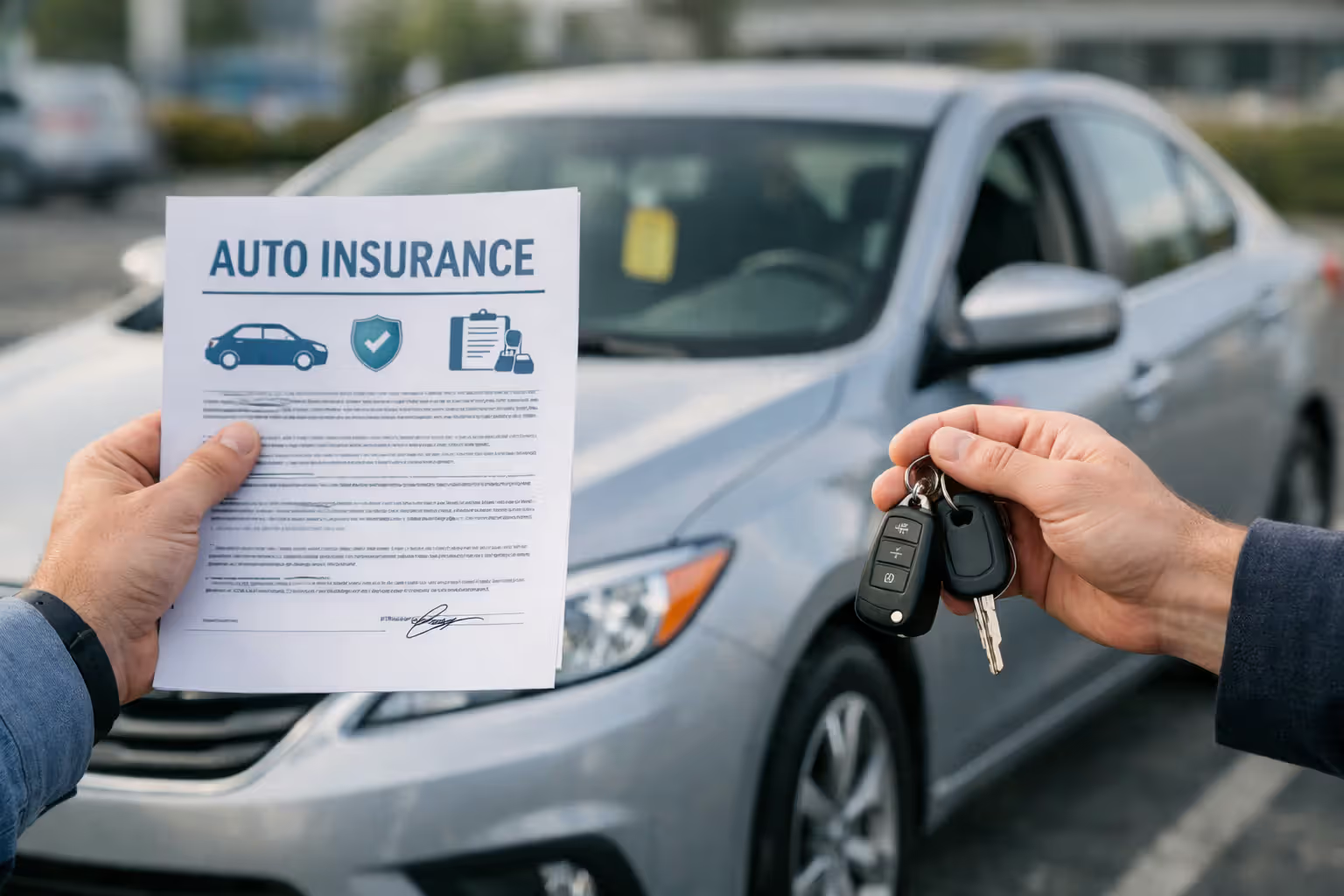
Your personal auto insurance typically follows you, not just your vehicle. This principle means that if you carry liability, collision, and comprehensive coverage on your own car, those protections generally extend to a rental car you're driving temporarily. The coverage works the same way it would if you were driving your own vehicle.
However, this extension isn't automatic in every situation. Your policy must be active and in good standing at the time you rent. The rental must also be for personal use rather than business purposes, and the vehicle needs to fall within standard passenger car categories. If you only carry state-minimum liability coverage on your personal vehicle, that's all that transfers to your rental—you won't suddenly gain comprehensive or collision protection just because you're driving a rental.
The distinction between liability and physical damage coverage matters significantly here. Liability insurance protects you when you damage someone else's property or injure another person. Physical damage coverage—which includes both collision and comprehensive—protects the vehicle you're driving, whether it's yours or rented. Both types can extend to rentals, but only if you already have them on your personal policy.
Author: Nathaniel Porter;
Source: talero.spotpariz.net
What Your Car Insurance Covers on a Rental Vehicle
Understanding exactly which protections transfer to a rental requires breaking down the main components of auto insurance coverage.
Liability Coverage for Rental Cars
Liability coverage is the foundation of any auto insurance policy and typically extends to rental cars without issue. If you cause an accident while driving a rental and damage another vehicle or injure someone, your liability coverage pays for their medical bills, property damage, and legal expenses up to your policy limits.
For example, if you carry $100,000 in bodily injury liability and $50,000 in property damage liability, those same limits apply when you're behind the wheel of a rental car. You won't receive higher limits just because you're renting, which is why some drivers with lower limits choose to purchase supplemental liability insurance from the rental company.
One common misconception: liability coverage does not pay for damage to the rental car itself. That falls under physical damage coverage, which is a separate category entirely.
Physical Damage Coverage: Collision and Comprehensive
Collision coverage pays for damage to your vehicle when you hit another car or object, regardless of who's at fault. Comprehensive coverage handles non-collision incidents like theft, vandalism, weather damage, or hitting an animal. If you carry both on your personal vehicle, they typically extend to rental cars.
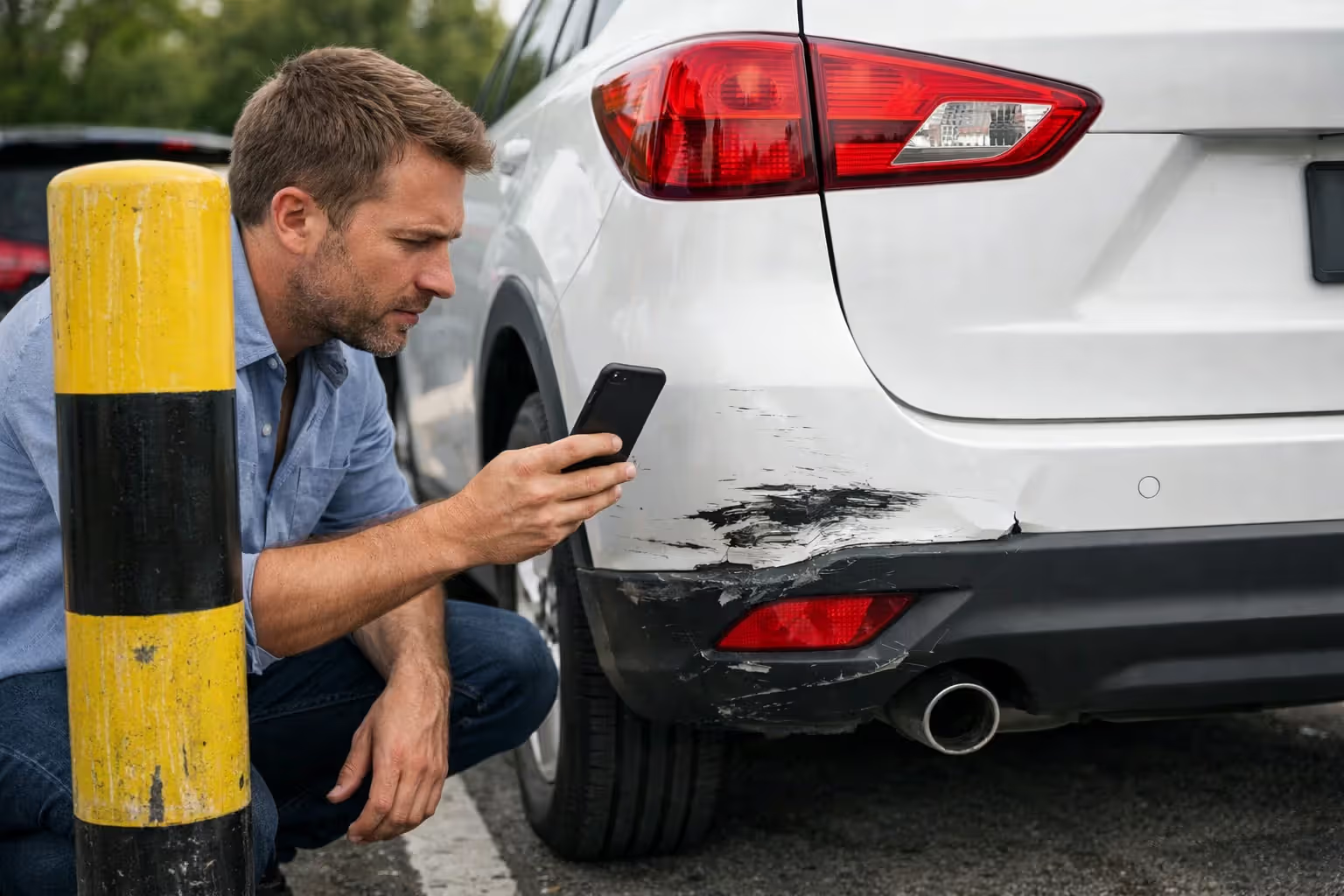
Your deductible applies the same way it would on your own car. If you have a $1,000 collision deductible and you back a rental SUV into a pole, you'll pay the first $1,000 of repairs before your insurance covers the rest. This can come as an unwelcome surprise to renters who assume their coverage means zero out-of-pocket costs.
The rental company's loss damage waiver (LDW) or collision damage waiver (CDW) works differently—it's not insurance but rather an agreement that the rental company won't hold you financially responsible for damage to their vehicle. This distinction becomes important when comparing your options.
Author: Nathaniel Porter;
Source: talero.spotpariz.net
Coverage Limits and Deductibles on Rental Cars
Your existing policy limits and deductibles transfer directly to rental situations. If you carry $250,000 in liability coverage, that's your protection level in a rental. If your comprehensive deductible is $500, you'll pay that amount before coverage kicks in for a stolen rental car.
This direct transfer can create gaps in two scenarios. First, rental cars are often newer and more expensive than the vehicle you own. If you total a $45,000 rental SUV but your personal car is worth $15,000, your insurance will still cover the rental's full value (minus your deductible), but you might face higher premiums afterward due to the size of the claim.
Second, some states require higher minimum liability limits than others. If you're renting in a state with higher minimums than your home state, your policy should still meet those requirements, but it's worth confirming with your insurer before traveling. California, for instance, requires minimum liability of $15,000 per person and $30,000 per accident for bodily injury, plus $5,000 for property damage—relatively low compared to recommended coverage levels.
Loss of use charges present another potential gap. When a rental car is damaged, the rental company loses income while the vehicle sits in the shop. Some insurers cover these loss-of-use fees; others don't. Similarly, "diminished value" claims—where the rental company seeks compensation because the vehicle is worth less after an accident even when repaired—may or may not be covered depending on your policy language.
When Car Insurance Doesn't Cover Rental Cars
Several situations fall outside the scope of standard personal auto insurance coverage for rentals.
Business use typically voids coverage extension. If you rent a car for work-related purposes—attending a conference, meeting clients, or making sales calls—your personal policy likely won't cover you. You'll need either a commercial auto policy or your employer's coverage. Even if you're mixing business and pleasure on a single trip, an accident during business use could leave you unprotected.
Exotic or luxury vehicles often exceed the coverage scope of personal policies. Most insurers define covered vehicles as standard passenger cars, SUVs, and pickup trucks. If you rent a Ferrari, Lamborghini, or other high-value specialty vehicle, your policy probably excludes it. The same goes for large moving trucks, cargo vans, and vehicles with a gross weight above a certain threshold (often 10,000 pounds).
International rentals require separate consideration. Your U.S. auto insurance generally doesn't cover you in foreign countries, with Canada sometimes being an exception. Mexico presents a particular challenge—U.S. policies aren't valid there, and Mexican law requires local coverage. Drivers who cross the border without purchasing Mexican insurance face serious legal and financial consequences if they have an accident.

Author: Nathaniel Porter;
Source: talero.spotpariz.net
Unauthorized drivers create another exclusion. If someone not listed on the rental agreement drives the car and has an accident, both your insurance and the rental company's protections may be void. This includes letting a friend take the wheel or allowing your spouse to drive when they weren't added to the rental contract.
Finally, if your personal auto policy has lapsed or been canceled, you obviously have no coverage extension. Some drivers mistakenly believe the rental company's insurance is automatic or that their credit card will cover everything, only to discover significant gaps after an accident.
Filing a Claim After a Rental Car Accident
The claim process for a rental car accident involves coordination between multiple parties and requires prompt action.
First, ensure everyone's safety and call 911 if there are injuries or significant damage. Exchange information with other drivers just as you would in your own car—names, contact details, insurance information, and license plate numbers. Take photos of all vehicles, the accident scene, road conditions, and any visible damage.

Author: Nathaniel Porter;
Source: talero.spotpariz.net
Next, notify the rental company immediately, even for minor damage. Your rental agreement requires this, and failing to report can void coverage options you may have purchased. The rental company will provide instructions and documentation. Don't sign anything admitting fault or agreeing to pay for damages on the spot.
Contact your insurance company within 24 hours. Provide them with the police report number (if applicable), rental agreement, photos, and details about what happened. Your insurer will open a claim and assign an adjuster. Be clear about whether you purchased any coverage from the rental company, as this affects how the claim is handled.
The rental company will likely charge your credit card for estimated damages immediately. If you have physical damage coverage, your insurer will reimburse you (minus your deductible) once they settle the claim. If you purchased the rental company's damage waiver, they should reverse those charges.
Document everything: keep copies of the rental agreement, receipts for any coverage you purchased, the accident report, photos, correspondence with both insurers, and credit card statements showing charges. This paper trail becomes essential if disputes arise about who pays what.
Processing time varies. Simple claims with clear liability might settle in a few weeks. Complex situations involving injuries, disputes about fault, or disagreements between insurers can take months. During this time, you may need to follow up regularly with both your insurance company and the rental agency.
Rental Car Insurance Options vs. Your Own Policy
The biggest mistake renters make is assuming they're automatically covered without checking their policy. Before you travel, call your insurance agent and ask specifically what's covered on a rental car. Ask about your deductible, whether loss-of-use charges are included, and if there are vehicle type restrictions. Five minutes on the phone can prevent a very expensive surprise
— Loretta Worters
Beyond your personal auto insurance, two other coverage sources commonly protect rental cars: credit card benefits and rental company insurance products.
Many credit cards offer rental car coverage as a cardholder benefit when you use the card to pay for the rental. This coverage typically works as secondary insurance, meaning it pays only after your personal auto insurance. Some premium cards offer primary coverage, which pays first without requiring you to file a claim on your personal policy.
Credit card coverage usually handles collision and theft but not liability. Coverage limits vary by card, ranging from $25,000 to $75,000 or more. Exclusions are common: trucks, luxury vehicles, rentals longer than 15-31 days (depending on the card), and rentals in certain countries. You must decline the rental company's collision damage waiver to activate credit card coverage, and you need to follow specific claim procedures, including reporting the incident to the card issuer promptly.
Rental companies offer several insurance products at the counter. The collision damage waiver or loss damage waiver (often $15-$40 per day) isn't technically insurance but relieves you of financial responsibility for damage to the rental car. Supplemental liability insurance ($10-$20 per day) provides additional liability coverage beyond what your personal policy offers. Personal accident insurance covers medical expenses for you and your passengers. Personal effects coverage protects belongings stolen from the rental car.
These rental company options are expensive when calculated daily—a week-long rental can add $100-$200 in insurance costs—but they offer convenience and peace of mind. You won't face deductibles, your personal insurance rates won't increase if you file a claim, and you avoid the hassle of coordinating between your insurer and the rental company.
| Coverage Source | Typical Cost | Liability Protection | Physical Damage Coverage | Deductible | Claim Ease | Coverage Gaps |
| Personal Auto Policy | $0 additional (included in your premium) | Transfers your existing limits | Transfers if you have collision/comprehensive | Your existing deductible applies ($500-$1,000 typical) | Moderate (requires filing claim, may affect rates) | Business use, exotic vehicles, international (except sometimes Canada), loss of use fees may not be covered |
| Credit Card Coverage | $0 (benefit of card) | Usually none | Primary or secondary collision/theft only ($25k-$75k typical) | Usually $0 | Moderate to difficult (specific claim procedures, documentation requirements) | Liability not covered, time limits (often 15-31 days max), vehicle restrictions, must decline rental company CDW |
| Rental Company Insurance | $25-$60+ per day | Yes, if you purchase supplemental liability ($1M typical) | Yes, if you purchase CDW/LDW (full value of vehicle) | $0 | Easy (handle everything directly with rental company) | Expensive for longer rentals, may duplicate coverage you already have |
Frequently Asked Questions About Car Insurance and Rental Cars
Deciding whether to rely on your personal auto insurance, credit card benefits, or rental company insurance requires evaluating your specific situation. Check your policy declarations page or call your agent to confirm exactly what coverage you carry and how it applies to rentals. If you have comprehensive and collision coverage with reasonable deductibles, you're likely well-protected for standard rental cars used for personal purposes.
Credit card coverage works well as a backup layer, particularly if your card offers primary coverage. Just understand the limitations and claim requirements before you decline the rental company's waiver based solely on credit card protection.
Rental company insurance makes sense in specific scenarios: when you don't have personal auto coverage, when renting exotic or luxury vehicles excluded from your policy, for business travel not covered by your personal policy, or when you want to avoid potential deductibles and rate increases. The daily cost stings, but it might be worthwhile for peace of mind on a special trip or when driving in unfamiliar conditions.
Whatever you decide, make that decision before you reach the rental counter. Agents are trained to sell insurance add-ons, and you'll face pressure to purchase coverage you might not need. Walking in with a clear understanding of your existing protections and a firm decision puts you in control of both your coverage and your budget.
The question "does car insurance cover rental cars" has a nuanced answer: usually yes, but with conditions, limitations, and potential gaps that vary by policy and situation. Taking thirty minutes to review your coverage before your trip can save you from expensive surprises and ensure you're properly protected whether you're renting for a weekend getaway or a month-long relocation.