Concerned homeowner holding an insurance bill in front of a suburban house
Why Is My Homeowners Insurance So High?

Content
Homeowners insurance premiums have climbed sharply across the United States, leaving many property owners staring at renewal notices in disbelief. If you've recently opened your bill and wondered why your rate jumped 20%, 30%, or even 50%, you're not alone. Understanding the specific factors behind your premium can help you make informed decisions about your coverage and potentially identify opportunities to reduce costs.
Common Factors That Increase Homeowners Insurance Costs
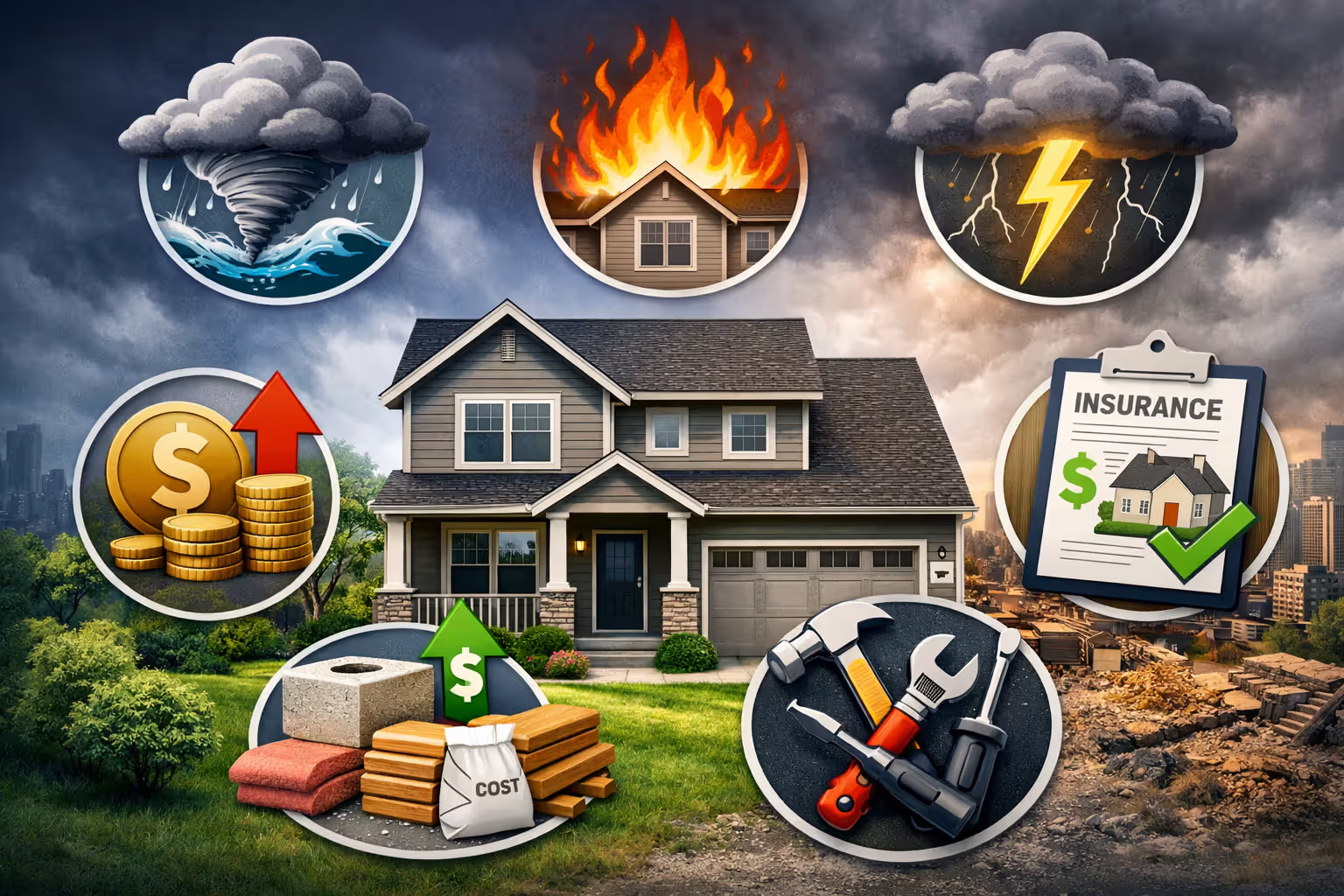
Insurance companies calculate premiums using complex risk models that evaluate dozens of variables. Your rate reflects the insurer's assessment of how likely you are to file a claim and how expensive that claim might be.
The primary cost drivers include your home's location and its exposure to natural disasters, the age and condition of your property, your claims history, the amount of coverage you carry, your credit-based insurance score, and the current replacement cost for building materials and labor. Many homeowners don't realize that even factors beyond their control—like regional wildfire activity or a neighbor's insurance fraud—can push rates higher across entire ZIP codes.
Inflation has hit the insurance industry particularly hard. Construction costs surged through 2024 and 2025, meaning insurers need more money to rebuild homes after total losses. Supply chain disruptions, labor shortages, and increased material costs have made even minor repairs significantly more expensive. When a roof replacement that cost $15,000 three years ago now runs $24,000, insurers adjust premiums accordingly.
Reinsurance costs have also spiked. Insurers buy their own insurance to protect against catastrophic losses, and reinsurance companies have raised rates substantially after years of billion-dollar disaster payouts. Those costs get passed directly to policyholders.
Author: Alyssa Coleman;
Source: talero.spotpariz.net
How Your Home's Location Affects Insurance Rates
Geography plays an outsized role in determining your premium. Two identical houses—same age, same square footage, same construction—can have vastly different insurance costs based solely on their ZIP codes.
Coastal properties face hurricane and storm surge risks that drive premiums up substantially. Florida, Louisiana, and Texas homeowners routinely pay three to four times the national average because of hurricane exposure. Some coastal areas have become nearly uninsurable through private markets, forcing homeowners into state-backed insurance pools that often charge even higher rates with less coverage.
Wildfire zones have seen the most dramatic increases recently. Homes in California's wildland-urban interface, parts of Colorado, and other western states face premiums that have doubled or tripled since 2023. Insurers have pulled out of high-risk areas entirely, leaving homeowners scrambling for coverage through surplus lines carriers at premium prices.
Your fire protection class matters more than most people realize. This rating, assigned by the Insurance Services Office, measures how well-equipped your local fire department is to protect your property. A home five miles outside city limits with a volunteer fire department and limited water supply will cost significantly more to insure than an identical house three blocks from a fully-staffed station with hydrants every 300 feet.
Crime rates influence premiums too. Higher theft and vandalism claims in your neighborhood translate to higher rates for everyone in that area. Insurers track claim frequency by ZIP code and adjust pricing accordingly.
Weather patterns beyond hurricanes and wildfires also factor in. Areas prone to hail damage, tornadoes, or severe thunderstorms see elevated rates. A single major hailstorm that damages roofs across an entire county can trigger rate increases that persist for years.
Understanding Your Coverage Limits and Deductible
The amount of coverage you carry and the deductible you choose directly impact your premium. These two elements represent a fundamental trade-off: more coverage or lower deductibles mean higher premiums, while accepting more out-of-pocket risk reduces your monthly cost.
Coverage limits should reflect your home's replacement cost—what it would cost to rebuild from the ground up using current labor and material prices. Many homeowners discover they're underinsured only after a major loss. Conversely, some carry excessive coverage that costs more than necessary. An accurate replacement cost estimate, updated every few years, ensures you're not overpaying for coverage you don't need or risking financial disaster with inadequate limits.
Extended replacement cost coverage, which pays above your stated limit if construction costs spike after a disaster, adds to your premium but provides valuable protection. Guaranteed replacement cost coverage, which rebuilds your home regardless of cost, commands even higher premiums but offers maximum security.
Personal property coverage, liability limits, and additional living expenses all contribute to your total premium. Increasing liability coverage from $300,000 to $500,000 might add $40 to your annual premium—a worthwhile investment for the added protection.
How Deductibles Work in Homeowners Insurance
Your deductible is the amount you pay out of pocket before insurance coverage kicks in. Standard deductibles range from $500 to $2,500, though some policies go higher. Choosing a $2,500 deductible instead of $500 might reduce your premium by 20-30%, but you'll need that cash available if disaster strikes.
Some policies use percentage deductibles for specific perils. Wind and hail deductibles often equal 1-5% of your home's insured value. On a $300,000 policy, a 2% wind deductible means you pay the first $6,000 of storm damage. These percentage deductibles can create significant out-of-pocket costs that catch homeowners off guard.
Hurricane deductibles work similarly in coastal states, sometimes applying separately from wind deductibles. You might face one deductible for a named hurricane and a different deductible for straight-line winds or hail. Read your policy carefully to understand what you'll actually pay after different types of claims.
Replacement Cost vs. Actual Cash Value Coverage
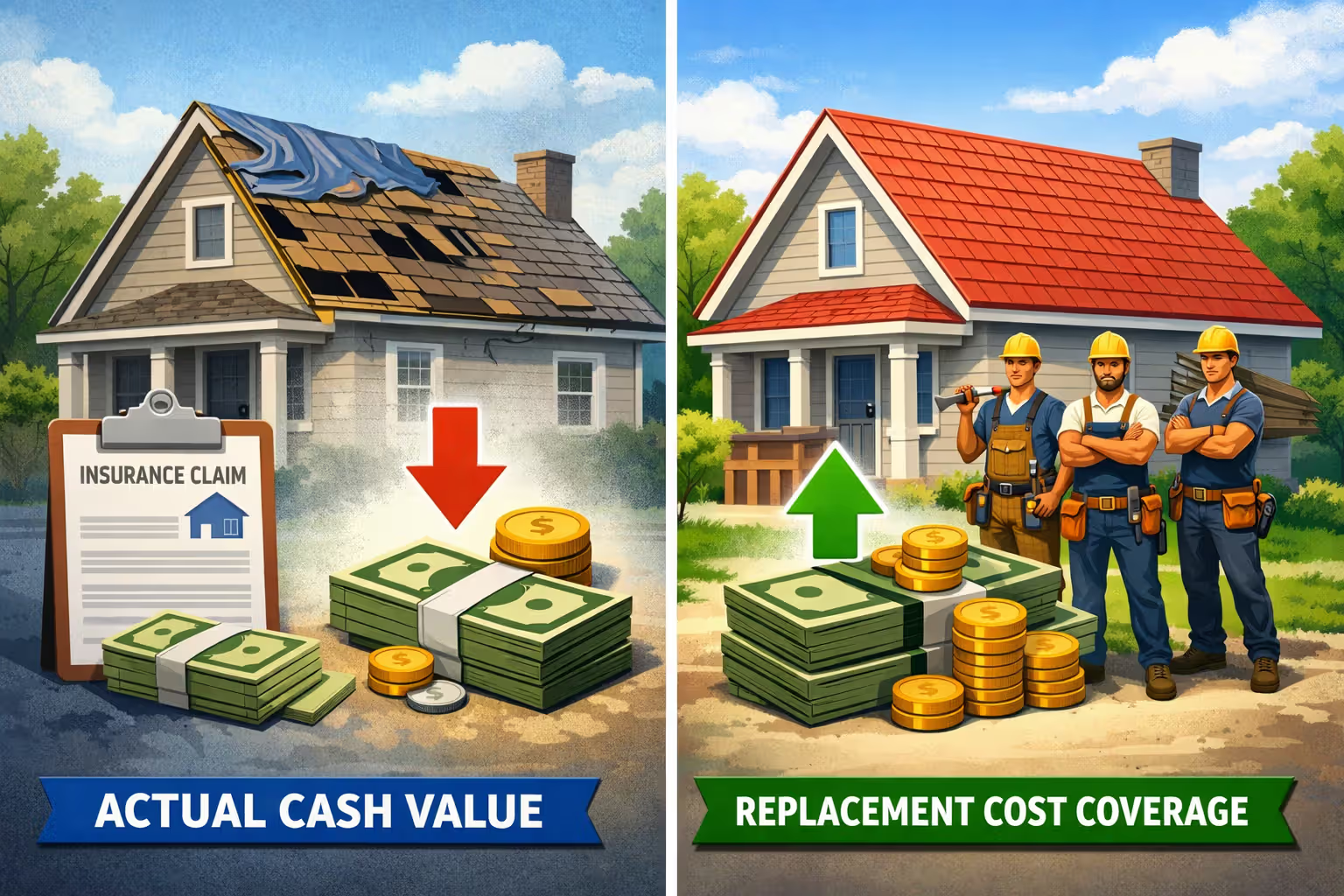
Replacement cost coverage pays to repair or rebuild without deducting for depreciation. If your 15-year-old roof gets destroyed, the insurer pays for a new roof at current prices. Actual cash value coverage subtracts depreciation, so that same roof might net you only 40% of replacement cost after depreciation is applied.
Replacement cost coverage costs 10-20% more but prevents situations where you receive a $4,000 check for a roof that costs $20,000 to replace. Most lenders require replacement cost coverage, and most homeowners find it worth the additional premium.
Author: Alyssa Coleman;
Source: talero.spotpariz.net
Claims History and Risk Assessment
Your personal claims history significantly impacts your rates. File two claims within three years and you'll likely see a substantial rate increase at renewal. File three claims and you might struggle to find coverage at all.
Insurers access your claims history through the Comprehensive Loss Underwriting Exchange (CLUE), a database that tracks claims filed on properties and individuals for seven years. Even claims you filed at a previous address follow you. Some homeowners discover that claims filed by previous owners of their current home affect their rates, though you can sometimes dispute these through your insurer.
Not all claims affect rates equally. A $2,000 theft claim might trigger a larger rate increase than a $15,000 weather-related claim, because insurers view frequent small claims as indicators of higher risk. Water damage claims, particularly from issues like burst pipes or slow leaks, often result in steeper increases than wind or hail damage because they suggest maintenance problems.
The claim-free discount rewards homeowners who haven't filed claims for five or more years, sometimes reducing premiums by 15-20%. Losing this discount after filing even a minor claim can make the rate increase more painful than the discount itself.
Some insurers offer claim forgiveness programs that protect your rate after your first claim in a certain period. These programs typically cost extra but can pay off if you need to file a claim.
Shopping for new insurance after filing claims proves difficult. Many insurers won't quote coverage for applicants with multiple recent claims, and those that do charge significantly higher rates. This dynamic traps some homeowners with their current insurer even when rates climb unreasonably.
Home Characteristics That Impact Your Premium
Your home's physical features directly influence how much you pay. Age matters tremendously—a 70-year-old house with original plumbing and electrical systems costs more to insure than a 10-year-old home built to modern codes. Older homes face higher risks of fires, water damage, and system failures.
Roof condition and age affect rates more than almost any other single factor. Insurers increasingly require roof inspections for homes with roofs over 15 years old. Some refuse to write new policies on homes with roofs over 20 years old, while others charge surcharges of 20-40% for aging roofs. A $12,000 roof replacement might reduce your annual premium by $600-800, paying for itself over time while providing better protection.
Construction materials influence risk assessment. Brick and stone homes generally cost less to insure than wood-sided houses. Fire-resistant materials reduce premiums in wildfire-prone areas. Homes with aluminum wiring or polybutylene plumbing face higher rates or coverage restrictions because these materials have documented failure rates.
Square footage directly correlates with premium cost—larger homes cost more to rebuild and typically contain more valuable contents. A 4,000-square-foot house will always cost more to insure than a 2,000-square-foot house, all else being equal.
Swimming pools, trampolines, and certain dog breeds increase liability risk and raise premiums. A pool might add $50-150 to your annual premium. Some insurers exclude coverage for specific dog breeds or require liability-only coverage for homes with trampolines.
Outdated heating, electrical, and plumbing systems increase claim likelihood. Knob-and-tube wiring, Federal Pacific electrical panels, and cast-iron drain pipes all trigger rate increases or coverage restrictions. Upgrading these systems reduces risk and often qualifies for premium discounts.
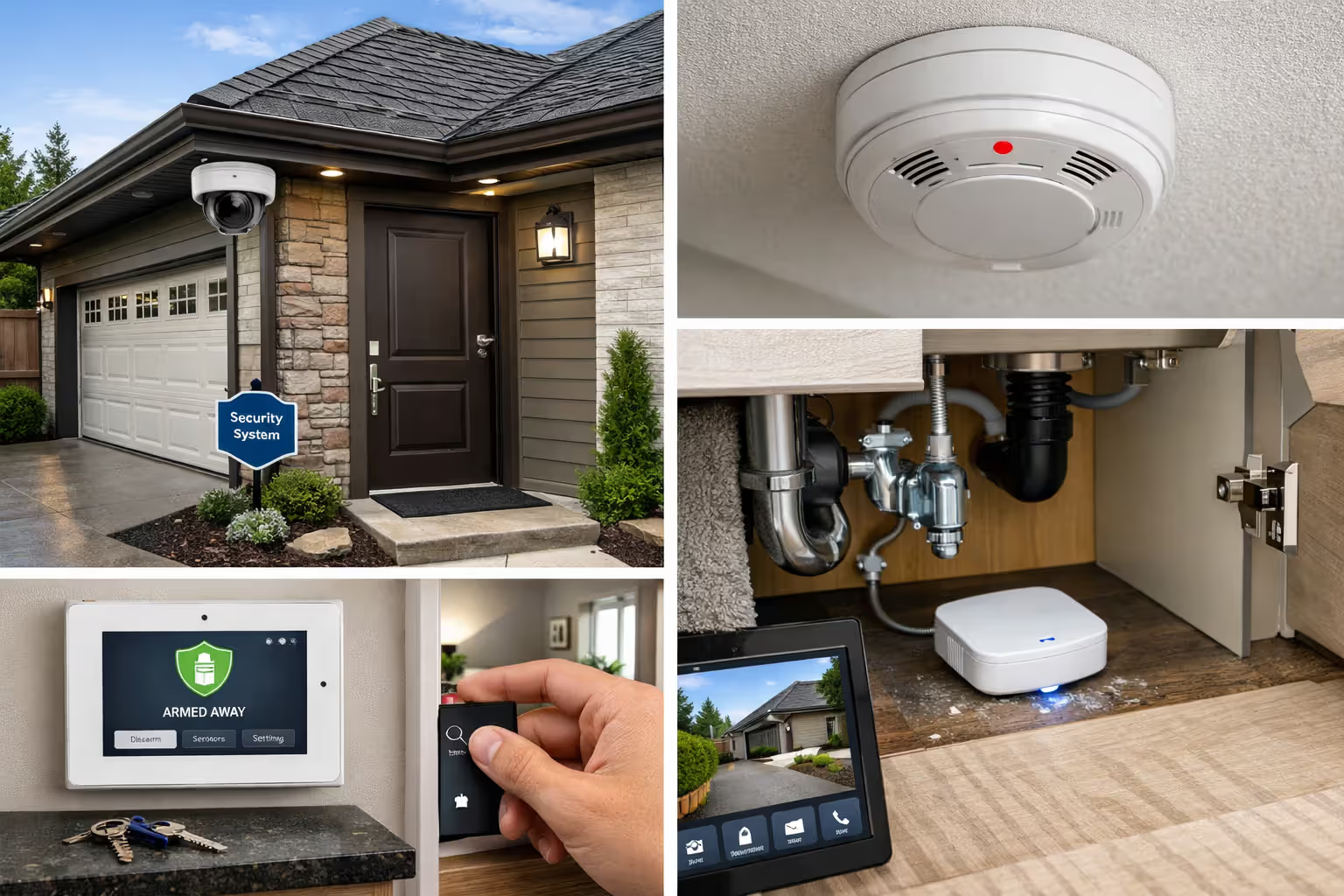
Home security features can lower rates. Monitored alarm systems, deadbolts, smoke detectors, and fire extinguishers demonstrate risk reduction. Some insurers offer 5-15% discounts for comprehensive security systems.
What You Can Do to Lower Your Homeowners Insurance
Homeowners need to understand that insurance pricing has fundamentally shifted over the past few years. The old model where rates increased 2-3% annually is gone. Climate volatility, inflation, and reinsurance costs have created a new reality where 15-25% annual increases are common in high-risk areas. The key is understanding which factors you can control—your deductible, your home's condition, your claims behavior—and optimizing those while accepting that location-based risk is simply the cost of living where you've chosen to live
— Jennifer Martinez
You're not powerless against rising premiums. Several strategies can reduce your costs without sacrificing necessary protection.
Increasing your deductible from $1,000 to $2,500 immediately lowers your premium. Run the numbers to see if the savings justify the additional risk. If you have sufficient emergency savings to cover a higher deductible, this trade-off often makes financial sense.
Bundling home and auto insurance with the same company typically saves 15-25% on both policies. Insurers reward customers who consolidate coverage, and the discount often exceeds what you'd save by splitting policies between different companies.
Shopping around remains the single most effective way to reduce costs. Rates vary dramatically between insurers for identical coverage. Get quotes from at least three companies every two to three years. Regional and local insurers sometimes offer better rates than national brands, particularly if you have characteristics that big companies' algorithms flag as high-risk but that smaller companies evaluate differently.
Improving your credit score can significantly reduce premiums in most states. Insurers use credit-based insurance scores to predict claim likelihood. Paying down debt, correcting credit report errors, and maintaining on-time payments can improve your score and lower your rate by 10-20%.
Ask about every available discount. Many insurers offer discounts for: - Being claim-free for five or more years - Installing wind-resistant roofing - Having a monitored security system - Being over 55 years old - Paying your premium in full annually - Going paperless - Having impact-resistant windows in hurricane zones - Installing a water leak detection system
Review your coverage annually to ensure it matches your current needs. If you've paid off expensive jewelry or reduced your personal property, you might lower coverage limits. If your home's value has plateaued or declined in your market, your replacement cost might not need to increase at the same rate as previous years.
Consider dropping coverage you don't need. If you have an older roof near the end of its life, some homeowners choose actual cash value coverage for the roof only, accepting depreciated payouts in exchange for lower premiums. This strategy requires careful consideration of your financial ability to cover the gap.
Make home improvements that reduce risk. Beyond roof replacement, consider upgrading to impact-resistant shingles, reinforcing garage doors in hurricane zones, replacing old electrical panels, or installing a whole-home water shutoff system. Many of these improvements qualify for immediate discounts and reduce long-term claim risk.
Avoid filing small claims whenever possible. If damage costs $2,000 and your deductible is $1,500, filing a claim for $500 might trigger rate increases that cost you thousands over the next five years. Use insurance for significant losses, not routine repairs.
Author: Alyssa Coleman;
Source: talero.spotpariz.net
Comparison of Average Annual Homeowners Insurance Premiums by State
| State | Average Annual Premium | Primary Risk Factors |
| Florida | $4,231 | Hurricanes, coastal exposure |
| Louisiana | $3,847 | Hurricanes, flooding |
| Texas | $3,575 | Hurricanes, hail, tornadoes |
| Oklahoma | $3,408 | Tornadoes, hail, wind |
| Colorado | $3,201 | Hail, wildfires |
| National Average | $1,899 | Varies by region |
| Vermont | $1,045 | Low disaster risk |
| Oregon | $987 | Moderate risk profile |
| Utah | $921 | Low disaster frequency |
| Hawaii | $897 | Strong building codes, low claims |
Premium data reflects 2026 market rates for typical single-family homes with standard coverage.
Frequently Asked Questions About High Homeowners Insurance Costs
High homeowners insurance premiums reflect genuine increases in risk and costs across the insurance industry. While frustrating, understanding the specific factors driving your rate empowers you to make strategic decisions about your coverage and your home.
Start by requesting a detailed explanation of your premium from your insurance agent or company. Ask which factors most significantly impact your rate and which changes would produce the greatest savings. Get quotes from multiple insurers to ensure you're getting competitive pricing. Consider the trade-offs between lower premiums and higher out-of-pocket risk when adjusting deductibles and coverage limits.
Invest in home improvements that reduce risk—roof replacement, system upgrades, security enhancements—when financially feasible. These improvements protect your property while potentially lowering insurance costs over time. Maintain your home proactively to prevent claims, and use insurance for significant losses rather than routine repairs.
Insurance costs will likely continue rising in many markets, particularly those exposed to climate-related risks. Factoring insurance costs into housing decisions has become as important as considering property taxes and mortgage rates. Understanding why your homeowners insurance is so high helps you navigate this challenging market and make informed decisions that balance protection with affordability.