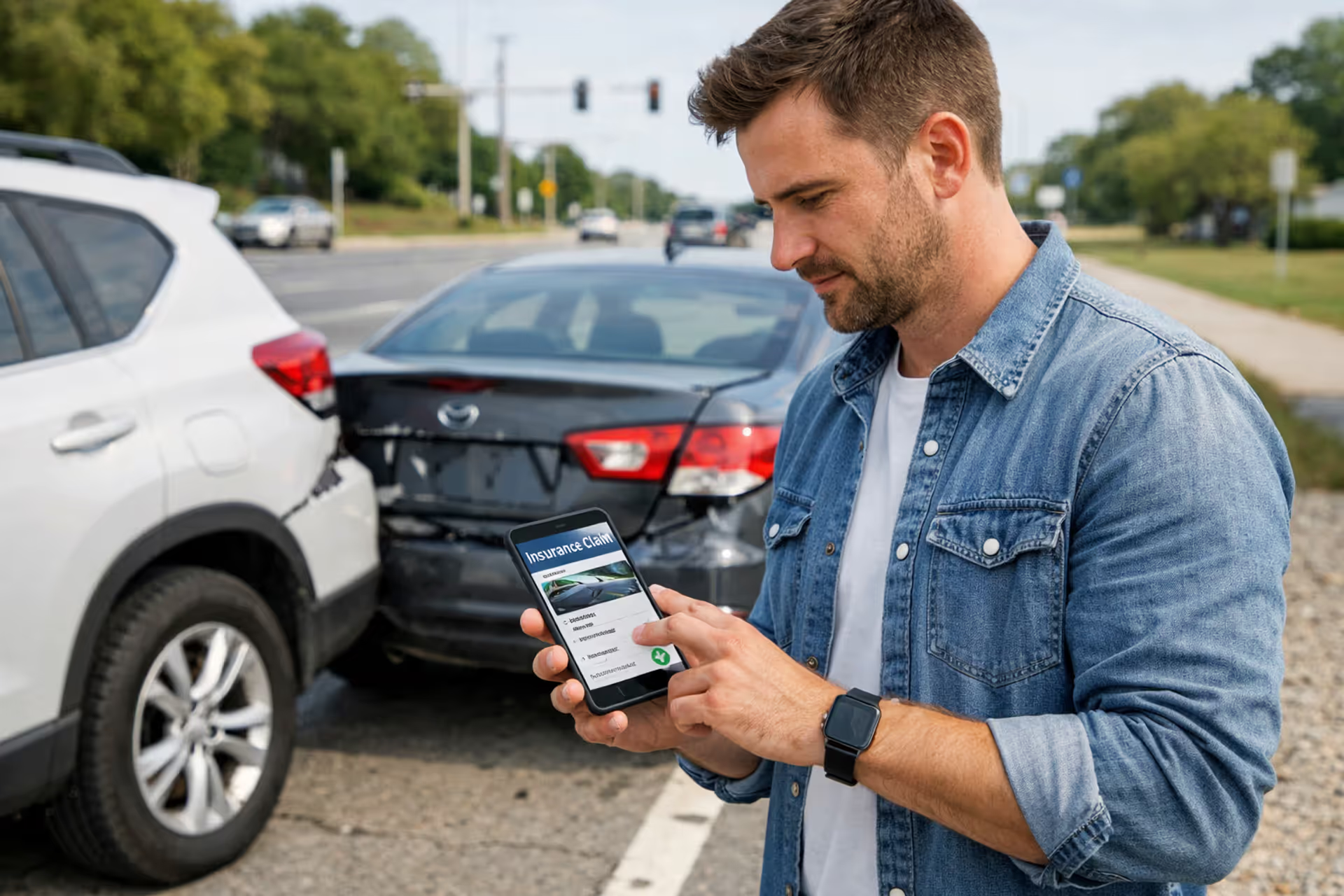
Driver reviewing car insurance after a minor roadside accident
How to Get Car Insurance for Your Vehicle?

Content
Most Americans need auto insurance—it's the law in 48 states—but here's what's wild: nearly 40% of drivers admit they have no idea what their policy actually covers. They signed up, started paying, and hoped for the best. That approach works fine until you're standing on the shoulder of I-95 after a fender-bender, realizing your "full coverage" doesn't mean what you thought it meant.
Getting the right car insurance isn't complicated, but it does require understanding a few key concepts: what protection you actually need (versus what the state says you need), how much you should pay out-of-pocket when things go wrong, and what happens when you actually file a claim. This guide walks through every essential detail.
What Car Insurance Covers and Why You Need It
Think of auto insurance as a financial safety net with multiple layers. Different coverage types handle different scenarios.
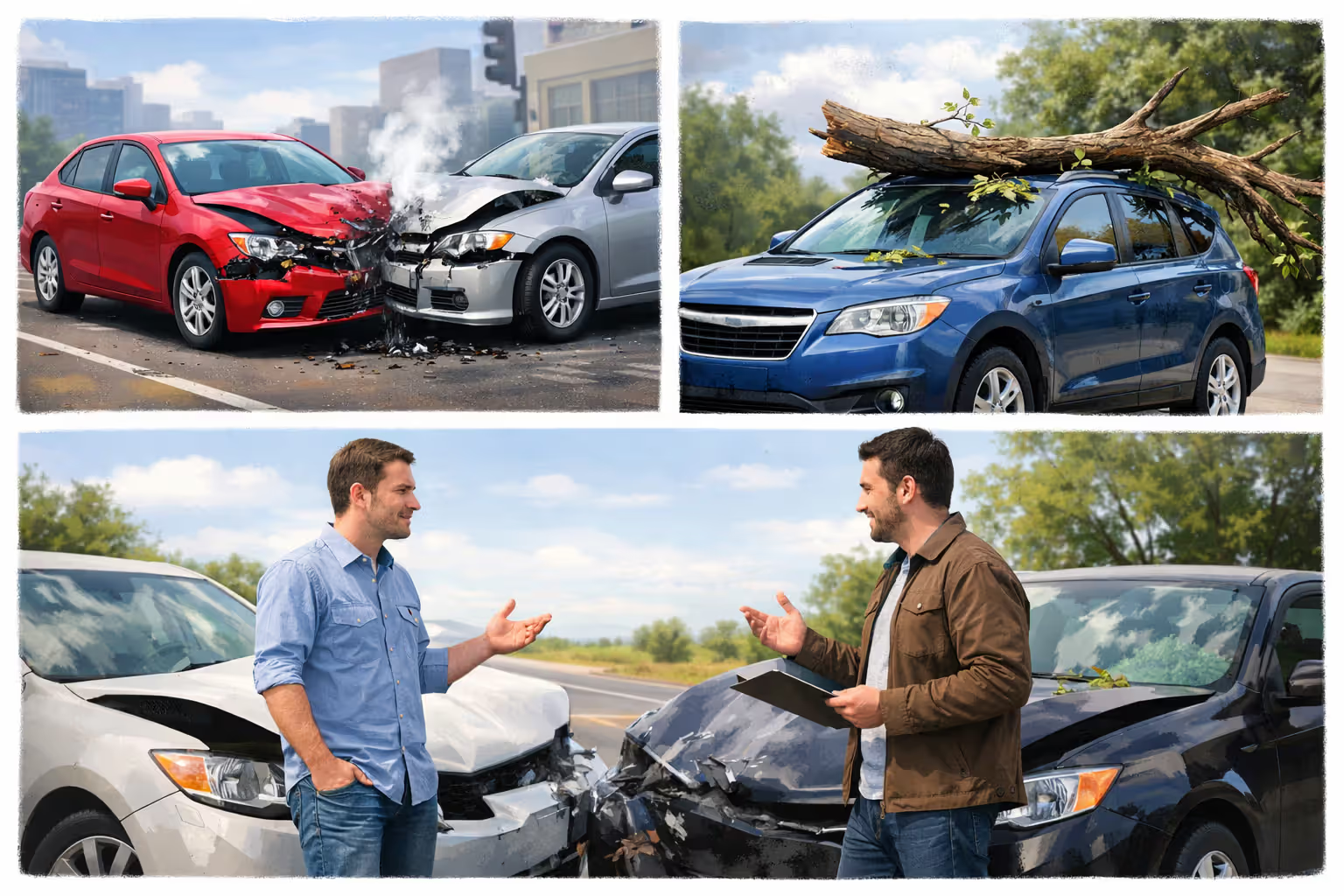
Liability coverage is the legal requirement that keeps you out of trouble with the DMV. It pays when you damage someone else's stuff or injure another person. Picture this: you're texting at a red light (don't do that), don't notice the light turned green, and the guy behind you gets impatient and honks. You startle, hit the gas, and plow into the SUV ahead of you. The driver needs physical therapy for six weeks. Her passenger goes to the ER. Both vehicles need bodywork. Liability insurance handles every penny of their bills and repairs. Your car? That's on you—unless you have the next type of coverage.
Collision coverage fixes your vehicle after crashes, whether you caused them or not. That same red-light scenario? Collision pays to fix your car too. It also covers you during winter storms when you hydroplane into a concrete barrier, or when you misjudge that tight parking garage turn and scrape your entire passenger side. The at-fault question doesn't matter with collision.
Comprehensive coverage protects against the random chaos of vehicle ownership. A tree limb falls during a storm and caves in your roof. Someone smashes your window to steal the loose change in your cupholder. During an evening drive through rural areas, wildlife darts into your path and damages your front end. Your catalytic converter gets stolen (happening constantly in certain cities right now). A hailstorm turns your hood into a golf ball. All comprehensive claims.
You'll also encounter uninsured motorist protection, which becomes your liability coverage when someone without insurance hits you. Medical payments coverage handles your hospital bills regardless of fault. Rental reimbursement pays for a temporary vehicle while yours gets repaired.
Here's the thing about legal requirements: New Hampshire and Virginia let you skip insurance entirely if you prove financial responsibility another way (like posting a bond). Every other state mandates liability coverage at minimum. Drive without it and you're looking at suspended licenses, four-figure fines, and SR-22 filing requirements that jack up your rates for years. Cause a serious accident uninsured? You could lose your house.
The mechanics are simple: you pay premiums (monthly, every six months, or annually), and when something bad happens, you file a claim. The insurance company investigates, confirms coverage, and pays according to your policy's terms and limits.
Steps to Get Car Insurance
Buying insurance isn't just about finding the lowest price. It's about matching coverage to your specific situation.
Assess Your Coverage Needs
Start with brutal honesty about your finances and risk tolerance. State minimums exist to satisfy legislators, not to protect your assets. California requires just $15,000 per person for bodily injuries. Emergency medical transport alone can exceed $3,000, while a single overnight hospital stay might run another $10,000. Minor surgery? You've blown past $15,000 before the patient even goes home. Cause a serious accident with those minimum limits and you're personally liable for everything above $15,000—potentially hundreds of thousands of dollars.
Look at what you're driving. If your car's only worth $2,800 and comprehensive plus collision costs $900 per year, you're paying nearly a third of the vehicle's value annually for coverage that maxes out at $2,800 minus your deductible. Maybe $1,500 after you pay out-of-pocket. Does that math work? For many older vehicles, it doesn't.
Now consider what you own. Rent an apartment with nothing in savings? Lower liability limits might suffice since you don't have assets worth suing for. Own a home with $120,000 in equity? You need robust liability protection—insurance experts typically suggest 100/300/100 at minimum (we'll decode those numbers shortly). Someone injured in an accident you caused can come after your house, retirement accounts, and future wages if insurance doesn't cover their losses.
How much cash could you access quickly if disaster struck tomorrow? That number should guide your deductible choice. Setting a $2,500 deductible to save $30 monthly sounds smart until your transmission pan catches a road hazard and you're scrambling to find $2,500.
Compare Quotes from Multiple Insurers
Insurance pricing is bizarre. Two companies can quote the exact same driver wildly different premiums for identical coverage—sometimes 50% apart. Why? Each insurer weighs risk factors differently, targets different customer profiles, and has different claims experiences in your area.
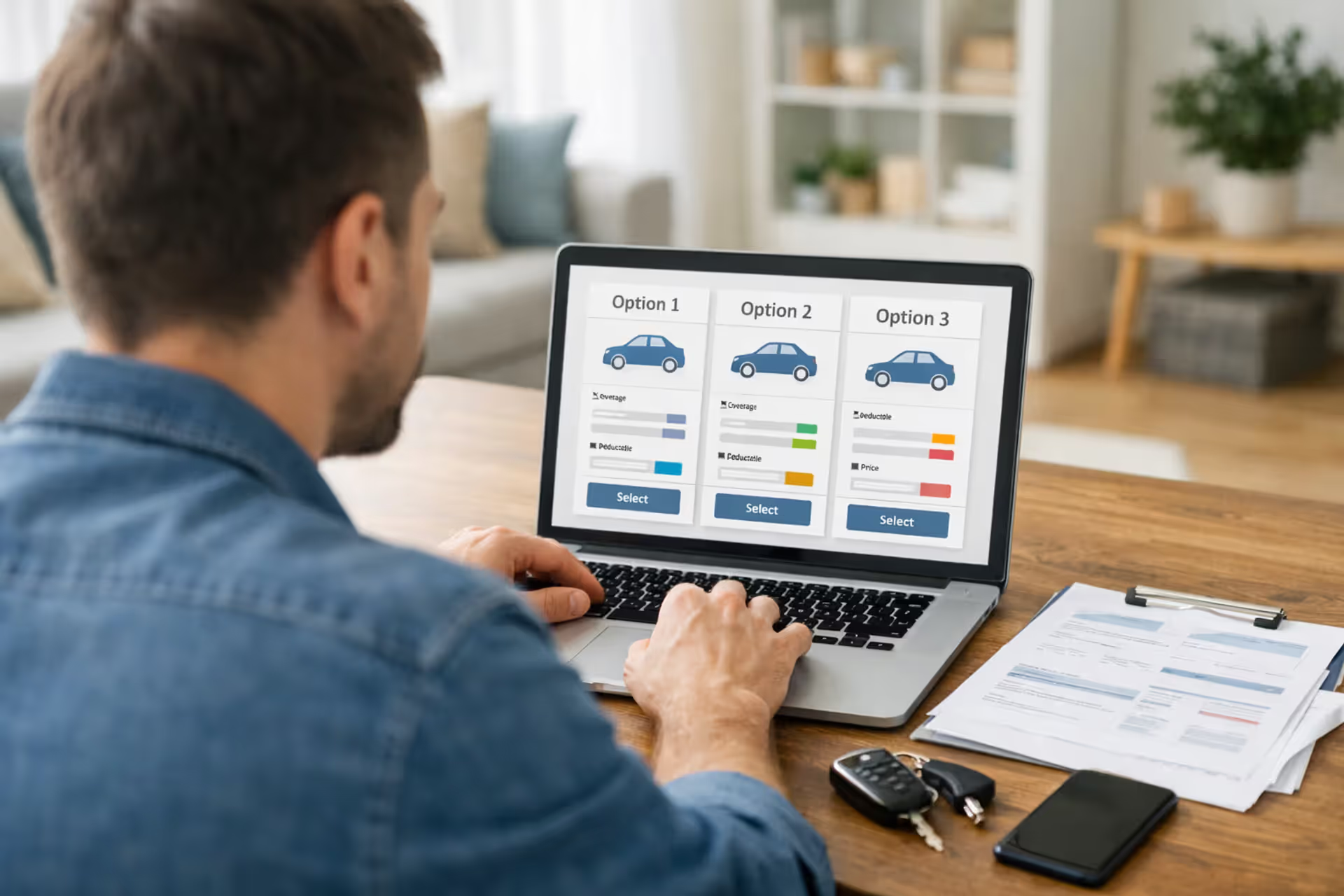
Request pricing from a minimum of five different carriers. Mix national brands (Progressive, Allstate, Liberty Mutual) with regional carriers that dominate your state. Don't skip online-only insurers like Geico or Lemonade—they often beat traditional agents on price.
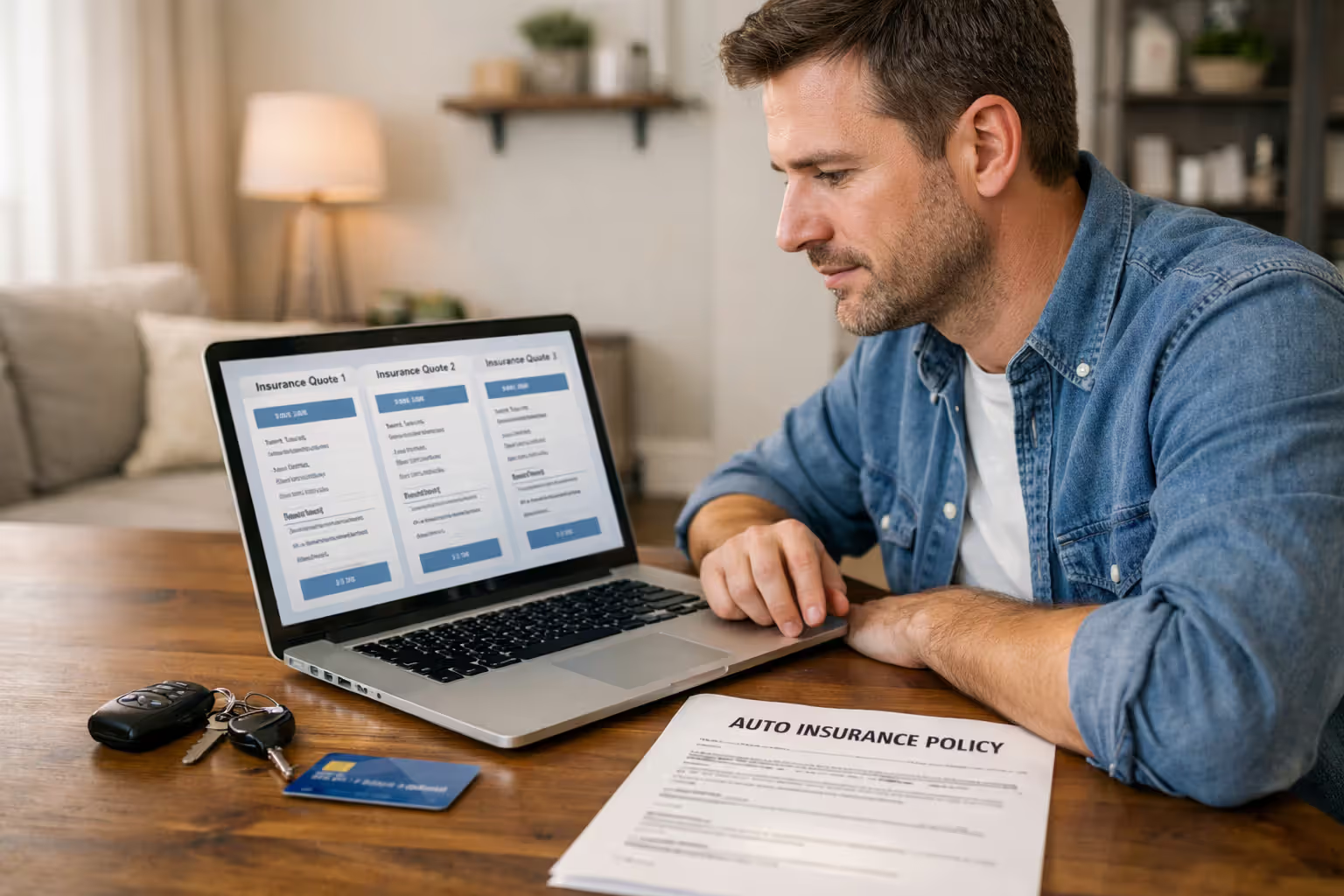
The essential step: verify you're evaluating identical coverage across all quotes. One quote might look $600 cheaper annually but include half the liability limits and double the deductible. Write down the exact coverage specifications and use identical numbers for every quote.
Discounts matter enormously. Bundling home and auto typically shaves 20-25% off both policies. Good student discounts for teenagers can reduce their astronomical rates by 10-15%. Low annual mileage (under 7,500 miles yearly) qualifies for discounts at many insurers. Modern safety features—automatic emergency braking, blind spot monitoring, lane departure warnings—can each knock off a few percentage points. Some companies offer 5% off just for setting up automatic payments.
Choose Your Policy and Finalize Purchase
Author: Caroline Halstead;
Source: talero.spotpariz.net
You've got quotes. You've verified coverage amounts. Now slow down and read the declarations page before you click "purchase."
Check that every listed driver is correct. Your teenager who just got their learner's permit needs to be on there. Verify your VIN matches your actual vehicle—sounds obvious, but mistakes happen. Confirm your address is right since your location significantly impacts pricing. Make sure coverage limits match what you requested.
Most insurers want the first month's premium upfront, though many let you split it into two payments if needed. Paying the full six-month premium immediately usually earns a small discount—5-7% typically. If you can afford it without straining your budget, take the discount.
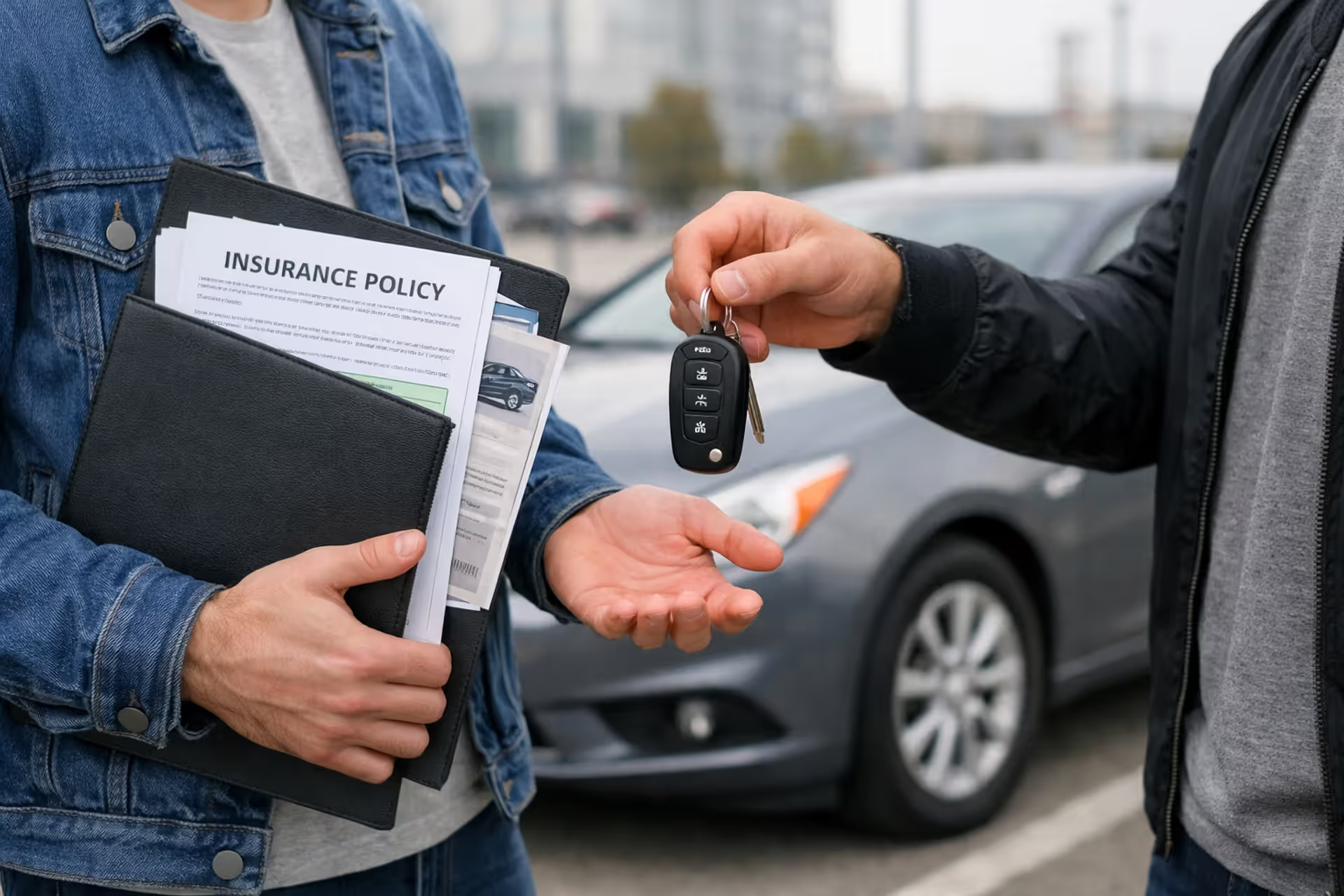
You'll get proof of insurance instantly—a digital ID card you can save to your phone or print. Keep it accessible always. Getting pulled over without proof means a ticket in most states even if you're legitimately insured.
Schedule your start date carefully. Coverage activates at 12:01 AM on the date you select. Switching insurers? Make the new policy effective exactly one day after the old one expires. Even a single day without coverage creates a "lapse" in your insurance history, which insurers view as high-risk behavior and penalize with higher rates for years.
Understanding Your Car Insurance Deductible
Your deductible is your skin in the game—the portion you pay before insurance contributes a dollar.
Here's a real scenario: you swerve to avoid a pothole, overcorrect, and sideswipe a parked car. Body shop estimates $4,200 in repairs. You selected a $750 deductible when you bought the policy. You write a check for $750. Insurance covers the remaining $3,450.
Deductibles only apply to collision and comprehensive claims—the parts of your policy protecting your vehicle. You never pay a deductible for liability claims when you damage someone else's property or injure another person. Insurance handles those bills directly.
Most policies let you choose deductibles between $100 and $2,500, with $500 and $1,000 being most common. The relationship is inverse: higher deductibles mean lower premiums because you're accepting more financial risk yourself. Bump your deductible from $250 to $1,000? Expect premiums to drop 20-35%, depending on your insurer and location.
Choosing the right amount requires honest self-assessment. Could you comfortably access $1,500 right now if you needed to? If that would require credit cards or borrowing from family, maybe stick with a $500 deductible. The premium difference might be $40 monthly—$480 yearly. Weigh that against the stress of scrambling for cash after an accident.
One useful guideline: set your deductible at roughly one week's take-home pay. Most households can manage that amount without serious financial disruption.
Remember that deductibles apply per incident. File three separate claims within twelve months? You'll pay three deductibles. This is why many people skip filing claims for minor damage that barely exceeds their deductible—paying $600 out-of-pocket beats paying a $500 deductible and risking rate increases from a claim on your record.
Author: Caroline Halstead;
Source: talero.spotpariz.net
Car Insurance Coverage Limits Explained
Limits determine the maximum your insurer will pay for covered losses. Exceed those limits and you're personally liable for the difference—which can be financially catastrophic.
Liability limits use three numbers separated by slashes: 50/100/25, for instance. The first number ($50,000) is the cap for any single person's bodily injury. The second ($100,000) is the total maximum for all bodily injuries in one accident. Property damage receives the third limit ($25,000 per incident).
Why this matters: imagine you run a stop sign and T-bone a sedan with three occupants. The driver suffers $65,000 in medical expenses. A passenger has $55,000 in bills. Another passenger needs $25,000 in treatment. Your policy has 50/100/25 limits. Insurance pays $50,000 for the driver (the per-person limit), $50,000 total for both passengers (capping out the $100,000 per-accident limit), leaving you personally owing $45,000. That's a lawsuit, wage garnishment, and potentially bankruptcy.
| State | Bodily Injury Per Person | Bodily Injury Per Accident | Property Damage |
| California | $15,000 | $30,000 | $5,000 |
| Florida | Not mandated* | Not mandated* | $10,000 |
| Texas | $30,000 | $60,000 | $25,000 |
| New York | $25,000 | $50,000 | $10,000 |
| Pennsylvania | $15,000 | $30,000 | $5,000 |
| Ohio | $25,000 | $50,000 | $25,000 |
| Georgia | $25,000 | $50,000 | $25,000 |
| North Carolina | $30,000 | $60,000 | $25,000 |
| Michigan | $50,000 | $100,000 | $10,000 |
| Virginia | $30,000 | $60,000 | $20,000 |
*Florida mandates Personal Injury Protection rather than bodily injury liability
Those state minimums are dangerously low for modern medical costs and vehicle values. Insurance professionals consistently recommend 100/300/100 as a reasonable baseline for drivers with assets to protect. Vehicles get expensive—totaling a new electric SUV could easily hit $80,000. Medical bills spiral fast—a serious injury requiring surgery, hospitalization, and months of physical therapy can reach six figures.
Uninsured and underinsured motorist coverage fills the gap when someone hits you and either has no insurance or carries inadequate limits. Roughly 13% of American drivers are completely uninsured—one in eight cars on the road. This coverage treats their accident like it was your liability claim, paying your bills and repairs when the at-fault driver can't.
Collision and comprehensive have limits too, based on your vehicle's actual cash value (what it's worth today, not what you paid). Total a car currently valued at $16,500? The maximum payout is $16,500 minus your deductible, even if you still owe $22,000 on the loan. That's why gap insurance exists—it covers that difference for financed vehicles.
How the Car Insurance Claim Process Works

Author: Caroline Halstead;
Source: talero.spotpariz.net
You've just been in an accident. You're shaken up, maybe injured, definitely stressed. Here's exactly what happens next.
Immediate reporting: Call your insurer's claims department right away—don't wait until you get home. Most operate around the clock. You'll provide basics: where and when it happened, who was involved, a quick description of the accident. Many insurers now have mobile apps where you can file claims, upload photos, and track progress all in one place. Report it within 24 hours at most; delays can complicate claims.
Scene documentation: While still at the accident site, if you're physically able, document everything. Take 20-30 photos from multiple angles showing all vehicle damage, the overall scene, street signs, traffic signals, skid marks, road conditions—everything. Exchange information with other drivers: full names, phone numbers, insurance companies and policy numbers, vehicle makes and models, license plate numbers. Any bystanders who saw what happened? Collect their names and phone numbers for later reference. Call police if anyone appears injured, if vehicles can't be moved safely, or if damage looks significant (most states require police reports when damage exceeds $500-$2,000, varying by location).
Adjuster assignment: Within one business day, your insurer assigns a claims adjuster to investigate. This person becomes your main contact. They'll call to discuss the accident in detail, explain next steps, and answer questions. They'll review any police reports, examine photos, interview witnesses if necessary, and determine fault and coverage applicability.
Damage evaluation: The adjuster needs to see your vehicle's damage firsthand. You can drive it to their office, have them visit your home, or take it to a repair shop. They'll assess damage and estimate repair costs. If repairs would exceed 70-80% of the vehicle's value, they'll likely declare it a total loss. You can always get independent repair estimates if you believe the adjuster's assessment is too low—you're not obligated to accept their first evaluation.
Resolution and payment: Once everything checks out, the insurer issues payment. For repairs, they might pay the shop directly (after you pay your deductible to the shop) or reimburse you after repairs are complete. For total losses, they'll send you a check for the vehicle's actual cash value minus your deductible. Timeline varies—simple claims with clear liability might settle in a week; complex multi-vehicle accidents with injuries could take several months.
Keep meticulous records throughout. Save every email, text, and letter. Document every phone conversation: date, time, representative's name, what you discussed. Take notes. This creates a paper trail if disputes arise.
Insurance companies employ thousands of adjusters whose job is settling claims efficiently and economically. That's not evil—it's business. But it means their first offer isn't always their best offer. If you genuinely believe your vehicle's value is higher than their assessment, present evidence: recent comparable sales, dealer appraisals, documentation of recent major repairs or upgrades. Be professional but persistent. I've seen settlements increase $2,000-$5,000 when owners came prepared with solid evidence
— Robert Martinez
Common Mistakes When Getting Car Insurance
Even people who've had insurance for decades make costly errors that could be easily avoided.
Accepting bare-minimum state requirements is probably the single most dangerous mistake drivers make. Those minimums were often established 20-30 years ago when healthcare cost a fraction of today's prices and vehicles were cheaper. A moderately serious accident today—broken bones, concussion, couple days hospitalized—can generate $150,000+ in medical bills. If you're carrying 25/50/25 coverage and cause that accident, you're personally responsible for over $100,000. The injured party's attorney will come after your house, your bank accounts, your wages. People go bankrupt this way.
Never comparing rates is like assuming the grocery store you shopped at five years ago still has the best prices. Insurance companies constantly adjust their pricing models, enter new markets, exit unprofitable segments, and compete for different customer demographics. The company that gave you a killer rate when you were 28 might no longer be competitive now that you're 35 with two kids. Comparing quotes every two to three years typically saves 15-25% by switching to a more competitive insurer.
Ignoring discount opportunities leaves hundreds of dollars on the table annually. Beyond obvious ones like bundling or good driver discounts, ask about: professional affiliation discounts (teachers, engineers, healthcare workers, first responders often qualify), alumni association discounts, defensive driving course credits (usually good for 5-10% off for three years), military service discounts, early signing discounts for renewing before your policy expires, paperless billing discounts, and paid-in-full discounts. Stack four or five discounts and you might reduce premiums 30-40%.
Misunderstanding what you bought leads to nasty surprises during claims. Classic example: drivers think "full coverage" is an actual thing. It's not. It's slang for "liability plus collision plus comprehensive," but it doesn't tell you anything about your actual limits or deductibles. Another common confusion: believing liability coverage protects your own vehicle (it only covers others' property). Or thinking comprehensive means "everything" (it doesn't cover collisions—that's literally a different coverage type).
Dropping protection prematurely on aging vehicles sometimes backfires. Yes, maintaining collision and comprehensive on a 2008 sedan worth $3,200 while paying $850 annually for those coverages makes little mathematical sense. But if that old sedan is your only transportation, you have no emergency fund, and you absolutely need a car to get to work, maybe that $850 is worth the peace of mind. Context matters.
Forgetting to update your policy after life changes creates coverage gaps and missed savings. Got married? That should lower your rate. Moved from downtown Chicago to a rural suburb? Your premium should drop significantly. Paid off your car loan? You might drop collision and comprehensive if the car's value is low. Bought a new vehicle? You've got 30 days to add it, but doing so immediately ensures it's properly covered. Teenager got their license? They absolutely must be listed or claims involving them could be denied entirely.

Author: Caroline Halstead;
Source: talero.spotpariz.net
Frequently Asked Questions
Getting proper car insurance isn't rocket science, but it demands more thought than picking the first cheap quote you find online. The coverage decisions you make today directly determine whether an accident becomes a minor inconvenience or a financial catastrophe that haunts you for years.
Take time to honestly assess what you need based on your assets, your vehicle's value, and your risk tolerance. Understand how deductibles affect both your premiums and out-of-pocket costs. Know what your coverage limits actually mean and whether they'd protect you in a worst-case scenario. And please, compare quotes from multiple insurers—the hour you invest could save you thousands.
Your situation changes constantly: new vehicles, new drivers in the household, new addresses, improving credit scores. Review your policy annually to ensure it still fits your life. That proactive approach keeps you properly protected while avoiding the premium creep that happens when you ignore your coverage for years.
The goal isn't just checking a legal box or finding the absolute lowest price. It's securing genuine protection that lets you drive with confidence, knowing that when the unexpected happens—and it will eventually—you won't lose everything you've worked for.