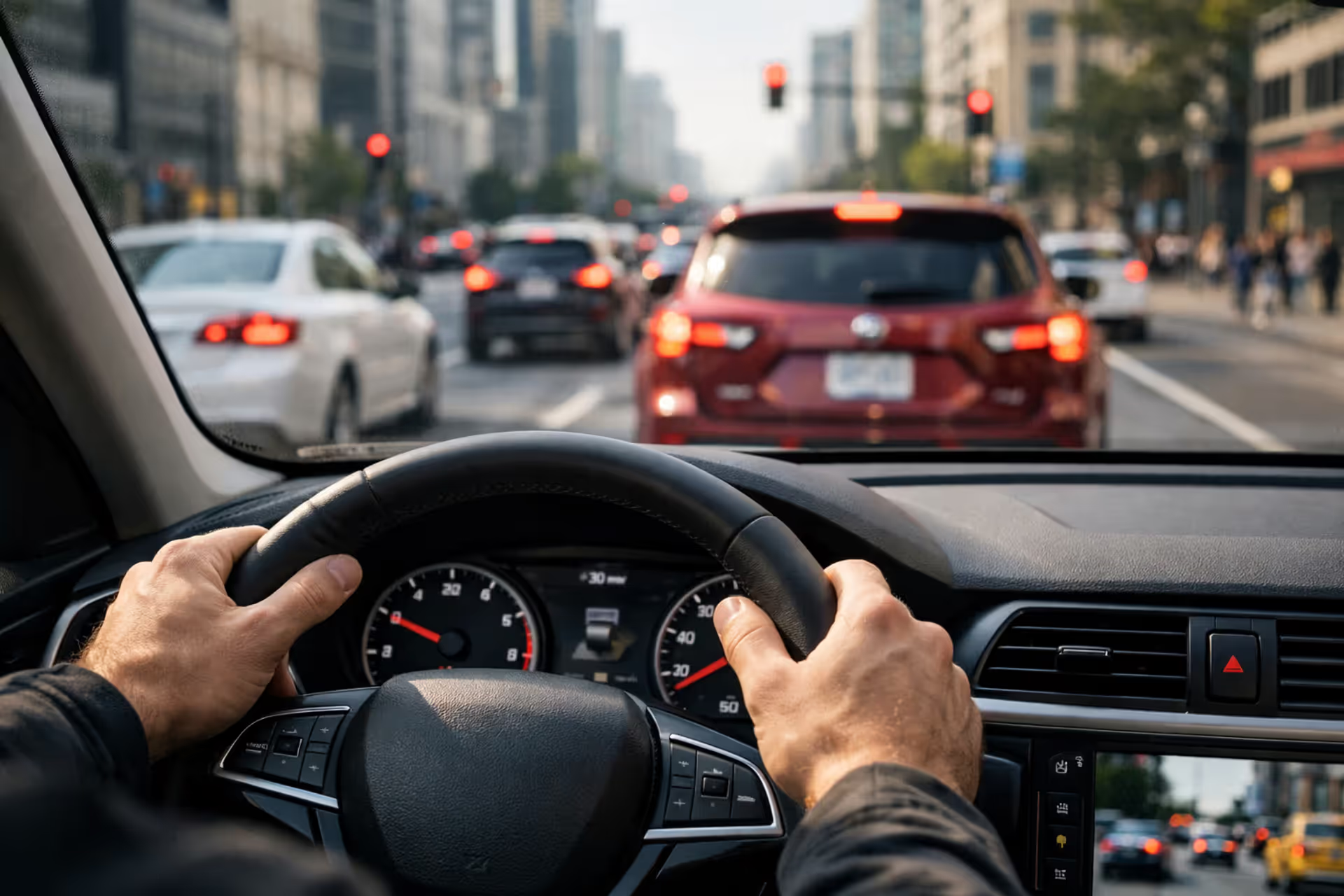
Driver behind the wheel in city traffic, representing liability car insurance and road responsibility
What Is Liability Car Insurance?

Content
When you're behind the wheel, you're responsible for more than just your own safety. Every driver faces the possibility of causing an accident that injures someone else or damages their property. Liability car insurance exists to protect you from the financial devastation that can follow such incidents—covering medical bills, vehicle repairs, and legal costs that could otherwise drain your savings or lead to bankruptcy.
Most states legally require drivers to carry liability insurance before they can register a vehicle or legally drive. Yet many motorists don't fully understand what their policy actually covers, how much protection they truly have, or what happens when they file a claim. This guide breaks down everything you need to know about liability car insurance, from basic definitions to coverage limits, deductibles, and the claims process.
Liability Car Insurance Definition
Liability car insurance is coverage that pays for injuries and property damage you cause to others in an at-fault accident. Unlike collision or comprehensive insurance—which repair your own vehicle—liability protection focuses exclusively on compensating third parties: the other driver, their passengers, pedestrians, or property owners affected by your mistake.
In 48 states, liability insurance is mandatory. Only New Hampshire and Virginia allow drivers to operate vehicles without it, though Virginia charges an uninsured motorist fee and both states still hold drivers financially responsible for any damage they cause. State minimum requirements vary widely, but the core principle remains the same: if you're at fault, your liability policy steps in to cover the victim's losses up to your policy limits.
The purpose extends beyond legal compliance. Liability insurance protects your personal assets—your home, savings, and future wages—from lawsuits filed by injured parties. Without adequate coverage, a single serious accident could result in garnished wages, liens on your property, or forced asset liquidation to satisfy a judgment.

Author: Caroline Halstead;
Source: talero.spotpariz.net
What Does Liability Car Insurance Cover
Liability policies consist of two distinct components, each addressing different types of harm you might cause. Understanding the difference helps you assess whether your coverage matches your actual risk.
Bodily Injury Liability Coverage
Bodily injury liability pays for physical harm you cause to other people. This includes immediate medical expenses like emergency room visits, surgery, and hospitalization, as well as ongoing costs such as physical therapy, rehabilitation, prescription medications, and follow-up care. If injuries are severe, the coverage extends to long-term nursing care, disability accommodations, and lost wages when victims can't return to work.
Beyond medical bills, bodily injury liability covers your legal defense if you're sued. Attorney fees, court costs, and settlement negotiations all draw from this portion of your policy. In fatal accidents, it pays for funeral expenses and wrongful death claims brought by the victim's family.
Real-world example: You run a red light and T-bone another car, breaking the driver's leg and giving a passenger a concussion. Your bodily injury liability covers their ambulance transport, emergency room treatment, orthopedic surgery, neurological evaluation, three months of physical therapy, and the wages both victims lose during recovery. If they hire attorneys and sue for pain and suffering, your policy pays for your legal defense and any settlement or judgment up to your coverage limit.
Property Damage Liability Coverage
Property damage liability handles the cost of repairing or replacing other people's property you damage in an accident. Most commonly, this means the other driver's vehicle, but coverage extends far beyond cars.
If you veer off the road, this coverage pays to repair fences, mailboxes, landscaping, building facades, utility poles, or traffic signals you strike. It covers damage to cargo another vehicle was transporting. In parking lot accidents, it handles repairs to other cars you hit while maneuvering.
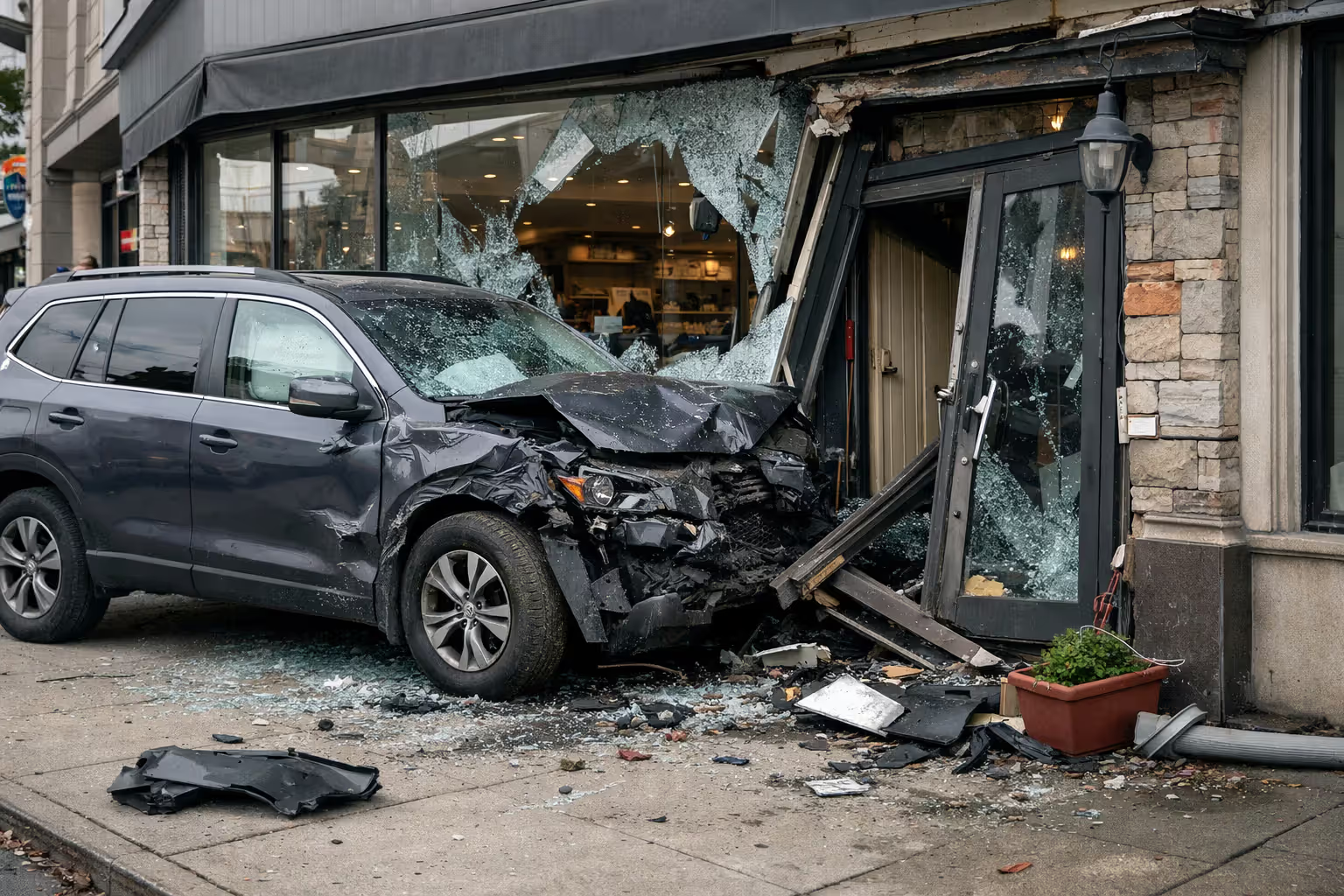
Real-world example: You lose control on a slippery road and slide into a parked luxury SUV, then continue into a storefront, shattering the plate glass window and damaging merchandise displays. Your property damage liability pays to repair the SUV (or replace it if totaled), replace the store's window, fix the damaged door frame, and compensate the business owner for ruined inventory. If the store loses business during repairs, your coverage may extend to those economic losses as well, depending on your policy limits and state law.
Author: Caroline Halstead;
Source: talero.spotpariz.net
Coverage Limits and How to Choose Them
Liability insurance is sold with split limits, expressed as three numbers separated by slashes—for example, 25/50/25. The first number represents bodily injury coverage per person (in thousands), the second covers total bodily injury per accident, and the third indicates property damage coverage per accident.
In a 25/50/25 policy: - $25,000 maximum for any single injured person - $50,000 maximum for all injuries in one accident - $25,000 maximum for property damage per accident
State minimums typically range from 15/30/5 to 25/50/25, but these bare-minimum policies rarely provide adequate protection. A moderate accident involving two injured people and a totaled newer vehicle can easily exceed $100,000 in costs. If your liability limits fall short, you're personally responsible for the difference, and injury victims can sue to collect from your assets.
Insurance professionals generally recommend 100/300/100 coverage as a baseline for most drivers, with higher limits for those who own homes, have significant savings, or face elevated risk due to long commutes or high-traffic driving environments. The cost difference between minimum coverage and substantially higher limits is often surprisingly small—sometimes just $15 to $30 per month—because insurers know most claims fall well below policy maximums.
Consider your net worth when selecting limits. A useful rule of thumb: carry liability coverage equal to or greater than your total assets. If you own a home with $150,000 in equity and have $75,000 in retirement savings, you're carrying $225,000 in exposed assets that a judgment could reach. A 100/300/100 policy provides $300,000 in bodily injury protection and $100,000 for property damage, offering reasonable protection for your financial position.
For drivers with substantial assets, umbrella liability policies provide an additional layer of protection. These policies sit above your auto liability coverage, adding $1 million to $5 million in extra coverage for a relatively modest premium, typically $200 to $500 annually.
Author: Caroline Halstead;
Source: talero.spotpariz.net
How the Liability Insurance Claim Process Works
Understanding the claims process helps you respond effectively after an at-fault accident and manage expectations about timing and outcomes.
Immediate aftermath: At the accident scene, exchange insurance information with the other driver and document the scene with photos. Contact your insurance company within 24 hours, even if the other party plans to file the claim. Your insurer needs to know about the incident to prepare a defense if needed.
Claim filing: The injured party typically files a claim directly with your insurance company. You'll provide your account of the accident to your claims adjuster, who opens a file and begins investigating. Your insurer has a duty to defend you, meaning they handle all communication with the claimant and their attorneys.
Investigation phase: The adjuster reviews police reports, interviews witnesses, examines vehicle damage, and assesses medical records to determine fault and verify the extent of injuries and property damage. This process typically takes two to four weeks for straightforward cases, longer when injuries are severe or fault is disputed.
Evaluation and negotiation: Once the investigation concludes, the adjuster determines the claim's value based on medical expenses, repair costs, lost wages, and pain and suffering (in states that allow such damages). If the claim falls within your policy limits, your insurer negotiates a settlement with the claimant. Most liability claims settle without litigation.
Payout: After reaching a settlement, your insurance company pays the claimant directly. You typically don't handle any money yourself. Simple property damage claims may settle within 30 days, while injury claims involving ongoing treatment can take several months or even a year if surgery or long-term rehabilitation is involved.
When limits are exceeded: If the claim exceeds your coverage limits, your insurer pays up to the policy maximum and notifies you that you're personally exposed for the remainder. The claimant can then pursue you directly through a lawsuit. This scenario underscores why adequate limits matter—your insurer stops defending you once policy limits are exhausted.
Liability Insurance Deductibles Explained
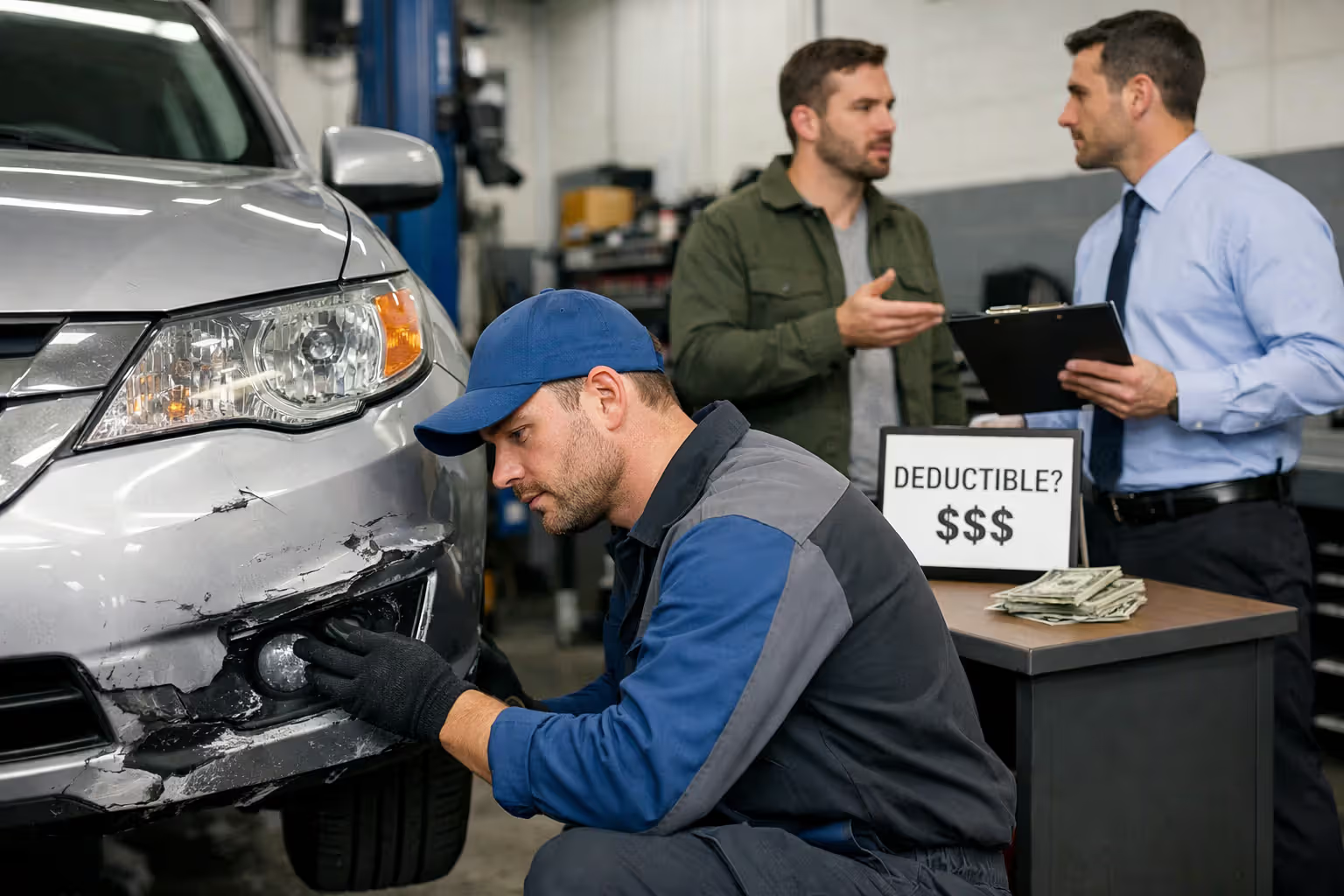
One of the most common misconceptions about car insurance centers on deductibles and liability coverage. Here's the critical fact: liability insurance typically has no deductible. You never pay out of pocket when your liability coverage pays a claim for damage you caused to someone else.
Deductibles apply only to first-party coverages—insurance that repairs your own vehicle or property. Collision coverage (which fixes your car after an accident regardless of fault) and comprehensive coverage (which handles theft, vandalism, weather damage, and animal strikes) both require you to pay a deductible before insurance covers the rest. Common deductible amounts are $500, $1,000, or $1,500.
The confusion arises because most drivers purchase both liability and first-party coverages together. When you're at fault in an accident, your liability coverage pays for the other driver's car with no deductible, but if you want your own car repaired, you'll use your collision coverage and pay your deductible first.
Example scenario: You rear-end another car at a stoplight. The other driver's repair costs $3,800, and your own car needs $2,200 in repairs. Your liability property damage coverage pays the full $3,800 to the other driver with no deductible. If you have collision coverage with a $500 deductible, you pay $500 and your insurer pays $1,700 to repair your vehicle. If you only carry liability insurance (no collision), you pay the entire $2,200 yourself—but you still owe nothing toward the other driver's repairs because liability coverage handled that.
This structure explains why liability-only policies cost significantly less than "full coverage" (liability plus collision and comprehensive). You're accepting the risk of paying for your own vehicle repairs in exchange for lower premiums.
Author: Caroline Halstead;
Source: talero.spotpariz.net
Common Mistakes When Buying Liability Coverage
Many drivers undermine their financial protection by making preventable errors when purchasing liability insurance.
Choosing state minimum limits: The most widespread mistake is buying only the minimum required coverage. State minimums were set years or decades ago and haven't kept pace with vehicle values or medical costs. A 25/50/25 policy might have seemed reasonable in 2010, but in 2026, even a moderate SUV can cost $50,000 to replace, and a brief hospital stay easily exceeds $25,000. One serious accident can exhaust minimal coverage, leaving you personally liable for hundreds of thousands in excess damages.
Assuming liability covers your own vehicle: Drivers who've never filed a claim sometimes believe their liability insurance will repair their own car after an at-fault accident. It won't. Liability is strictly third-party coverage. If you want your own vehicle repaired regardless of who's at fault, you need collision coverage. If you're financing or leasing a vehicle, your lender requires collision and comprehensive coverage, but once the loan is paid off, many drivers drop these coverages to save money—then discover too late that their liability-only policy won't fix their car after they cause an accident.
Ignoring exclusions: Liability policies contain important exclusions. Intentional damage isn't covered—if you deliberately hit another vehicle, your insurer won't pay. Business use often requires separate commercial coverage; delivering food or transporting passengers for payment may void your personal liability policy. Racing, stunt driving, and using your vehicle in a crime all trigger exclusions. Read your policy to understand what activities aren't protected.
Skipping umbrella policies: Drivers with significant assets often carry adequate auto liability limits but fail to consider umbrella coverage. An umbrella policy is remarkably cost-effective, providing $1 million or more in additional liability protection across all areas of your life—auto, home, recreational vehicles—for $300 to $500 per year. If you have a net worth above $300,000, umbrella coverage deserves serious consideration.
Not reviewing coverage after life changes: Your liability needs change as your financial situation evolves. Buying a home, building retirement savings, receiving an inheritance, or starting a business all increase your exposed assets. Review your liability limits annually and after major life events to ensure your coverage still matches your risk.
State Minimum vs. Recommended Liability Coverage
The gap between what states require and what insurance professionals recommend can be substantial. This table compares minimum legal requirements with expert-recommended coverage for several states:
| State | State Minimum | Recommended Minimum | Gap |
| California | 15/30/5 | 100/300/100 | $85K–$95K |
| Florida | 10/20/10 | 100/300/100 | $90K–$90K |
| Texas | 30/60/25 | 100/300/100 | $70K–$75K |
| New York | 25/50/10 | 100/300/100 | $75K–$90K |
| Ohio | 25/50/25 | 100/300/100 | $75K–$75K |
| Georgia | 25/50/25 | 100/300/100 | $75K–$75K |
| Illinois | 25/50/20 | 100/300/100 | $75K–$80K |
| Arizona | 25/50/15 | 100/300/100 | $75K–$85K |
All figures in thousands. Gap represents the difference in per-person bodily injury and property damage coverage.
State minimum liability limits were designed to ensure basic financial responsibility, not to provide adequate protection for today's drivers. Medical costs and vehicle values have increased dramatically over the past two decades, but many state minimums haven't changed since the 1990s. Drivers who carry only the minimum required coverage are essentially gambling that they'll never cause a serious accident. The modest additional cost of higher limits—often less than the price of two coffee shop visits per month—is one of the best financial decisions a driver can make
— Robert Chen
Frequently Asked Questions About Liability Car Insurance
Liability car insurance forms the foundation of financial protection for every driver. While state minimums satisfy legal requirements, they rarely provide adequate coverage for the real-world costs of serious accidents. Medical expenses, vehicle values, and legal judgments in 2026 far exceed the limits set by outdated minimum requirements in most states.
Choosing appropriate liability limits—ideally 100/300/100 or higher—costs modestly more than minimum coverage but protects your assets from devastating lawsuits. Remember that liability coverage carries no deductible when paying claims on your behalf, but it never repairs your own vehicle. Understanding these distinctions helps you build a policy that matches your actual needs.
Review your coverage annually, especially after acquiring assets like a home or building substantial savings. Consider umbrella liability policies once your net worth exceeds $300,000. The peace of mind that comes from knowing you're adequately protected—and the financial security that appropriate coverage provides—far outweighs the small additional premium cost