Driver reviewing auto insurance policy beside a parked car
What Is Full Coverage Car Insurance?

Content
When shopping for auto insurance, you've likely encountered the phrase "full coverage" from dealers, lenders, and other drivers. The term sounds comprehensive—like a policy that protects you from every possible scenario. But that's not how it works. Misunderstanding what "full coverage car insurance" actually means can leave you either paying for unnecessary protection or facing surprising coverage gaps when you need help most.
Learning what the insurance industry and financial institutions actually mean by full coverage, which specific protections make up this type of policy, and whether it fits your circumstances can help you avoid wasting money over your policy's lifetime. This comprehensive guide explains everything about full coverage car insurance, from the individual pieces that create a robust policy to filing claims and determining if this level of protection matches your needs.
Full Coverage Car Insurance Definition
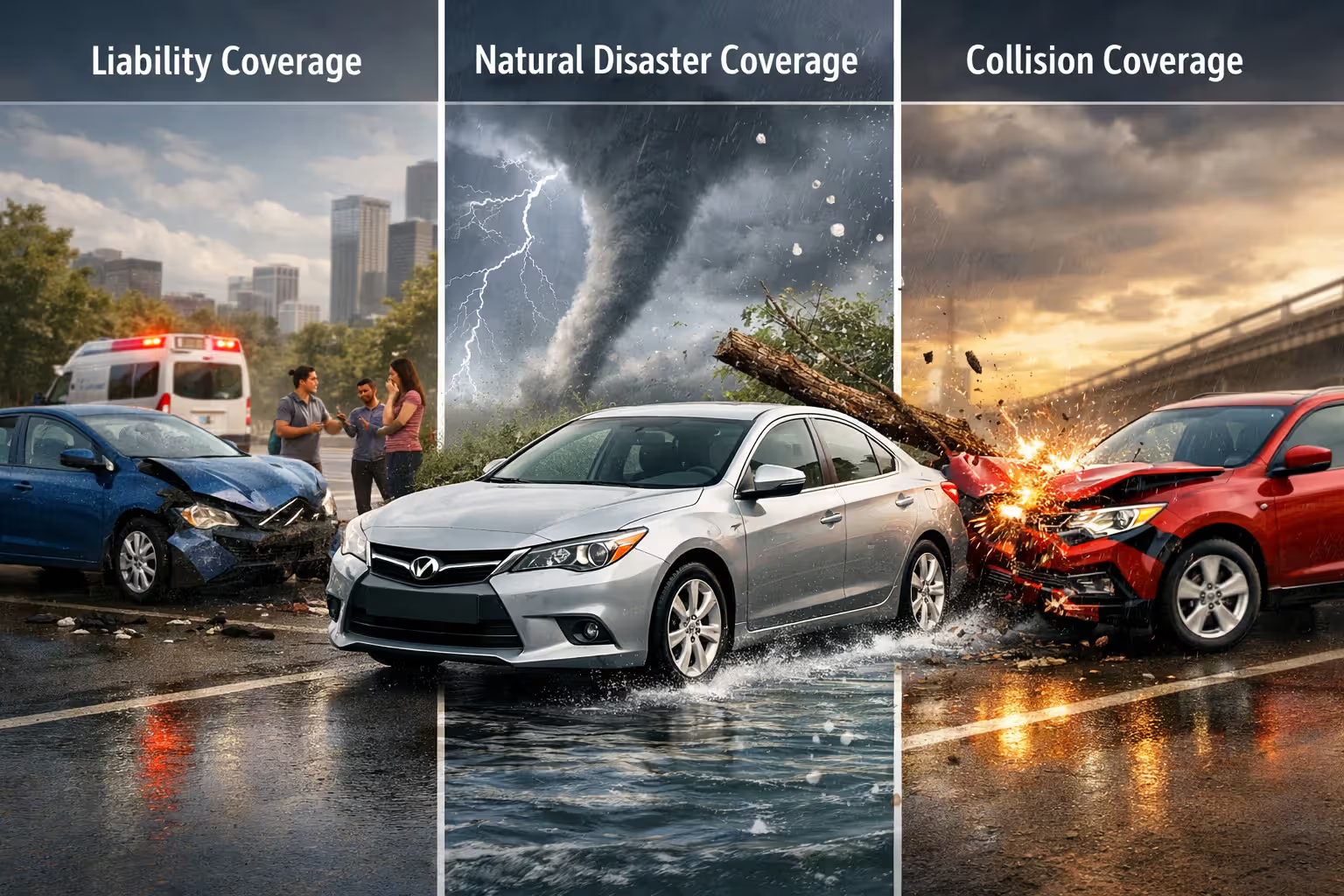
Let's start with an important clarification: the insurance industry doesn't officially recognize "full coverage" as a policy type. You won't see this term in your policy contract or state insurance laws. Instead, people use it as convenient shorthand to describe a package combining three primary auto insurance types: liability coverage, comprehensive coverage, and collision coverage.
When lenders demand "full coverage" for financed or leased vehicles, they want a policy protecting both their investment in the car and your legal responsibilities to other people. When drivers mention having "full coverage," they generally mean carrying more than their state's mandatory minimum liability requirements.
The terminology creates problems because of what "full" implies. The word suggests absolute protection against every conceivable loss, but that's misleading. Even policies bundling liability, comprehensive, and collision won't cover certain situations. You won't receive payment for mechanical failures, routine maintenance, aftermarket modifications (without specific endorsements), or deliberate damage. The policy also won't necessarily cover every person driving your vehicle unless they appear on your policy or satisfy specific conditions.
Insurance professionals typically prefer discussing coverage by naming its exact components rather than using the ambiguous "full coverage" phrase. This precision helps you grasp precisely which protections you're purchasing and where vulnerabilities might lurk.
Author: Alyssa Coleman;
Source: talero.spotpariz.net
What Does Full Coverage Car Insurance Cover
A standard full coverage policy merges three separate protection types, each addressing different loss scenarios. Grasping how these components work helps you select appropriate limits and deductibles.
Liability Coverage
Liability insurance forms the base of any auto policy and represents the sole coverage most states legally mandate. It compensates for damage and injuries you inflict on others in accidents where fault lies with you. The protection divides into two sections:
Bodily injury liability handles medical costs, lost income, pain and suffering compensation, and attorney fees when you injure someone in a crash. When you cause a collision sending another motorist to the emergency room, this section pays their treatment costs and associated expenses within your policy's limits.
Property damage liability covers repairs or replacement of other people's belongings you damage during an accident. While this primarily means other vehicles, it extends to fences, storefronts, mailboxes, utility poles, and various structures.
Liability coverage provides zero payment toward your own vehicle's repairs or your medical expenses—it exclusively shields you from financial responsibility for harm you inflict on others. Policies express limits as three figures, like 100/300/100, representing $100,000 per individual for bodily injury, $300,000 per accident for bodily injury, and $100,000 for property damage.
Comprehensive Coverage
Comprehensive coverage addresses damage to your vehicle from non-collision incidents. Picture it as protection from unexpected events beyond your control through defensive driving alone.
This section pays for repairs or replacement when your car sustains damage from:
- Theft or vandalism
- Fire or explosions
- Falling objects (trees, limbs, construction debris)
- Natural disasters (floods, hurricanes, tornadoes, earthquakes)
- Hail or windstorm damage
- Animal strikes (deer, elk, or other wildlife collisions)
- Civil disturbances or riots
- Glass damage (windshield chips and cracks)
Comprehensive coverage involves a deductible, usually spanning $100 to $2,000. Consider this scenario: Hail damages your car causing $3,000 in repairs, and you've selected a $500 deductible. You contribute $500 upfront, and your insurer handles the remaining $2,500.
Don't let the name fool you—comprehensive doesn't mean universal. It excludes mechanical breakdowns, engine troubles, or transmission problems—standard auto policies never cover these maintenance issues.
Collision Coverage
Collision coverage handles repairs or replacement when your vehicle suffers damage in crashes with other vehicles or stationary objects, regardless of who caused the accident. This protection covers your car when you rear-end someone at a stoplight, get side-swiped while parking, or skid into a concrete barrier during bad weather.
Where liability coverage protects others, collision insurance protects your vehicle. When fault lies with you in an accident, collision coverage addresses your repairs while your liability coverage handles the other driver's damages. When another driver causes the crash and carries insurance, you can claim through their liability coverage instead, eliminating your deductible.

Author: Alyssa Coleman;
Source: talero.spotpariz.net
Collision coverage also involves a deductible, which may match or differ from your comprehensive deductible. Many people select higher deductibles to reduce premium costs, accepting greater immediate expense in exchange for lower monthly payments.
Coverage maxes out at your vehicle's actual cash value, subtracting your deductible. When repairs exceed the car's worth, the insurer designates it a total loss and compensates you for the vehicle's pre-accident market value.
How Full Coverage Car Insurance Works
Knowing when each coverage type activates helps you navigate claims and understand what happens after accidents or losses.
During at-fault accidents, multiple coverages coordinate. Your liability coverage addresses the other driver's vehicle damage and medical costs. Your collision coverage handles your vehicle's repairs. When you're injured, your personal injury protection or medical payments coverage (if purchased) covers your medical bills, or you might rely on your health insurance.
Imagine this scenario: You're driving to work when a deer jumps onto the road. You swerve, lose control, and crash into a tree. The impact crumples your front end and deploys your airbags. Your coverage responds this way:
- Collision coverage addresses the vehicle damage from striking the tree
- Comprehensive coverage doesn't activate because damage resulted from the collision impact, not the deer itself (had you actually struck the deer, comprehensive would apply)
- Liability coverage remains inactive because you didn't harm anyone else's property or injure other people
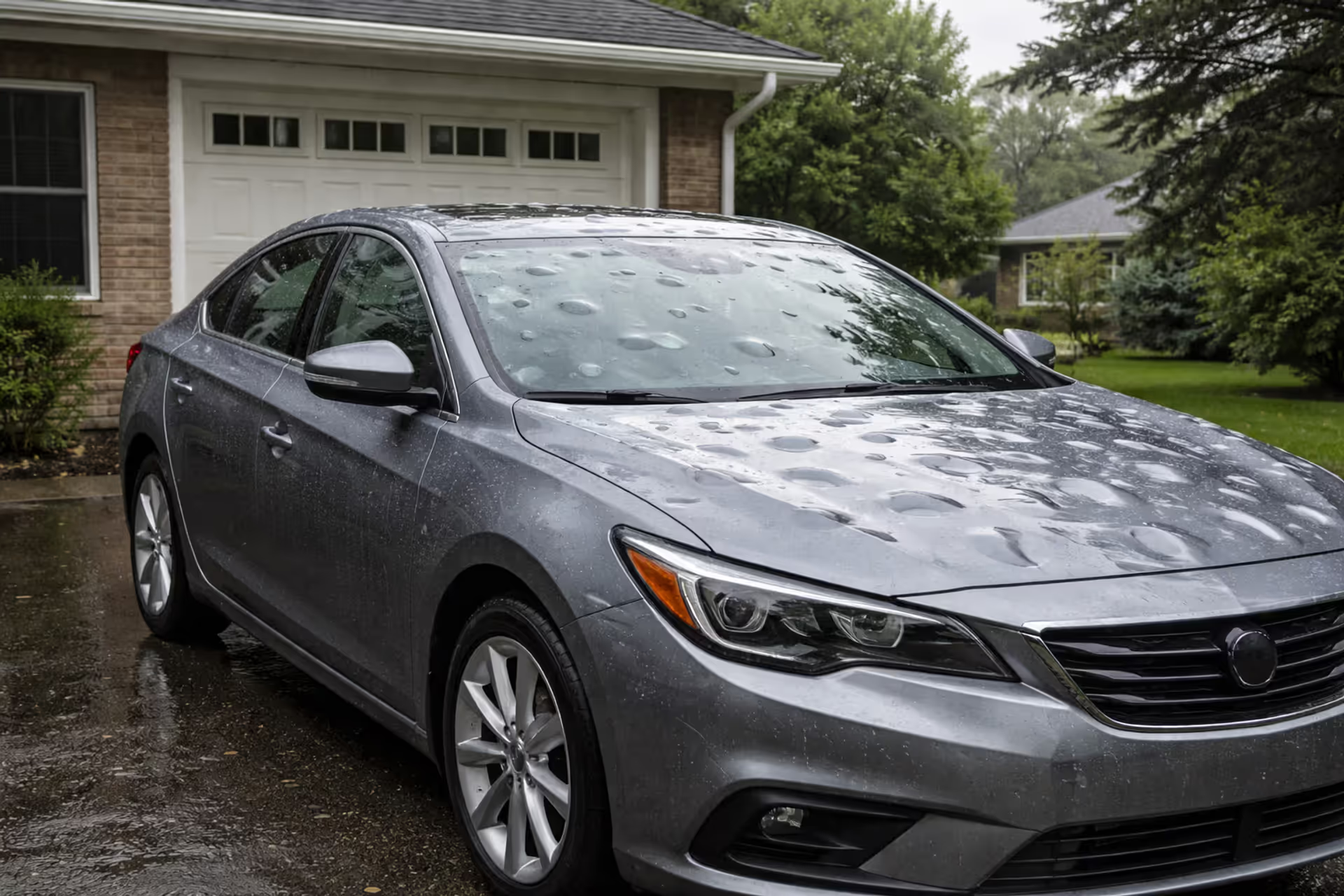
Picture a different situation: A brutal hailstorm pummels your car in a parking lot, creating dozens of dents across your hood and roof. Three days later, while driving your damaged vehicle, someone rear-ends you at a red light.
- Comprehensive coverage addresses the hail damage
- Collision coverage handles the rear-end accident damage
- The other driver's liability coverage should also cover the rear-end repairs since they caused it, potentially letting you bypass your collision deductible
How coverages interact matters for deductibles and claims. You submit separate claims for hail damage and collision damage, possibly paying two deductibles. However, when the other driver acknowledges fault and their insurance covers your collision repairs, you sidestep your collision deductible completely.
Coverage Limits and Deductibles Explained

Author: Alyssa Coleman;
Source: talero.spotpariz.net
Two crucial factors establish how much protection you receive and your out-of-pocket costs following claims: coverage limits and deductibles.
Coverage limits establish the maximum payment your insurance provides for covered claims. Liability coverage limits apply per person, per accident, or per occurrence. Comprehensive and collision limits equal your vehicle's actual cash value.
Selecting adequate liability limits proves critical because you remain personally liable for damages exceeding your policy limits. When you cause an accident generating $500,000 in damages but carry only $100,000 in coverage, you face potential lawsuits for the $400,000 difference. Financial planners frequently recommend liability limits of at least 100/300/100, with substantially higher limits when you possess significant assets requiring protection.
Deductibles represent your payment before insurance coverage begins for comprehensive and collision claims. Standard deductible options span $250 to $2,000. Selecting higher deductibles reduces your premium because you're shouldering more financial risk. Lower deductibles increase premiums but minimize your immediate expense when filing claims.
Your ideal deductible reflects your financial capacity. When a $1,000 repair expense would strain your budget, select a lower deductible. When you maintain solid emergency savings and want to minimize premium costs, higher deductibles become attractive.
Different coverage configurations compare like this:
| Coverage Component | What's Covered | Typical Deductibles | When It Applies | Cost Factors |
| Liability | Injuries and property damage inflicted on others | None (deductibles don't apply) | At-fault accidents affecting other people or their property | Your driving history, chosen coverage limits, geographic location, driver age |
| Comprehensive | Non-collision incidents (theft, weather, vandalism, animal strikes) | $100–$2,000 | Events unrelated to driving collisions | Vehicle market value, ZIP code, selected deductible, anti-theft features |
| Collision | Crash damage involving vehicles or objects | $250–$2,000 | Vehicle accidents, regardless of fault determination | Vehicle market value, your driving record, chosen deductible |
Deductible and premium relationships don't follow straight lines. Raising your deductible from $500 to $1,000 might cut your annual cost by $150, but increasing from $1,000 to $2,000 might only save another $75. Request quotes using various deductible amounts to identify the optimal balance for your budget.
The Full Coverage Insurance Claim Process
Filing claims efficiently and understanding expectations reduces stress during already challenging situations. The process shifts slightly depending on claim type but follows a general pattern.
Step 1: Report incidents immediately. Contact your insurance company promptly after accidents, theft, or damage. Most insurers operate 24/7 claims hotlines. For accidents, report them even when you don't plan to file claims—your policy probably mandates prompt notification of any incident.
Step 2: Document everything thoroughly. Photograph all damage from multiple angles, collect contact information from other drivers and witnesses, and secure police reports for accidents or theft. For comprehensive claims like storm damage, photograph the damage and relevant conditions (fallen branches, visible hail, etc.).
Step 3: Assessment and inspection. The insurance company dispatches a claims adjuster to evaluate damage. For minor claims, they might assess damage through photos you upload via mobile apps. For substantial damage, adjusters inspect vehicles personally, either at your residence, repair facilities, or claims centers.
Step 4: Estimate and approval. The adjuster prepares repair estimates or, for totaled vehicles, calculates actual cash value. You'll receive a claim decision clarifying covered items and payment amounts. When disagreeing with assessments, you can request re-inspections or secure independent estimates.
Step 5: Pay your deductible. For comprehensive and collision claims, you pay deductibles before repairs start. Some insurers subtract it from claim payments; others require you to pay repair shops directly. For total loss claims, deductibles are subtracted from settlement checks.
Step 6: Repairs or settlement. For repairable damage, you select repair shops (unless policies mandate specific shops). Insurers pay shops directly or reimburse you after completing repairs. For total losses, you receive checks for vehicle values minus deductibles, with any outstanding loan balances forwarded to lenders.
Timeline expectations depend on claim complexity. Straightforward comprehensive claims (like windshield replacements) might resolve within days. Major collision claims requiring extensive repairs can span weeks. Total loss settlements typically take 7–14 days after adjusters complete valuations.
A frequent mistake: beginning repairs before obtaining insurer approval. Starting repairs without filing claims or before adjuster assessments can result in denied coverage or disputed repair costs. Always secure approval first, except emergencies requiring immediate action to prevent additional damage (like temporarily covering shattered windows).
The term 'full coverage' generates misleading expectations of complete protection that can expose consumers to risk. My advice to clients focuses on understanding coverage through specific components—liability, comprehensive, collision—and recognizing that even combining all three leaves gaps. Auto policies never cover everything, and once drivers grasp this reality, they make smarter decisions about supplementary coverages like gap insurance, rental reimbursement, or umbrella policies
— Jennifer Martinez
Do You Need Full Coverage Car Insurance
Your answer depends on specific circumstances, including legal mandates, financial obligations, and personal financial capacity.
When full coverage becomes mandatory:
Financing or leasing your vehicle means your lender or leasing company mandates comprehensive and collision coverage until you complete loan payments or return leased vehicles. This safeguards their financial stake—when cars are totaled, insurance satisfies loans rather than leaving lenders with losses.
When full coverage remains optional but advisable:
Even without loans, full coverage makes sense when vehicles hold substantial value and you couldn't manage replacement costs from savings. A practical guideline: when your car's worth exceeds 10 times your annual premium for comprehensive and collision coverage, maintaining that coverage usually proves worthwhile.
Consider a vehicle valued at $15,000. When comprehensive and collision coverage costs $800 annually, you'd need 18.75 years of premiums to match the car's value—making coverage valuable. But when identical coverage costs $1,800 yearly, you'd break even in just over 8 years, and coverage might not justify costs, particularly as depreciation continues.
When dropping full coverage makes sense:
As vehicles age and lose value, a point arrives where comprehensive and collision coverage costs exceed its value. When your car's worth $3,000 and you're spending $900 yearly for full coverage with $1,000 deductibles, you're paying substantially for minimal benefit. Maximum payouts after total losses would reach only $2,000 ($3,000 value minus $1,000 deductible).
Additional considerations:
- Your emergency reserves: Can you manage car replacement when it's totaled? If not, maintain full coverage despite the car's age.
- Your geographic environment: Living where theft rates run high, severe weather strikes frequently, or wildlife populations are dense makes comprehensive coverage valuable.
- Your accident history: Multiple at-fault accidents mean collision coverage protects you from your own elevated risk profile.
- State minimum mandates: Remember that eliminating comprehensive and collision still leaves state-required liability coverage. You can never legally eliminate all insurance while operating vehicles.
Frequently Asked Questions About Full Coverage Insurance
Selecting appropriate auto insurance protection involves balancing financial security against premium expenses. While "full coverage" lacks precision as an insurance term, grasping the three core components—liability, comprehensive, and collision—helps you construct policies matching your requirements.
Begin by ensuring adequate liability coverage to safeguard your assets when causing serious accidents. Many professionals recommend limits substantially exceeding state minimums, especially when you've accumulated significant savings or property. Then assess whether comprehensive and collision coverage deliver financial value based on your vehicle's worth, your capacity to absorb losses, and any lender mandates.
Revisit your coverage annually as vehicle depreciation continues and your financial circumstances evolve. The full coverage that perfectly suited you when purchasing your car might become unnecessarily costly as it ages. Similarly, life transitions like completing loan payments, building emergency funds, or relocating to different regions should prompt coverage reviews.
Remember that even comprehensive policies contain exclusions. Evaluate additional coverages like uninsured motorist protection, medical payments coverage, rental reimbursement, and gap insurance based on your particular risks and circumstances. Your goal isn't purchasing every available coverage—it's constructing policies delivering solid protection without spending on coverage you don't need.