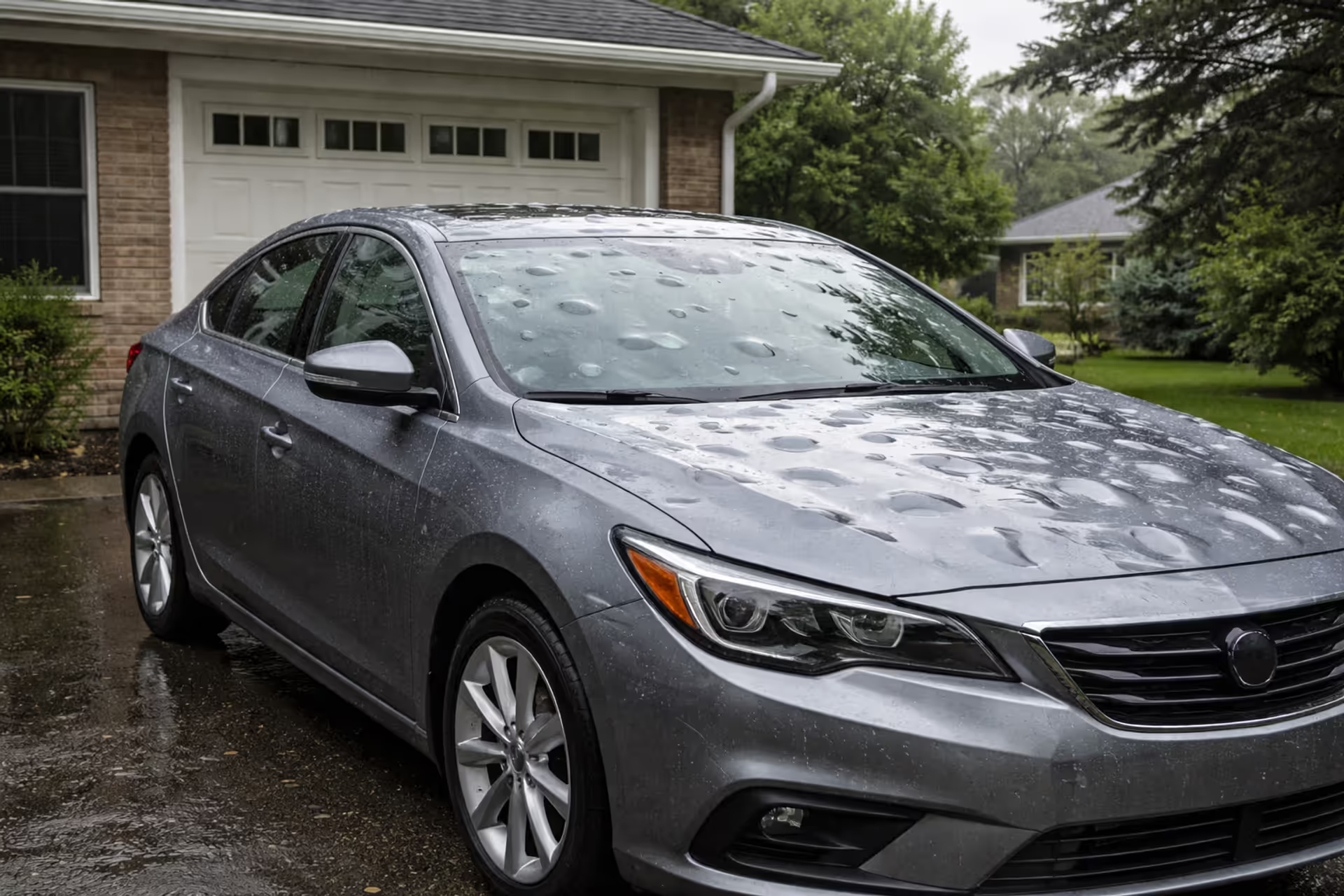
Car with hail damage parked in a driveway after a storm
What Is Comprehensive Insurance on a Car?

Content
Your car sits in the driveway one morning covered in baseball-sized hail dents. Or you walk out of the grocery store to find your window smashed and stereo gone. Maybe a deer jumps directly into your driver's side door on a country road. None of these scenarios involve you crashing into another vehicle—yet each one can cost thousands to repair.
That's where comprehensive insurance comes in. While most people know collision coverage handles fender benders, they're often unclear about what protects them from theft, weather disasters, and random acts of nature. Skip this coverage, and you're writing personal checks when storms hit or wildlife appears.
We'll break down exactly what comprehensive insurance does, when it makes financial sense, and how to navigate the claims process without overpaying or leaving yourself exposed.
Comprehensive Insurance Definition and Basics
Think of comprehensive insurance as the "weird stuff" coverage for your vehicle. It pays for damage from incidents that don't involve your car hitting (or being hit by) another vehicle or object during normal driving.
Insurance contracts sometimes call this "other than collision" coverage—which tells you what it is by describing what it isn't. You won't find comprehensive insurance listed as mandatory on any state's requirements list. Every state demands liability coverage, but comprehensive? That's your choice, unless you're financing.
Here's the catch: if you owe money on your car, your lender decides for you. Banks and finance companies write comprehensive coverage into loan agreements because they technically own your vehicle until you make that final payment. They're protecting their investment, not doing you a favor.
The confusion between comprehensive and collision trips up even experienced drivers. Here's the simplest way to remember the difference: collision activates when your vehicle makes contact with something during a driving incident—another car, a telephone pole, a guardrail, even a pothole. Comprehensive covers almost everything else.
Author: Trevor Whitfield;
Source: talero.spotpariz.net
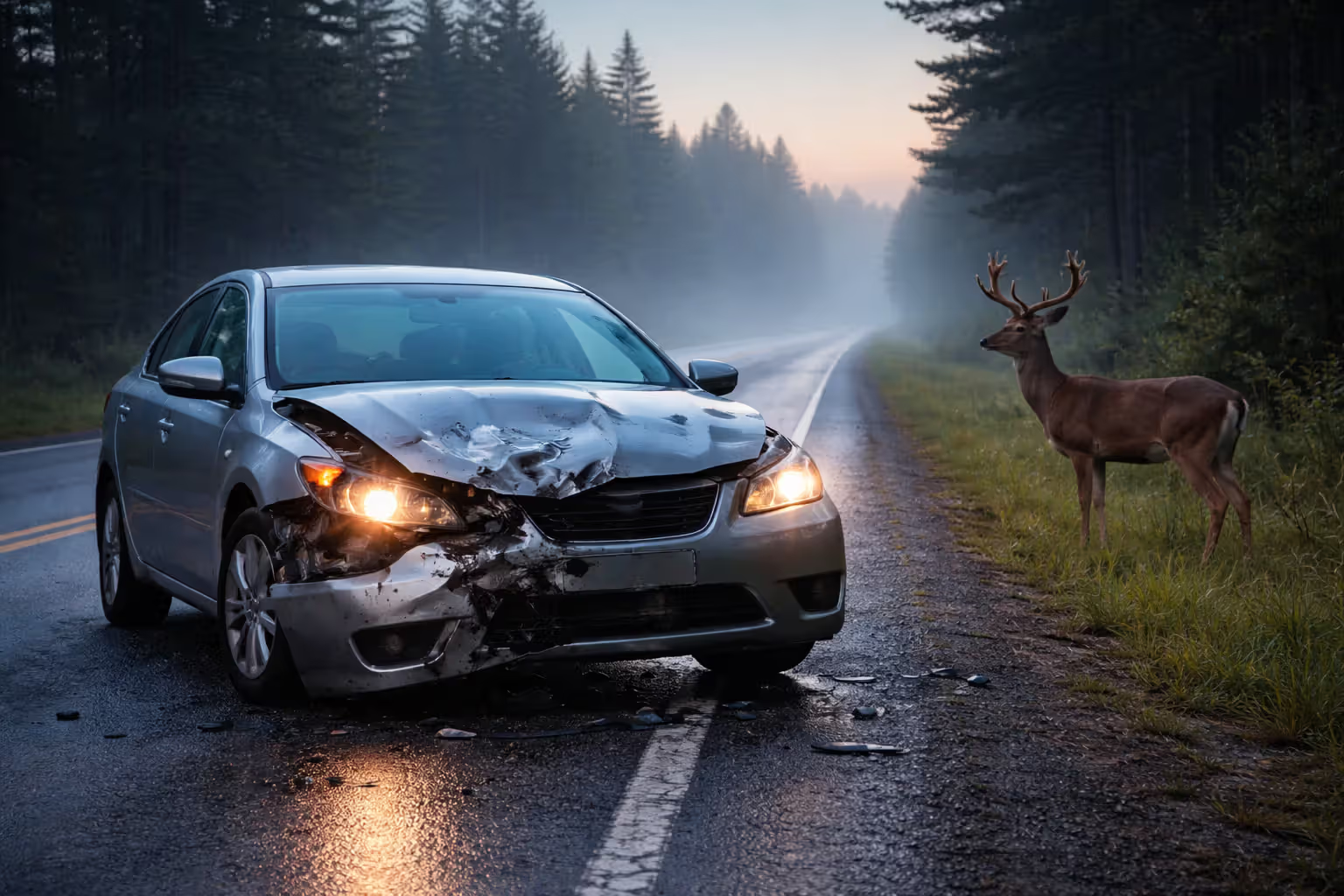
Let's use deer as an example since they cause so much confusion. You're driving, a deer runs into the road, you hit it? That's comprehensive. You're parked, a deer runs into your car's side panel? Still comprehensive. But if you swerve to miss the deer and slam into a tree instead? Now you're filing a collision claim because you struck an object.
The word 'comprehensive' misleads people into thinking it covers every possible scenario. It doesn't. This coverage specifically handles non-collision situations—think theft, vandalism, and storm damage. Drivers often get surprised when they learn what's excluded
— Sarah Mitchell
What Comprehensive Car Insurance Covers
Comprehensive policies respond to specific categories of loss. Understanding which situations qualify helps you decide if the premium justifies the protection.
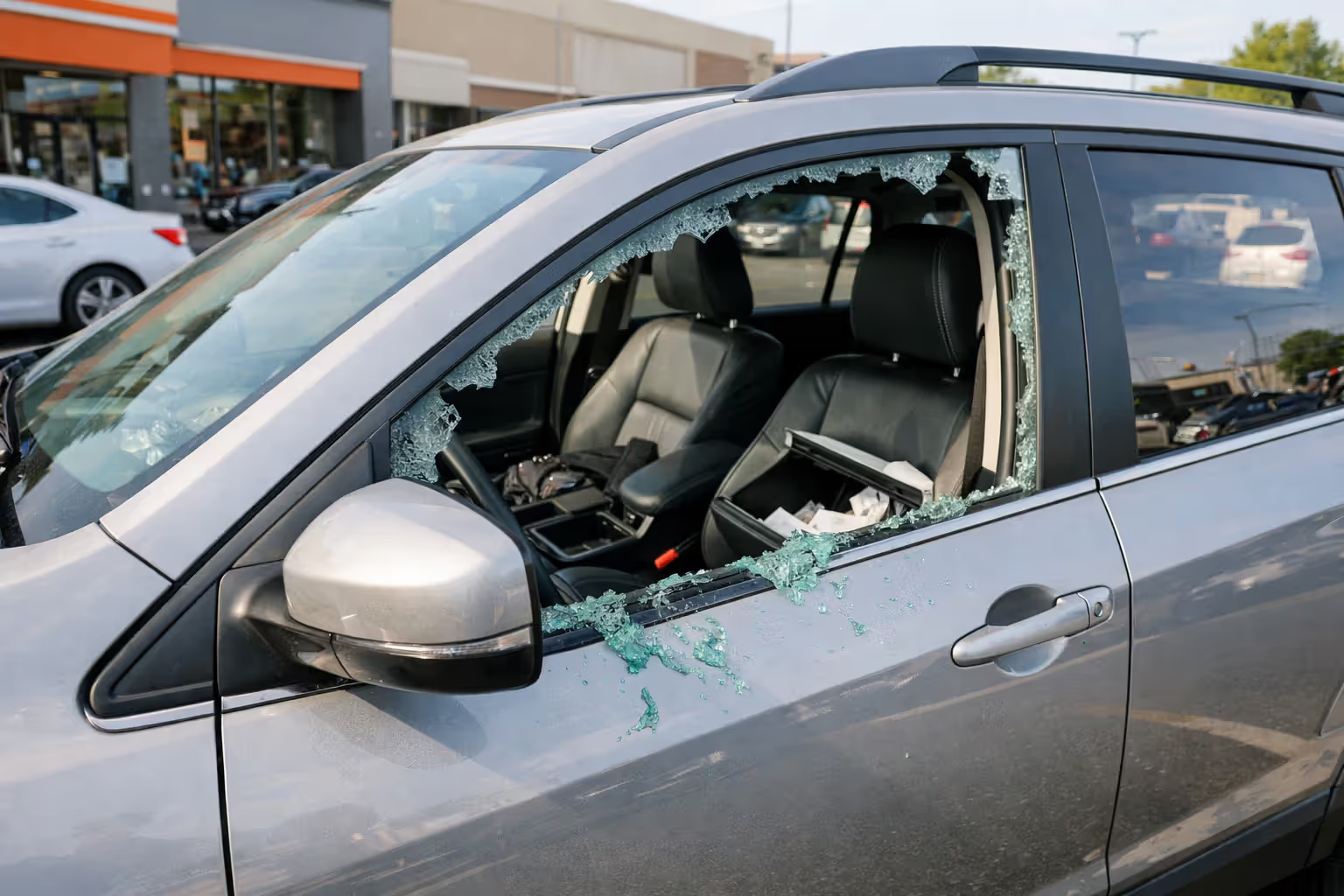
Theft and vandalism top the list of comprehensive claims in urban areas. Stolen catalytic converters, smashed windows, keyed paint jobs, slashed tires—all covered. If thieves steal your entire vehicle, comprehensive pays its actual cash value (minus your deductible). Same goes if they dump it in a lake after joyriding.
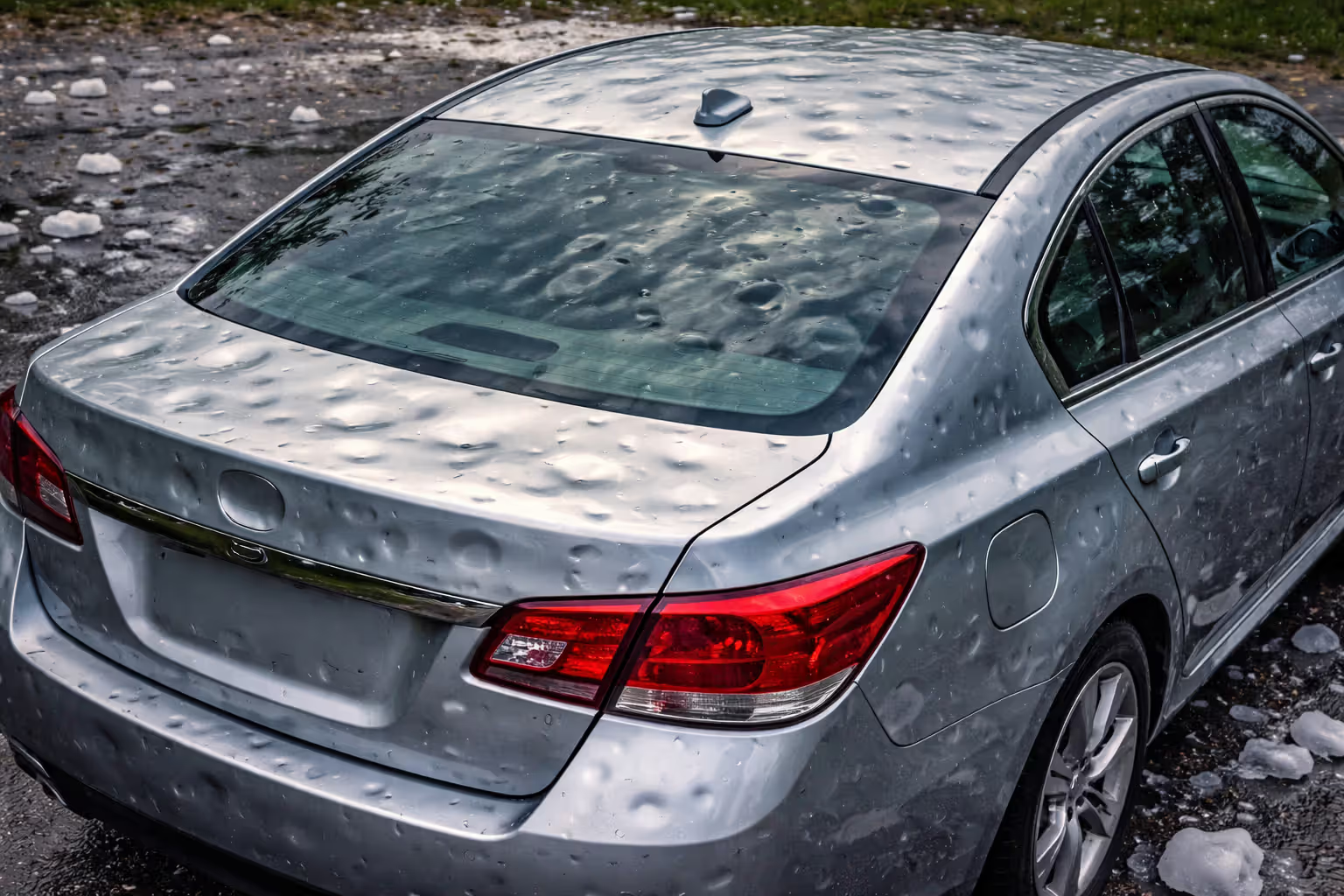
Weather damage creates the most dramatic comprehensive claims. Hail can cause $5,000+ in damage during a single storm, leaving your hood, roof, and trunk looking like a golf ball. Floods total vehicles regularly since water destroys electronics and creates mold issues that make repairs economically impossible. Tornadoes, hurricanes, lightning strikes—comprehensive handles all of it.
Animal collisions aren't limited to deer. Stray dogs, raccoons, bears in some regions, even birds can cause damage that trigger comprehensive coverage. A deer strike at highway speeds can destroy your front end, deploy airbags, and bend the frame enough to total the vehicle. Those claims often exceed $8,000.
Author: Trevor Whitfield;
Source: talero.spotpariz.net
Fire damage falls under comprehensive regardless of cause—unless the fire started because of a collision. Electrical fires, arson, wildfires spreading to parking areas, even a cigarette dropped in your backseat. All covered.
Falling objects mean more than just tree branches. Shopping cart corrals that blow over, debris from construction sites, rocks kicked up on highways, airplane parts (yes, it happens)—if it falls from above and damages your car, you're filing a comprehensive claim.
Glass breakage usually processes through comprehensive coverage. Most insurers offer glass claims with reduced or waived deductibles since windshield damage happens so frequently. You might pay $500 deductibles on other claims but nothing for windshield replacement.
Riot and civil unrest damage might sound unusual, but it matters in certain situations. Vehicles damaged during protests, looting events, or civil disturbances fall under comprehensive coverage.
What Comprehensive Insurance Does Not Cover
Comprehensive insurance won't pay for everything. Hit another car or crash into a mailbox? You need collision coverage for that. Your engine seizes because you skipped oil changes? That's maintenance neglect—no coverage. Transmission fails from normal wear? Also excluded.
Injuries to you or your passengers don't fall under comprehensive insurance. Medical payments coverage or personal injury protection addresses those healthcare expenses instead. Damage you cause to other people's property or their injuries requires liability coverage.
Here's something that surprises people: items stolen from inside your car aren't covered by auto insurance. Your laptop, phone, or Christmas presents in the trunk? That's a claim for your homeowners or renters insurance, not comprehensive auto coverage.
Author: Trevor Whitfield;
Source: talero.spotpariz.net
How Comprehensive Insurance Works
When something damages your car, you contact your insurer and describe what happened. They'll either send an adjuster to inspect the damage or ask you to get repair estimates from approved shops. Some companies now handle simple claims through smartphone apps—you upload photos and receive an estimate digitally.
The adjuster determines whether repairing your car makes financial sense. Once damage costs approach 70-80% of the vehicle's current value, insurers declare it a total loss. You'll receive a settlement check for what your car was worth immediately before the incident, minus your deductible.
For repairable damage, the insurance company pays the shop directly, or reimburses you if you've already paid. Either way, you're responsible for your deductible amount first.
Actual cash value drives these calculations. That's what your specific vehicle would sell for on the used market right before the damage occurred. Your 2019 sedan with 65,000 miles, minor scratches, and worn floor mats gets valued differently than an identical 2019 model with 30,000 miles and pristine condition.
When agents talk about "full coverage," they typically mean you're carrying liability, collision, and comprehensive together. No official insurance product called "full coverage" exists—it's just industry shorthand for a complete package that protects you from most vehicle-related financial disasters.
Author: Trevor Whitfield;
Source: talero.spotpariz.net
Understanding Your Comprehensive Insurance Deductible
Your deductible is the amount you pay out-of-pocket before insurance kicks in. Choose a $500 deductible and file a claim for $3,000 in hail damage? You pay $500, insurance pays $2,500.
Most insurers offer deductible options ranging from $100 to $2,000, with $250, $500, and $1,000 being most popular. You pick your deductible when buying coverage and can change it at renewal time.
Consider this financial balancing act: selecting a higher deductible drops your premium costs substantially. Bump your deductible from $250 to $1,000 and you might save $200-300 annually on premiums. That's a calculated gamble—you're betting you won't have claims frequently enough to offset the savings.
Choosing a smaller deductible increases your monthly insurance bill but shrinks your out-of-pocket expense during claims. A $100 deductible might add $300 to your annual premium, but you'll only pay $100 if someone steals your car.
Calculate this carefully. If raising your deductible saves $250 yearly, it takes four years of no claims to offset one $1,000 deductible payment versus a $250 deductible. Have you filed comprehensive claims in the past? How's your luck with weather and theft in your area?
Each claim means paying your deductible again. File three comprehensive claims in one year—hail damage in April, deer strike in July, vandalism in October—and you're paying three separate deductibles.
Glass claims often carry special deductibles. Some insurers waive deductibles entirely for windshield repairs or replacement, making these claims essentially free.
Comprehensive Insurance Coverage Limits Explained
Unlike liability coverage where you select dollar limits ($25,000, $50,000, etc.), comprehensive insurance doesn't work that way. Your coverage limit equals your vehicle's actual cash value, period.
Actual cash value means what your car's worth on today's market, not what you paid for it. Insurers determine this by researching comparable vehicles in your area—same year, make, model, similar mileage and condition. They'll adjust for any modifications, existing damage, or exceptional maintenance records.
Depreciation hammers these values hard. New cars lose 20-30% of their value the first year, then 10-15% annually after that. Buy a $40,000 SUV in 2024, and it might appraise at $30,000 by 2025, $25,500 by 2026, and $21,500 by 2027. Your comprehensive coverage maximum drops right alongside that value.
This depreciation reality explains why comprehensive coverage stops making sense on older vehicles. Paying $600 annually to insure a car worth $4,000 means you'd barely recover three years of premiums from a total loss claim—and that's before deductibles.
Some insurers sell replacement cost coverage or new car replacement endorsements for additional premiums. These upgrades pay for brand-new equivalent vehicles if yours gets totaled within a certain period after purchase, usually 1-3 years. You'll pay more upfront but avoid depreciation losses.
| Coverage Type | Protects Against | Applies When | State Mandate? | Average Annual Premium |
| Comprehensive | Vehicle theft, storm damage, vandalism, wildlife impacts, fires | Non-collision events occur | No (lenders often demand it) | $150–$400 |
| Collision | Impact with other vehicles, poles, barriers, or stationary objects | Accidents happen during vehicle operation | No (lenders often demand it) | $300–$700 |
| Liability | Property damage or bodily harm inflicted on others | You cause an accident | Yes (nearly all states) | $500–$1,200 |
Filing a Comprehensive Insurance Claim
The claims process unfolds smoothly when you know what insurers expect. Here's the actual workflow:
Step 1: Document everything immediately. Take photos from multiple angles showing all damage. For theft, call police right away and get a report number—insurers won't process theft claims without police documentation. For vandalism, weather damage, or animal strikes, photograph the scene if you can.

Author: Trevor Whitfield;
Source: talero.spotpariz.net
Step 2: Contact your insurance company. Call their claims line or use their mobile app to file electronically. Describe what happened, when it occurred, and what damage you've noticed. They'll assign a unique identifier for reference throughout the process.
Step 3: Get damage assessed. Your insurer might recommend specific shops for estimates or send an adjuster to inspect your vehicle personally. Some companies use photo-based estimates where you submit images through an app and receive preliminary damage assessments without in-person inspections.
Step 4: Review the settlement offer. Insurers provide repair estimates or, for totaled vehicles, actual cash value settlements. Check these carefully. If you disagree with their valuation, you can negotiate by providing evidence of higher comparable vehicle prices in your market.
Step 5: Complete repairs or accept payment. For repairs, the shop typically bills your insurer directly, and you pay just your deductible to the repair facility. For total losses, you sign over your title and receive your settlement minus the deductible.
Timeframes vary significantly. Simple windshield replacements might close within days. Theft claims usually require waiting periods—often 30 days—giving police time to recover your vehicle. Total loss settlements typically process within 2-3 weeks once you agree on valuation.
Documentation requirements include your driver's license, vehicle registration, photos of damage, police reports for theft or vandalism, and any relevant receipts or maintenance records. Better documentation means faster processing and fewer disputes.
| Claim Category | Typical Outcome | Expected Settlement Amount |
| Stolen Vehicle | Complete loss or recovery with extensive damage | $8,000–$35,000 |
| Hail Damage | Bodywork dents covering hood, roof, trunk panels | $2,500–$8,000 |
| Windshield Replacement | Fractured or destroyed front windshield glass | $200–$600 |
| Deer Strike | Front-end impact damage | $2,000–$8,000 |
| Flood Damage | Water penetration destroying electrical systems | $5,000–$15,000 (frequently totaled) |
| Vandalism | Scratched paint, shattered windows, damaged tires | $500–$3,000 |
Do You Need Comprehensive Coverage?
Comprehensive coverage isn't right for everyone. Several factors determine whether it makes financial sense for your specific situation.
Your vehicle's current value matters most. A common rule: drop comprehensive when your car's worth less than 10 times the annual premium. Paying $400 yearly to insure a $3,000 vehicle doesn't add up—you'd need the car totaled just to break even after a few years.
Loan or lease agreements remove your choice entirely. Lenders require comprehensive and collision coverage protecting their collateral. You can drop this coverage once you own the car outright, but not while you're making payments.
Your financial cushion weighs heavily in this decision. Could you afford a $6,000 loss tomorrow without significant hardship? Carrying comprehensive insurance offers meaningful protection for drivers who can't easily absorb major unexpected expenses, regardless of vehicle age. Got $20,000 sitting in savings? You might reasonably self-insure and pocket the premium savings.
Where you live and park affects your risk significantly. High vehicle theft rates, frequent severe weather, or abundant wildlife populations increase your likelihood of filing claims. City drivers face more vandalism and theft. Rural drivers hit more deer. Anyone in hail country knows the threat.
Running the numbers requires comparing premiums against potential losses. Add up what you'd pay in premiums over several years versus your car's current value. If premiums would equal your vehicle's value within 3-4 years, comprehensive coverage becomes questionable.
Don't forget your deductible in these calculations. A $1,000 deductible on a $5,000 car means insurance only covers losses above $1,000—limiting your maximum benefit to $4,000.

Author: Trevor Whitfield;
Source: talero.spotpariz.net
Frequently Asked Questions About Comprehensive Car Insurance
Comprehensive insurance protects your vehicle from numerous non-collision threats that liability coverage completely ignores. From stolen vehicles and vandalism to weather disasters and animal encounters, this coverage addresses real financial vulnerabilities.
Whether you need comprehensive insurance depends on your vehicle's current market value, personal financial reserves, and risk exposure. Newer vehicles with significant value warrant comprehensive protection, especially when financing requires it. Older vehicles with diminished values often don't justify the premium costs, particularly if you maintain savings that could cover potential losses.
Understanding how deductibles work, coverage limitations, and the claims process helps you make informed insurance decisions. Review your comprehensive coverage annually as your vehicle depreciates, adjusting your protection when the cost-benefit analysis shifts. Smart coverage today might become unnecessary tomorrow as your car ages and loses value.