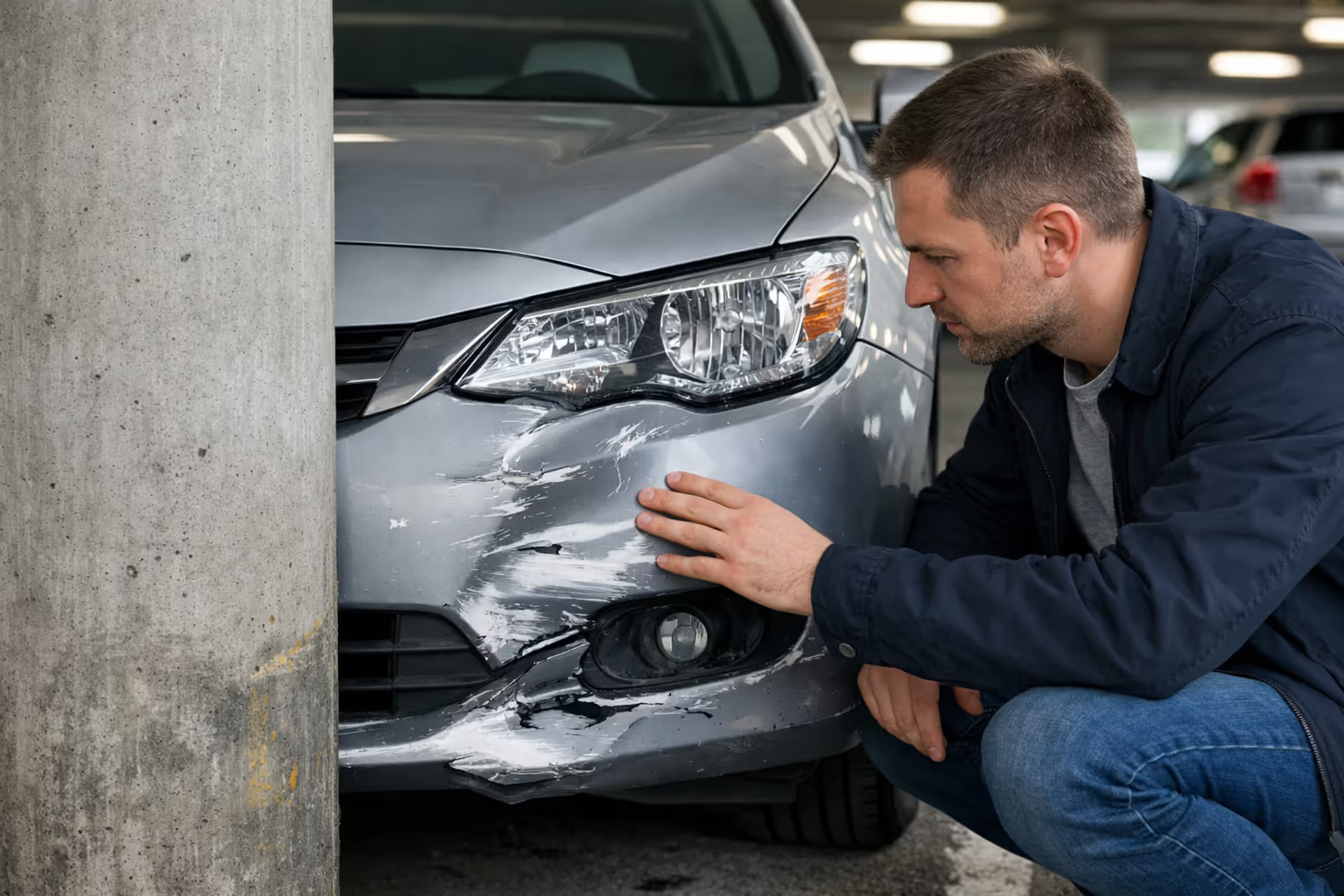
Driver inspecting minor car damage in a parking lot after a collision
What Is Collision Insurance on a Car?

Content
Picture this: you're backing out of a grocery store parking spot when—crunch—you scrape against a concrete pillar. Or maybe you're driving home in the rain and slide into a ditch. These everyday mishaps can leave you facing repair bills of $3,000, $5,000, or more. That's exactly where collision insurance steps in, though plenty of drivers pay for it each month without really grasping what they've bought or whether their money's being well spent.
Collision Insurance Definition and How It Works
Think of collision insurance as the coverage that handles damage to your car when it crashes into something—another vehicle, a fence, even the ground if you flip over. The critical thing to understand? It doesn't matter who screwed up. If you rear-end someone because you were checking your phone, collision coverage handles your repairs. If someone blows through a stop sign and T-bones you, collision coverage still handles your repairs (though you'd probably file through their liability insurance instead to skip paying your deductible).
Here's the basic mechanics: your car gets damaged in a crash, so you call your insurance company to file a claim. You'll need to cover your deductible first—that amount you agreed to pay out of pocket when you bought the policy. After that, the insurance company pays for repairs up to what your vehicle is actually worth right now, factoring in age, mileage, and condition.
What happens if fixing your car would cost more than it's worth? The insurer declares it totaled, cuts you a check for the car's current value, subtracts your deductible, and takes possession of the wreck. You bought the car for $24,000 two years ago, but it's only worth $17,000 today? You're getting $17,000 minus your deductible, not the original purchase price.
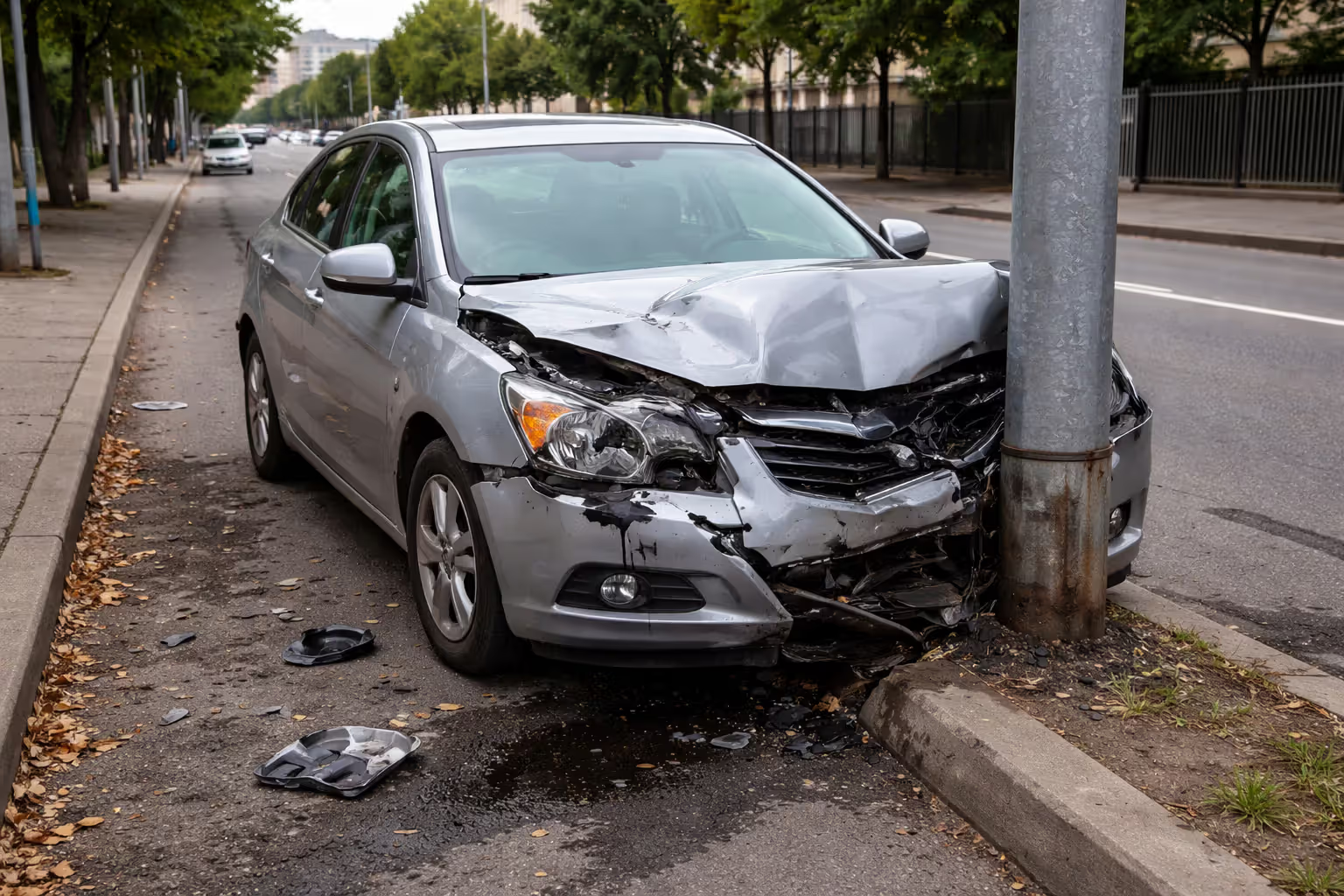
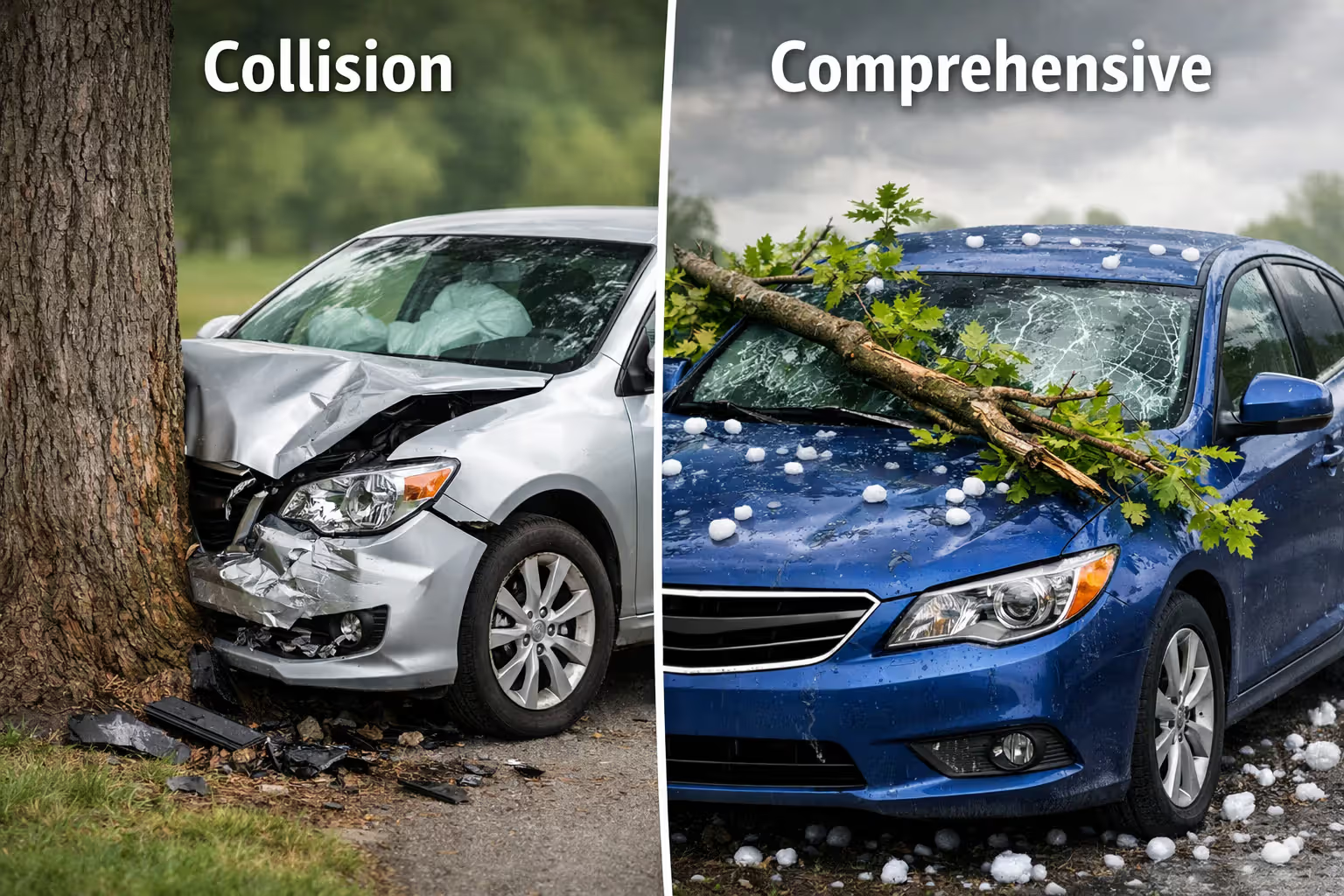
Coverage kicks in whether you smash into another car, take out a mailbox, hit a light pole, or roll your vehicle down an embankment. The connecting thread is collision—your car hitting something solid. Theft, hail damage, a windshield shattered by a rock, a deer running into your door? Those fall under comprehensive insurance, which is completely separate.
Author: Caroline Halstead;
Source: talero.spotpariz.net
Here's what catches people off guard: every state considers collision insurance optional. No law forces you to buy it. But try telling that to your auto lender. Banks and finance companies write collision coverage into your loan contract as a requirement. They've got money tied up in that car until you pay it off, and they're not about to let their collateral drive around unprotected.
What Does Collision Insurance Cover
The line between what's covered and what's not can get fuzzy, so let's make it concrete.
| Covered Scenarios | Not Covered Scenarios |
| Rear-ending another car or getting rear-ended | Someone stealing your car or breaking into it |
| Sliding off the road into a ditch or tree | Someone keying your paint or slashing your tires |
| Backing into a pole, mailbox, or building | Your windshield cracking from a flying rock |
| Flipping your vehicle in any type of accident | Hail denting your hood and roof |
| Getting sideswiped, T-boned, or hit head-on | A tree branch falling on your parked car during a storm |
| Another driver hitting you and driving away | Hitting a deer, elk, or any other animal |
| Scraping against a guardrail or concrete barrier | Your engine seizing up from lack of maintenance |
Multi-vehicle crashes: Whether it's a fender-bender in stop-and-go traffic or a serious highway accident involving three cars, collision coverage handles the damage to your vehicle. Now, if someone else caused the accident, you've got a choice—file through their liability insurance and pay nothing, or file through your own collision coverage and pay your deductible but potentially get faster service. Your insurance company will then go after the other driver's insurer to recover what they paid out, including your deductible.
Single-car crashes: You're driving on a rural road at dusk when a dog runs out. You swerve hard, miss the dog, but plow into a fence. Nobody else involved—just you and that fence. Collision coverage takes care of this. Same goes for losing control on black ice and spinning into a snowbank, or misjudging a curve and ending up in a drainage ditch.
Parking lot damage: You return to your parked car and find a nasty dent and scraped paint where someone clearly backed into you and took off. Frustrating, but collision coverage addresses it. You accidentally press the gas instead of the brake and crash into the car parked in front of you? Also covered, though potentially embarrassing.
Hit-and-run situations: Someone smashes into your car at 2 AM and disappears before you can get their plate number. Collision coverage pays for repairs after you file a police report. Some insurance companies will even waive your deductible if you manage to identify the other driver, though they fled the scene.
Now here's where people get tripped up: comprehensive coverage handles different risks. Someone busts your window to steal your laptop? That's comprehensive. A hailstorm turns your car into a golf ball? Comprehensive. You swerve to avoid an animal, lose control, and hit a tree? That's collision because you hit something. But if the deer actually runs into your car? That's comprehensive. The distinction matters because you might carry one type of coverage without the other.
Author: Caroline Halstead;
Source: talero.spotpariz.net
Understanding Your Collision Insurance Deductible
Your deductible is the chunk of money you're responsible for before insurance pays a dime. When you set up collision coverage, you pick this amount—usually somewhere between $250 and $2,000. This single choice dramatically affects both your monthly bill and what you'll actually pay if something goes wrong.
Higher deductible equals lower premium. Lower deductible equals higher premium. It's a direct trade-off.
| Deductible Amount | Approximate Annual Premium | You Pay for $3,000 in Damage | You Pay for $8,000 in Damage |
| $250 | $850 | $250 | $250 |
| $500 | $720 | $500 | $500 |
| $1,000 | $580 | $1,000 | $1,000 |
These numbers are ballpark estimates. Your actual premium depends on where you live, what you drive, your age, your driving record, and which company you're using.
Every single collision claim you file means paying that deductible. Your car needs $2,400 in repairs and you carry a $500 deductible? You write a check for $500, insurance covers the remaining $1,900. If repairs only cost $450, filing a claim is pointless—you'd pay the entire bill yourself and potentially trigger a rate increase for reporting a claim.
Here's where people make mistakes: they automatically choose the lowest deductible available because it seems like the best deal. But run the math. If dropping from a $500 deductible to a $250 deductible increases your annual premium by $150, you're paying that $150 every single year to potentially save $250 once. If you go three years without a claim—which many drivers do—you've paid an extra $450 to access a benefit worth $250. Not exactly winning strategy.

Author: Caroline Halstead;
Source: talero.spotpariz.net
A smarter approach? Pick the highest deductible you could comfortably pay tomorrow if you had to. If coming up with $1,000 would mean scrambling to borrow money or put it on a credit card, then $1,000 is too high. But if you've got $2,000 sitting in savings for emergencies, taking a $1,000 deductible and pocketing the premium savings makes perfect sense.
Watch out for gimmicky add-ons like "vanishing deductibles" or "deductible rewards." These programs promise to reduce your deductible by $50 or $100 for each claim-free year. Sounds great, except the extra premium you pay for this feature usually costs more than the deductible reduction is worth. Insurance companies aren't running charities—if they're offering something, they've done the math to ensure it profits them more than you.
Coverage Limits and Policy Factors
Collision insurance won't write you a blank check. The absolute maximum you can receive is your vehicle's actual cash value, or ACV—what your car is worth right now in its current condition, not what you paid for it or what a brand new version costs.
Actual cash value reality check: You financed a new SUV three years ago for $35,000. You've been making payments faithfully, and you still owe $22,000. But that SUV? It's probably worth around $19,000 on today's market after depreciation. If someone totals it tomorrow, collision insurance pays you $19,000 (minus your deductible). You still owe the bank $22,000. That $3,000 gap? You're stuck with it unless you bought gap insurance, which exists specifically to cover this scenario.
How depreciation eats your coverage: New vehicles lose value brutally fast—typically 20% to 30% in the first year alone. After that, figure on 15% to 18% depreciation annually. That five-year-old sedan you're driving might be worth only 35% to 40% of what the original owner paid. So yeah, you're paying collision insurance premiums each month to protect an asset that's worth less and less. At some point, this stops making financial sense.
Lender requirements aren't forever: Your bank demands collision coverage because they technically own part of your car until the loan is paid off. But the day you make that final payment? That requirement evaporates. You're free to drop collision coverage if you want, though whether you should depends on your car's value and your financial cushion.
State laws don't mandate it: Every state requires liability insurance—coverage for damage you cause to other people and their property. Minimums vary widely (anywhere from $10,000 to $50,000 per accident), but liability is non-negotiable. Collision insurance, though? Completely optional from a legal standpoint. The government doesn't care if you protect your own vehicle or not.
Special rules for special vehicles: Own a classic car, a hot rod, or something heavily modified? Standard collision policies using ACV calculations can really screw you over. A 1967 Mustang you've restored might be worth $60,000, but an adjuster using standard valuation guides might only see a 56-year-old car worth $25,000. That's where agreed value policies come in—you and the insurer agree upfront on the car's value, put it in writing, and that's what you get if the car is totaled. Most regular cars don't qualify for these policies, but specialty insurers offer them for collectibles and modified vehicles.
How to File a Collision Insurance Claim
Filing a claim efficiently means getting your car fixed faster and avoiding unnecessary hassles with your insurance company.
Right after the accident, secure the scene: Make sure nobody's hurt first—that's priority one. If there are injuries, if someone can't move their vehicle, or if local ordinances require it, call police. Then start documenting everything. Pull out your phone and photograph all damage to every vehicle involved, the overall scene from multiple angles, any skid marks or debris, street signs, and traffic signals. Get names and phone numbers from other drivers and any witnesses who stopped. If police respond, get the officer's name and report number.
Contact your insurer quickly: Most insurance companies want to hear about accidents within 24 to 48 hours, and some policies actually require it in writing. These days, you can usually report through a mobile app, on their website, or by calling their claims hotline (which operates 24/7). Stick to the facts—describe what happened without editorializing about whose fault it was or why you think it happened. Just the basic who, what, when, where.
You'll get a claim number and an adjuster: The insurance company creates a file with a claim number you'll reference in all future communications. They also assign an adjuster—this person becomes your main contact. The adjuster schedules a time to look at your damaged vehicle, either in person at your home or at one of their inspection centers. Some companies now do "virtual inspections" where you submit detailed photos through their app, and the adjuster writes an estimate from those images.
The adjuster assesses damage and writes an estimate: Once they've seen your car, the adjuster creates a repair estimate listing every damaged part and the labor needed to fix it. This estimate goes to whatever repair shop you choose. Here's something important: once the shop tears into your car, they'll often discover additional damage the adjuster couldn't see during the initial inspection. This is called a supplement. The shop contacts your insurance company to get approval for the additional work.

Author: Caroline Halstead;
Source: talero.spotpariz.net
You choose where repairs happen: Your insurance company might recommend certain shops—usually ones they've negotiated special arrangements with. These "preferred" or "network" shops can be convenient because they guarantee their work and handle paperwork directly with the insurer. But you're not obligated to use them. You can take your car wherever you want, though shops outside the insurer's network might require you to handle more of the coordination.
Pay your deductible to the repair shop: You don't send your deductible payment to the insurance company. Instead, you pay it directly to the repair shop, usually when you pick up your car. If your vehicle is totaled rather than repaired, the insurer deducts it from your settlement check before sending payment.
Receive your repaired car or settlement payment: For repairable damage, you get your car back once the shop finishes the work—typically one to three weeks depending on parts availability and how extensive the repairs are. For total losses, the insurer mails you a check for the vehicle's ACV minus your deductible, usually within 7 to 14 days after you accept their valuation. If you disagree with their valuation, you can negotiate by providing comparable vehicle listings or getting an independent appraisal.
Realistic timeframes: A straightforward claim—nobody's disputing who's at fault, parts are readily available, minimal complications—might wrap up in two weeks from accident to getting your car back. Complex situations involving totaled vehicles, disagreements about damage extent, or liability questions can drag on for months. Your insurance company has legal obligations to handle claims in good faith and can't unreasonably delay things, but "unreasonable" has a pretty flexible definition.
Smart tip many people miss: If the accident wasn't your fault and you have the other driver's information, you can file directly through their liability insurance instead of using your collision coverage. This means you pay zero deductible. The downside? Dealing with someone else's insurance company is often slower and more aggravating. Many people just file through their own collision coverage for convenience, knowing their insurance company will pursue subrogation—lawyer-speak for "going after the other guy's insurance to get reimbursed, including your deductible."
Do You Need Collision Insurance
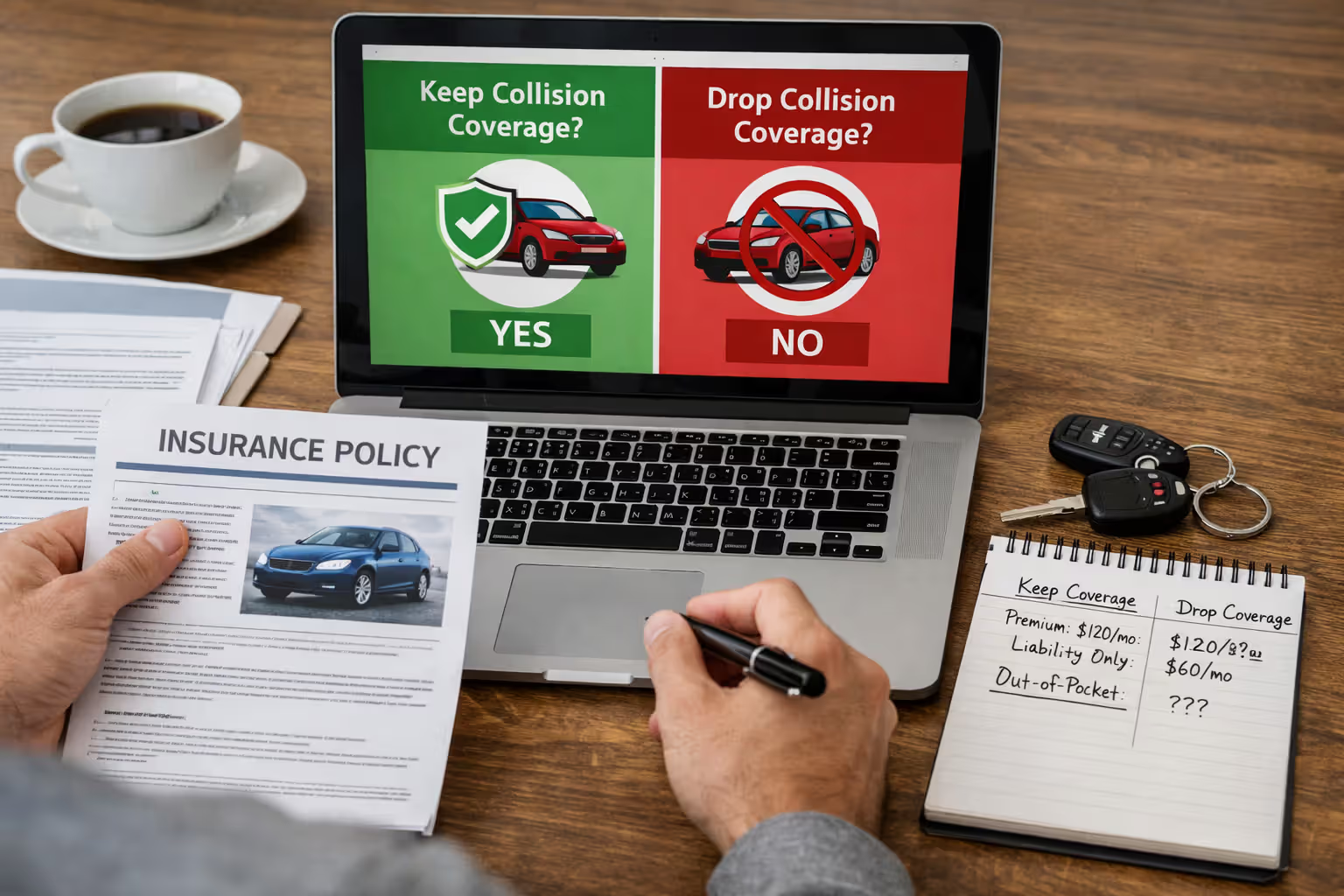
This isn't a yes-or-no question with one right answer. It depends on your specific situation.
Collision coverage makes obvious sense when: You're still making payments on a car loan or lease—the lender requires it, end of discussion. Your car is relatively new or worth more than $5,000 to $6,000. You don't have enough savings to replace your car if someone totaled it tomorrow. You've got a sketchy driving record with past at-fault accidents. You live in a dense urban area with heavy traffic and tight parking.
Consider dropping collision coverage when: Your car has aged to the point where it's worth less than $4,000 or $5,000. You own the vehicle outright with no loan. You've got substantial emergency savings—enough to buy a replacement car without financial strain. Your annual premium plus deductible adds up to more than 25% of your car's value.
Let's work through a real example. Say your car is worth $4,000. Your annual collision premium is $380, and you carry a $500 deductible. That means you're paying $380 every year to protect a $4,000 asset, but the most you'd ever receive is $3,500 ($4,000 minus your $500 deductible). Over three years, you'll pay $1,140 in premiums. Meanwhile, your car is depreciating—in three years it might be worth $2,500. Starting to see the problem? You're essentially paying someone else to manage a risk you could handle yourself by just saving that premium money.
The decision to drop collision coverage should happen when your annual premium plus deductible equals or exceeds 25% of your vehicle's actual cash value. At that point, you're essentially self-insuring anyway, just doing it inefficiently through an insurance company
— Robert Chen
Factors that complicate the math: Maybe you've had three at-fault accidents in the past five years. Even if your car is older and worth less, collision coverage provides value because, statistically speaking, you're more likely to need it. Or perhaps you live somewhere with notoriously bad drivers, aggressive traffic, and high accident rates—certain cities in Florida, Louisiana, and California come to mind. Location matters.
Some people just sleep better knowing they're covered, regardless of what the spreadsheet says makes sense. That's legitimate. Financial decisions aren't purely mathematical—peace of mind has real value. Just make sure you're consciously choosing to pay for that peace of mind rather than keeping coverage out of inertia.
The middle path: Instead of going all-or-nothing, raise your deductible substantially. Bumping from a $500 deductible to $1,500 can cut your premium by 30% or more. This approach works well for vehicles in that gray zone—worth maybe $6,000 to $10,000 where you want some protection but current premiums feel excessive. You're still covered if something catastrophic happens, but you're not paying through the nose for it.
One last critical point: once you drop collision coverage, you cannot add it back retroactively after an accident. You can generally add it mid-policy if nothing has happened, but insurance companies sometimes require a vehicle inspection first to verify there's no pre-existing damage you're trying to sneak past them.
Author: Caroline Halstead;
Source: talero.spotpariz.net
Frequently Asked Questions About Collision Insurance
Collision insurance serves one straightforward purpose: protecting your financial stake in your vehicle when crashes happen. For anyone driving a newer car, carrying an outstanding loan, or lacking savings to replace a vehicle, this coverage provides essential protection against repair costs that could otherwise wreck your budget.
The math isn't complicated. Find out what your car is currently worth, check your annual collision premium, and know your deductible. Add the premium and deductible together. If that sum approaches 25% to 30% of your vehicle's value, you're in the zone where coverage becomes questionable. Below that threshold? Collision coverage probably delivers solid value. Above it? You're likely better off setting aside that premium money in a savings account earmarked for car repairs.
Your personal circumstances trump general guidelines every time. A car worth $3,500 might not seem valuable enough to insure based purely on numbers, but if losing that $3,500 would genuinely derail your finances—if you couldn't get to work, couldn't afford a replacement, couldn't manage without major hardship—then collision coverage remains worthwhile despite the math. On the flip side, if you've got $25,000 sitting in savings and you're driving a $7,000 car, paying $450 annually for collision coverage means paying someone else to manage a risk you could easily absorb yourself.
Review your collision coverage every single year when your policy comes up for renewal. Your car depreciates steadily, and hopefully your financial situation improves over time. The coverage decision that made perfect sense when you drove your new car off the lot three years ago might look completely different today. Don't be afraid to adjust your deductible upward or drop coverage entirely when the economics shift. Just make sure you maintain coverage as long as your vehicle represents an asset you genuinely couldn't afford to replace out of pocket.